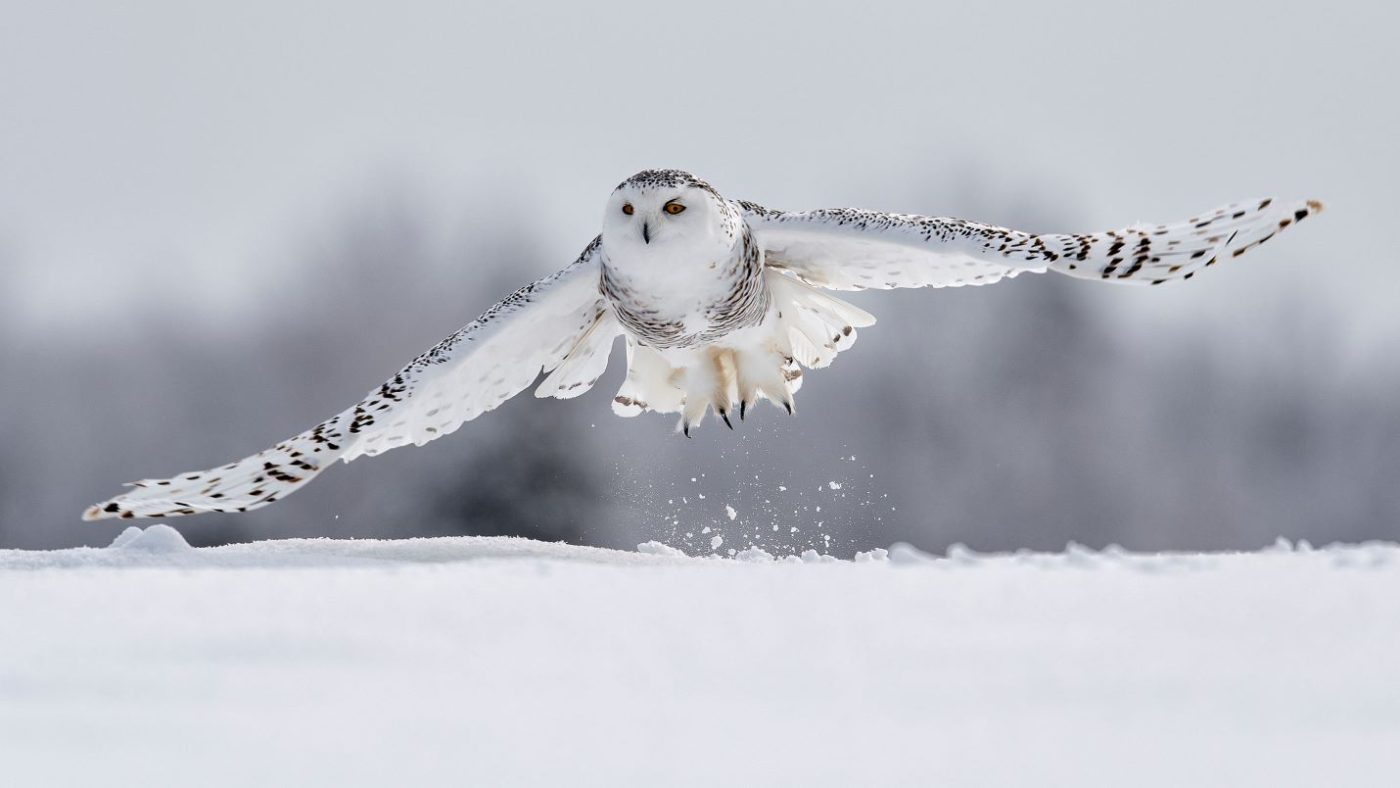
The snowy owl has been declared regionally extinct in Sweden. For the first time in 20 years, the country has officially lost a bird species.
Scientists point out that climate change has significantly affected the decline in their numbers, disrupting the fragile Arctic ecosystem.
“Warmer winters bring more rain and less snow, destroying the snow tunnels that lemmings rely on – the snowy owls’ main food source,” explained BirdLife International magazine.
The snowy owl, one of the largest owl species in the world, lives in the cold regions of the Arctic, including Alaska, Canada, northern Russia, and Scandinavia.
He has also become known in popular culture through the character Hedwig in the Harry Potter films.
“It is difficult to mistake a Snowy Owl for any other bird. Large, bright white and incredibly graceful, it is one of the largest owls in the world. It normally nests high in the Arctic, following the rise and fall of lemming populations. In good years, when food is plentiful, some migrate south and settle in the Swedish mountains.”
In November, the Swedish Species Information Center proposed classifying the snowy owl as “extinct” in Sweden, as no nesting has been observed since 2015.
This institution, part of the Swedish University of Agricultural Sciences (SLU), updates the Red List every five years, with the revised version expected to be published in March 2026.
But life has never been easy for this species. In the 1800s, in some parts of the world, it was among the most persecuted owls. Thousands were shot for taxidermy, and adults and eggs were hunted for food.
According to a study published in the journal Bird Conservation International at the end of 2024, the global population of snowy owls is estimated at 14,000 to 28,000 mating individuals.
In 2017, the International Union for Conservation of Nature (IUCN) classified the species as vulnerable, following a decline of about 30% in the global population in the last decade.
However, biologist Mikael Svensson from the SLU Species Data Bank points out that, although they are no longer seen in Sweden, snowy owls have not disappeared from all of Scandinavia. A return of lemmings could, over time, promote the return of snowy owls, which migrate erratically over thousands of kilometers, depending on the availability of prey.
Despite these challenges, Snowy Owls are extraordinary birds. They can hear prey hidden under deep snow and dive right through it to catch it.
Perfectly camouflaged in the Arctic landscape, they can live for decades in some of the harshest conditions on Earth.
And for a long time, Sweden offered them exactly what they needed: cold weather, open landscapes, wetlands, and plenty of rodents.