To look back on the obituaries featured in The Irish Times during 2025 is to acknowledge some of those who died this year after leading unusual, remarkable and/or distinguished lives.
January
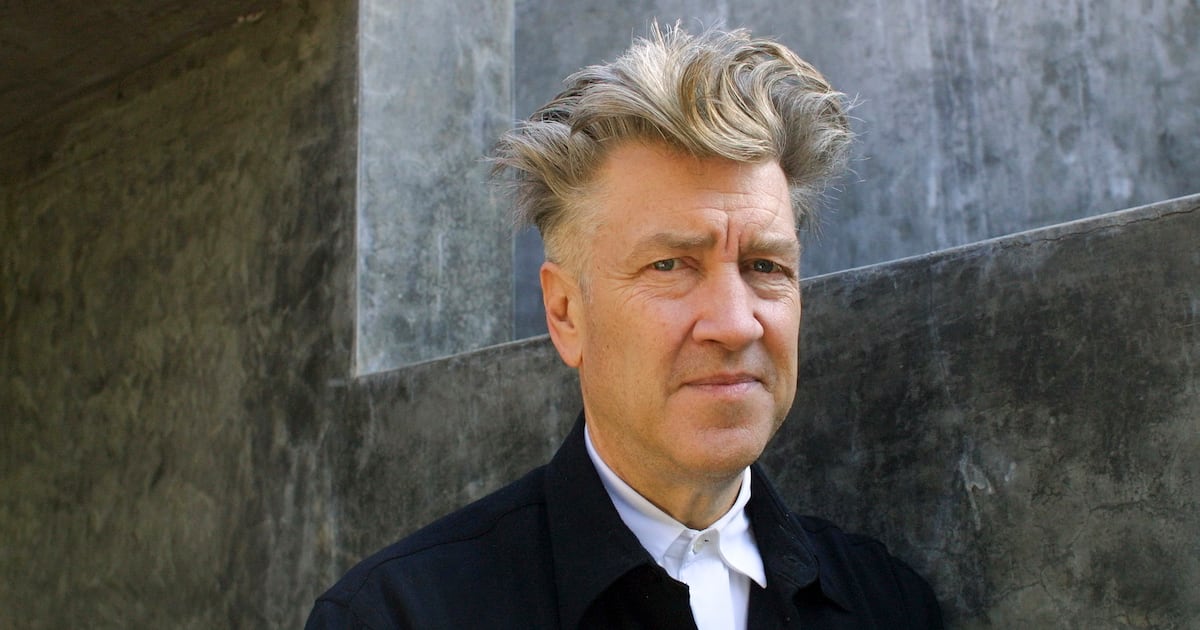
David Lynch (78) American film-maker. In 1970, he received an American Film Institute fellowship and relocated to work on the feature project that would eventually become Eraserhead. He also directed The Elephant Man; Blue Velvet; and Wild at Heart, which won the Palme d’Or at the 1990 Cannes film festival. The groundbreaking TV series Twin Peaks was a huge success. His thriller Mulholland Drive was named the best film of 2001 by the New York Film Critics Circle.
Paddy Hill (80), one of the Birmingham Six. Hill and five others were arrested shortly after the Provisional IRA bombed two Birmingham pubs on November 21st, 1974, killing 21 people and maiming and injuring more than 180. In 1991, they had their convictions overturned at the Old Bailey criminal court in London.
February
Michael Longley (85), poet. A love poet, a nature poet and a war poet, Longley’s work bore witness to the Troubles in his native Belfast, the first and second World Wars and the Holocaust. He was the author of 13 collections.
In 2010, he was honoured with a Commander of the British Empire (CBE) award, and from 2007 to 2010 he served as Ireland Professor of Poetry. In 2021, a special room at Queen’s University Belfast was named the Longley room in honour of the poet and his wife, Enda, who survives him.
March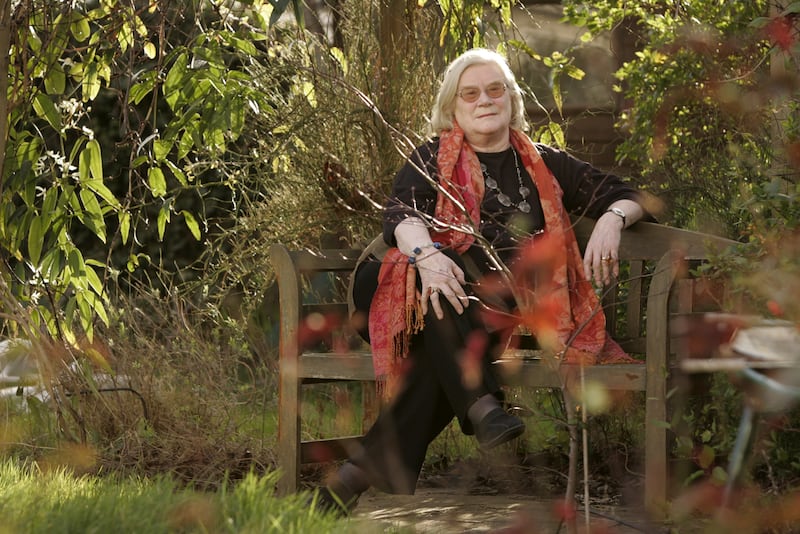 Irish author Jennifer Johnston. Photographer: Dara Mac Dónaill
Jennifer Johnston (95) novelist, playwright and short-story writer. Her awards included the Lifetime Achievement Award from the Irish Book Awards, the Irish PEN Award, the Whitbread (now the Nero Award), and a shortlisting for the Booker Prize. She was one of the writers nominated in 2014 for the position of first Irish Laureate for Fiction. Booker Prize winner Roddy Doyle described her as the greatest Irish writer ever.
Marie Quirke (60), District Court judge. She trained fellow judges, taught with the Law Society and was president of the Association of District Court Judges. In 1999, she was instrumental in setting up the Refugee Legal Service, a part of the Legal Aid Board, and was its first managing solicitor. In 2012, she was appointed a judge of the District Court.
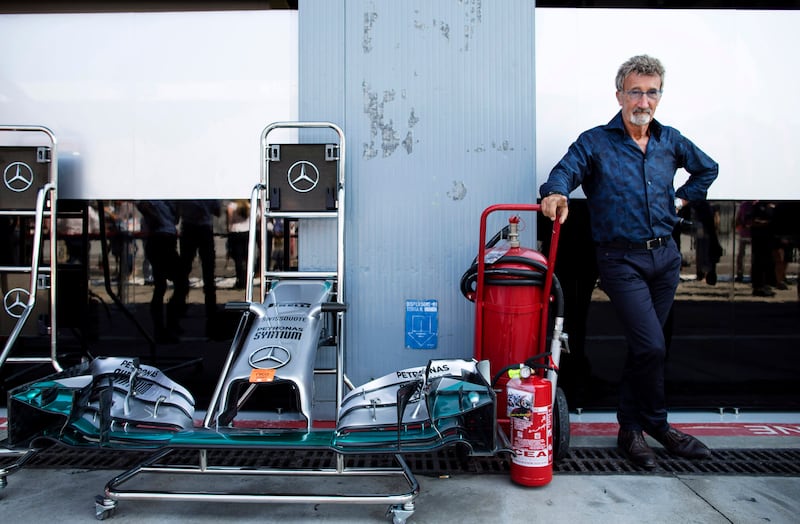 Eddie Jordan at the 2014 Italian Grand Prix in Monza. Photograph: Darren Heath/Getty
Eddie Jordan (76), motor racing entrepreneur. “We were johnny-come-latelies, noisy, brash, having a good time, giving the establishment two fingers,” Jordan told Motorsport magazine. “So we got lots of attention, lots of value for our sponsors and a huge fan base.” During his team’s lifespan from 1991 to 2005, he employed numerous top drivers including Eddie Irvine, Rubens Barrichello, the 1996 world champion Damon Hill, Heinz-Harald Frentzen and Jean Alesi.
April
Fiona McHugh (57), former editor of the Irish edition of the Sunday Times, and co-founder of the Fallon & Byrne restaurant and food hall. She was working with Bloomberg when she was recruited as business editor of the Irish edition of the Sunday Times in 1998. Among the stories she broke were Irish Life’s merger with Irish Permanent, and British Telecom’s bid to buy Esat Telecom. She succeeded Rory Godson as editor, becoming one of the few women in Ireland to edit a newspaper. She left to open Fallon & Byrne with her husband, Paul Byrne, and restaurateur Brian Fallon.
May
Virginia Giuffre (41), the first of Jeffrey Epstein’s sex-trafficking victims to go public. She famously said she was “passed around like a platter of fruit” as a teenager to rich and powerful predators. She alleged that she was forced her to have sex with Andrew Mountbatten Windsor, the former Prince Andrew. A widely published photograph showed Andrew with his hand around her waist. He said he had no memory of the occasion, or of ever meeting her, yet paid her a sum of money reported to be in the region of £11 million (€12.5 million). Her posthumously-published memoir, Nobody’s Girl, a memoir of surviving abuse and fighting for justice, was an acclaimed bestseller.
June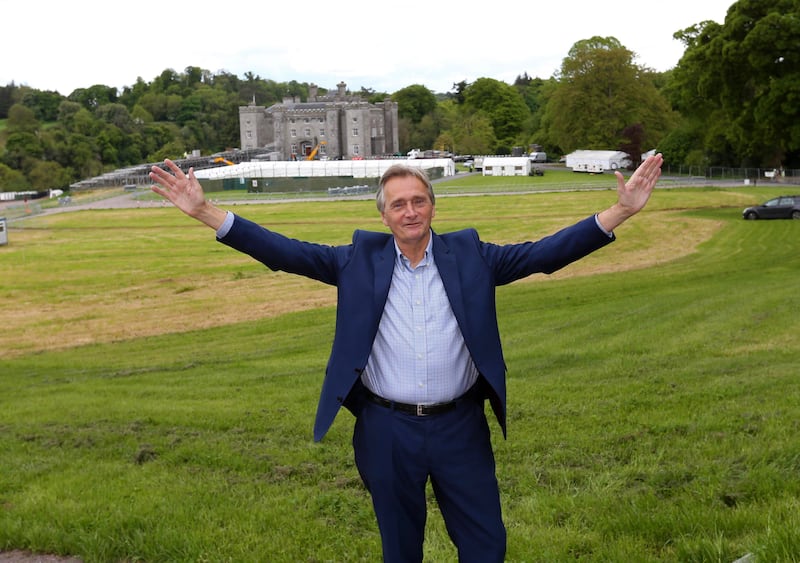 Henry Mount Charles at Slane Castle
Henry Mount Charles (74), custodian of Slane Castle. In 1976, Mount Charles took possession of Slane Castle, his ancestral mansion overlooking the Boyne. He opened a restaurant, and then a night club. He let Slane for films but most famously used the natural amphitheatre formed by the grounds in front of the castle for rock concerts. There were successful performances by Thin Lizzy, U2, The Rolling Stones, Bruce Springsteen and Bob Dylan, among others. He was traumatised by a fire at the Castle in 1991. One of his last business ventures was the Slane Distillery he started in 2009.
July
Brother Kevin Crowley (90), founder of the Capuchin Day Centre in Dublin. In 1968 Br Crowley arrived at the Capuchin Friary in Dublin’s Church Street, and soon realised that the people using the unit were in desperate need of much more than clothes. “I saw the people looking into dustbins and taking food out of the dustbins.” As a follower of St Francis, “I decided something should be done for them”, he said in 2022. The Day Centre has been a trusted place of refuge and help for countless numbers of Dublin people for decades now.
Ozzy Osbourne (76), British Black Sabbath heavy metal musician and reality television star. As the lead singer of Black Sabbath, Osbourne was one of the inventors of heavy metal. As a solo artist, he had 13 platinum albums and was given the nickname “Prince of Darkness”. This was in part due to an infamous onstage incident in which he bit the head off a bat. He took part in the MTV reality show The Osbournes, with some other members of his family, including his wife Sharon.
August
Seán Rocks (64), broadcaster and advocate for the arts. He started out as an actor and musician, but it was his work with the RTÉ Radio arts show Arena, which launched in 2009, that made his voice familiar to many. “People came back to Arena again and again simply because they knew Seán would talk to them about their work in an authentic way, always respectful of the effort they put in,” said Arena’s series producer Sinéad Egan, after his death from a sudden illness.
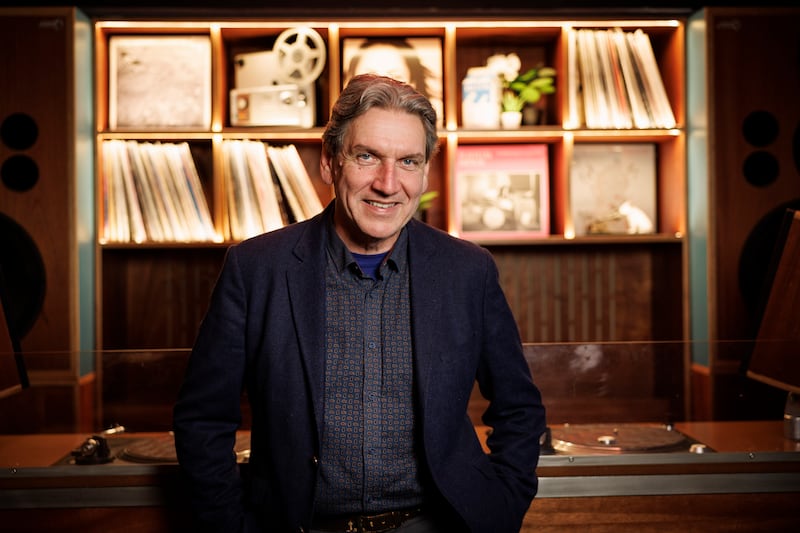 Seán Rocks. Photograph: Andres Poveda September
Conor Gearty (67), professor of law at the London School of Economics, a barrister and globally acclaimed human rights scholar and advocate. Originally from Co Longford, he did a master’s degree in Wolfson College, Cambridge. He later became a fellow of Emmanuel College, Cambridge, and got a scholarship to do a PhD in environmental law, which he achieved in 1986. In 1990, he moved to the school of law at King’s College, London, where he was appointed professor of human rights law in 1995. From 2002 to 2009, Gearty was director of the centre for the study of human rights at the London School of Economics (LSE) and was professor of human rights law at the LSE from 2002. From 2012 to 2016, he was director of the LSE’s Institute of Public Policy. In 2021, he was appointed an honorary queen’s counsel, now king’s counsel, in recognition of his services to law in England and Wales.
October
Ed Moloney (77) journalist and author. He was a key chronicler of the Northern Ireland Troubles. He worked for a number of different media outlets, including Hibernia, Magill, The Sunday Tribune and this newspaper. He was noted for the careful quality of his sources on all sides of the conflict and, consequently, the authority of the information he provided his readers. He wrote, and co-authored, several groundbreaking books, including A Secret History of the IRA. Later on, he expanded into making TV documentaries, as well as an online blog, The Broken Elbow.
November
Prunella Scales (93), British actor. An actor who worked primarily in theatre during her early career, but whose most famous part was Sybil Fawlty. There were only two series of six episodes each of Fawlty Towers, but each of the 12 is now considered a comedy classic. As Sybil Fawlty, Scales played the unperturbed and steely counterpart to her screen husband John Cleese’s chaotic Basil Fawlty.
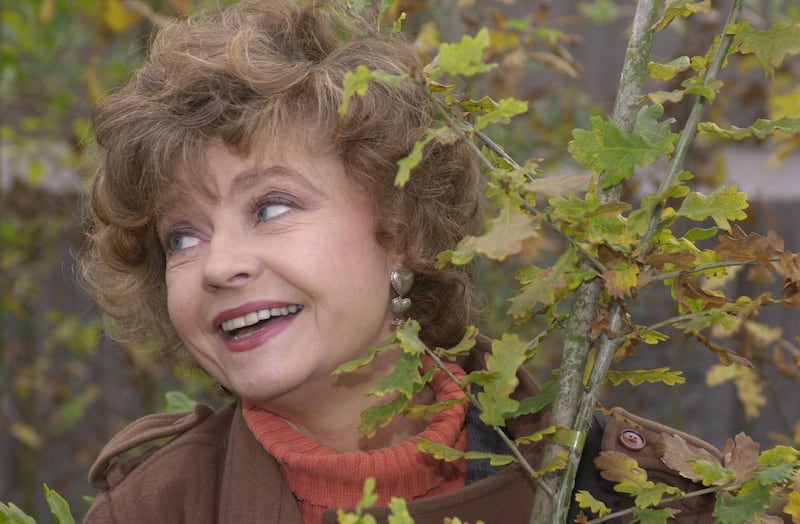 Prunella Scales. Photograph: Johnny Green/PA
David Hanly (81), broadcaster. In 1964, he joined the staff of the RTÉ Guide, where he became features editor. He left for a period to focus on his own writing, and wrote scripts for a number of radio programmes, including The Kennedys of Castleross. Some time later, he rejoined RTÉ as a trainee news reporter. Morning Ireland, which he originally co-presented with David Davin-Power, was the platform through which he became best known to the listening nation, as a formidable and compelling interviewer. His distinctive voice, was, as he said himself, the result of “about 35 years of Guinness and cigars”. After his death, one commentator observed that Hanly was the only radio presenter who could make “Good morning” sound like a threat.