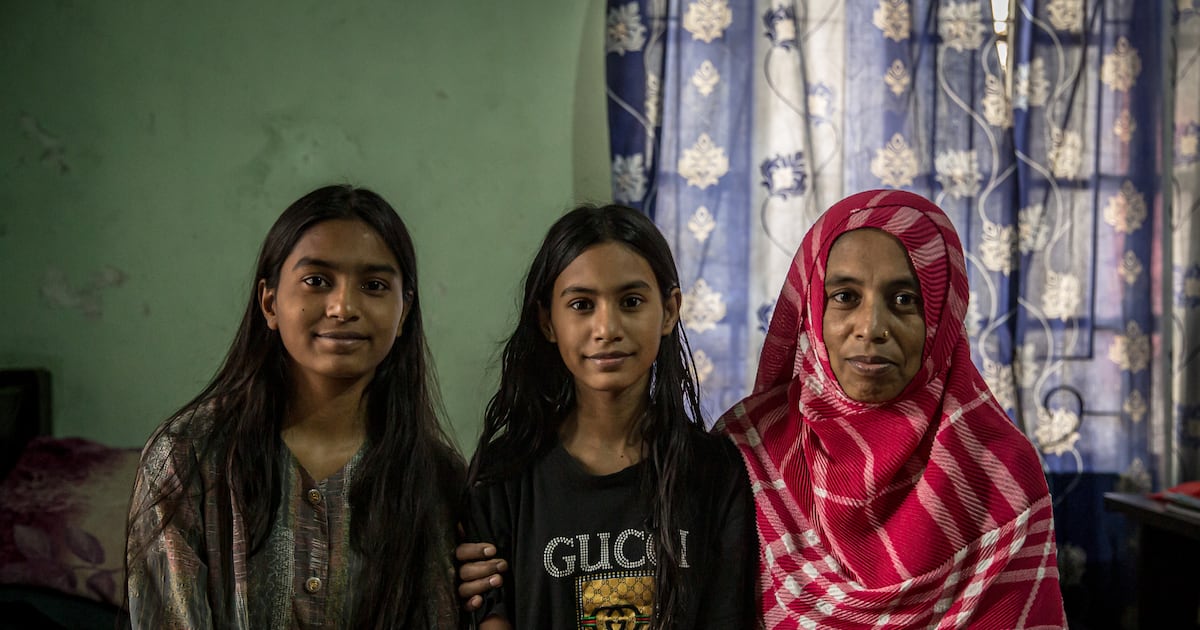
Meem Akhter had not had a day off in more than a week. The 17-year-old worked in the garment factory until 11pm the previous evening, starting again at 8am that morning.
She only came home to sleep, in a small apartment with her mother and three brothers, in an area known as the “dog killing cemetery”.
Meem’s father – once a farmer – was partially paralysed for more than two years, after suffering a stroke, before he died. The family didn’t have much, “but still we had a piece of land,” says Meem’s mother Yasim Akhtar, a small, thin woman wearing a dark flowery hijab, aged around 50. But the “big river, a lot of water, storms and rains” meant the land was underwater during the “good season,” forcing the family away from home and to the big city.
“In the village, we had a lot of open space and air,” Yasim reminisces. But “all the kids were very young and I was young too”. She sold their livestock to cover the costs of relocating to Dhaka. Bringing four children to the city alone was “tough” but “we were trying to survive”.
The stress of caring for them left her with lasting health issues, including high blood pressure, she says. “I look like a sick person but I was not like that before.”
Bangladesh is one of the world’s largest exporters of garments, topped only by China last year, and Ireland’s shops are filled with the products of Bangladeshi labour. Check any label, and there’s a high likelihood that you will see the words: “made in Bangladesh”.
According to the Observatory of Economic Complexity (OEC), Bangladesh exported €379 million worth of goods and services to Ireland in 2023, including €73 million of knit T-shirts. The EU was Bangladesh’s largest trading partner, with textiles making up almost 94 percent of the EU’s imports from there in 2024.
The clothes travel much further than most of Bangladesh’s millions of garment workers ever will. “I never thought of where the clothes go,” says Meem. “We consider it work, but we know they might be sold here or leave the country.”
Experts say Bangladesh is also one of the most vulnerable countries in the world to climate change, making the industry a kind of poisoned chalice for its citizens.
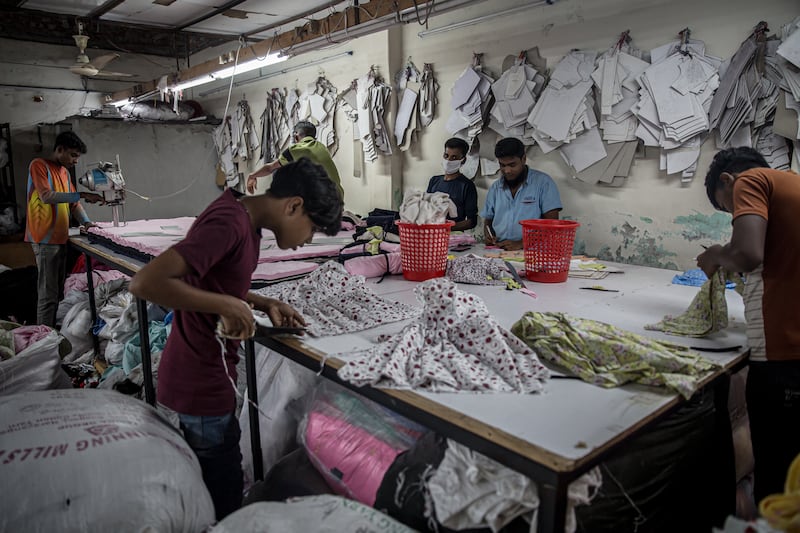 Workers inside a garment factory in the Mirpur area of Dhaka, Bangladesh
Estimates and calculations vary, but the fashion industry is generally believed to be responsible for between four and 10 per cent of global emissions. Bangladesh has a population of roughly 174 million people in an area less than twice the size of the island of Ireland.
Capital Dhaka – with almost 37 million people – is the world’s second most populous city, according to a recent UN report. Climate change – which makes weather conditions more extreme and unpredictable – is a major driver of internal migration from rural to urban areas. In certain areas, such as Bhola in the south, land mass reduces annually.
In Dhaka, I visited two garment factories, interviewing an owner, a manager and five female workers, and spending time in three of the workers’ homes. At least two of the workers moved to Dhaka after they were displaced by weather conditions which destroyed family houses.
“Dhaka, it’s a prison,” says Kulsum Begum (27), who came to the city as a teenager and now earns 11,000 taka a month (€76.62) operating a sewing machine in a small factory in the Mirpur area. She pays 6,000 taka (€41.80) each month for a single room which she lives in with her husband, her four-year-old child and one other person.
[ Bangladesh factory disaster forces West to think about high cost of cheap clothesOpens in new window ]
Women make up a growing percentage of the garment industry’s workforce, one factory owner said, as men opt for other professions, including driving the ubiquitous electric rickshaws, which – even when rented – can result in better pay along with less taxing hours.
Originally from Kishoreganj, in eastern Bangladesh, Eti Akhtar (18) has been working and living alone in Dhaka since she was 14. She is illiterate and has no contact with her family. Her father was a gambler who forced her into domestic labour, where she was starved and beaten.
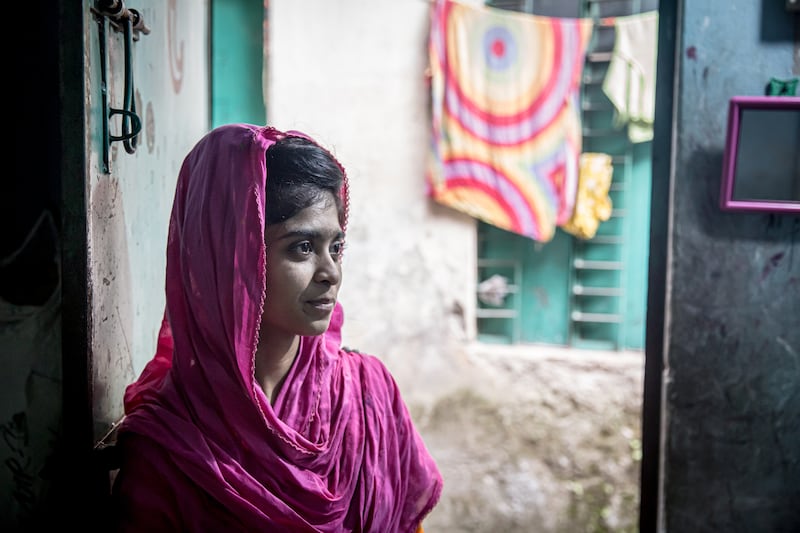 Eti Akhtar (18) has been working and living alone in Dhaka for the past four years
 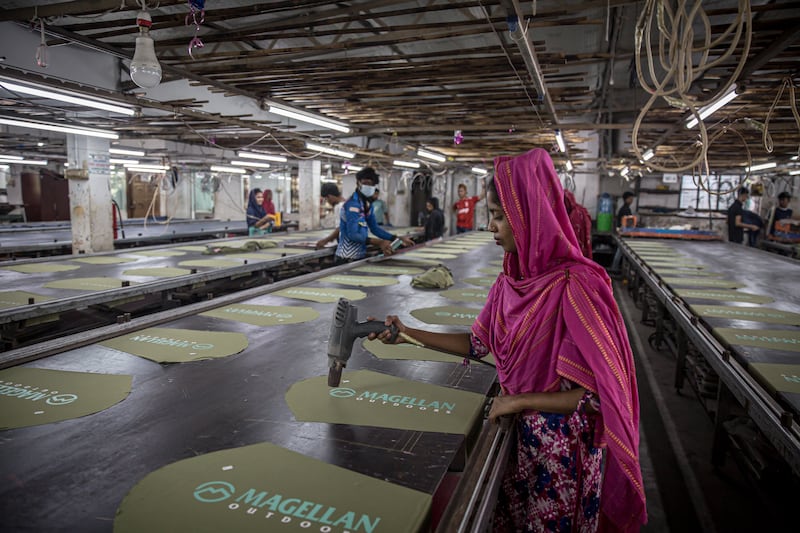 Eti and garment workers pictured in a clothing printing factory in Dhaka, Bangladesh.
Now she wakes early in the morning to cook some rice or other basic food – when she can afford to buy it. She packs it in a Tupperware container, before walking 45 minutes to the garment factory, where she starts at 8am.
Eti normally works six days a week until 8pm or 11pm, depending on commissions. Her base salary is 9,000 taka (€62.69) a month, with €97.52 for overtime – without which life is a real struggle, Eti said. Another benefit of working overtime is the owner provides some snacks, like eggs and bananas, she adds. “I’m ok if I get good food, that’s my only goal.”
On nights that they finish at 11pm, Eti worries about harassment. If she boards a bus, “they have a lot of abuses, [men] knock and touch us,” she says. Sometimes she puts on a niqab before she weaves alone through alleyways and streets, past shops and mosques, to get to and from the factory.
Her home is a spotlessly clean single room mostly taken up by a bed, with a water container and some glasses, plates and bowls tidied away neatly at one side. It is inside a compound with 11 other rooms. There is a shared cooking area, and toilet and shower area – she says she is lucky that people do not fight over them, as they do elsewhere. Her rent is 3,200 taka a month (€22.33).
In her free time, she watches reels on TikTok or Facebook, avoiding making new friends as “I think friends get you into bad influences”.
“I don’t want to work all my life. I want to get settled with someone who understands me properly, a good human being, and make a sewing business,” she says.
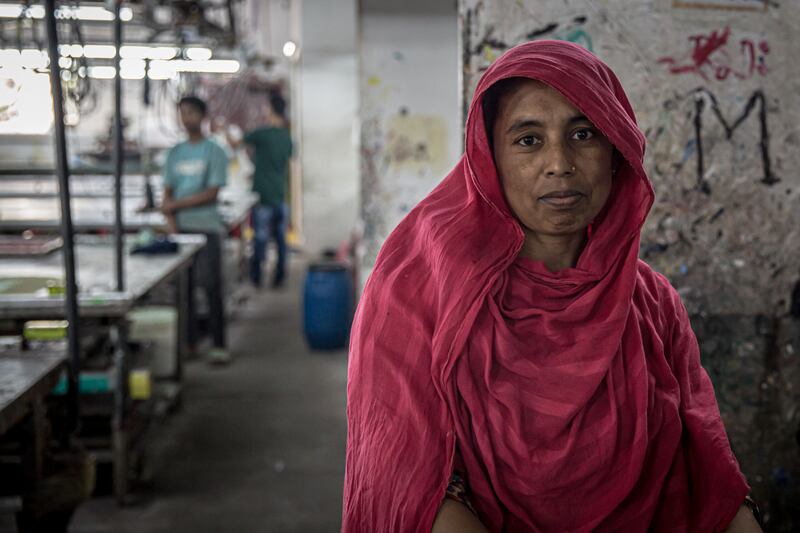 Jharna (39) works to support her children through education, but her daughters say they miss her and want her to leave the garment industry
Jharna (39), her husband and her daughters share a flat with another family – six people living in a two-bedroom apartment up a few flights of uneven stairs across the road from a chicken farm. Both parents work long hours. They are still paying back the $2,000 they borrowed to relocate to Dhaka in search of work.
“We always miss her,” says Jharna’s 13-year-old daughter Sumiya about her mother. “Because of our economic situation our mom has to work [in a garment factory] … She comes back very late at night, 11pm or midnight. We don’t want her to work in that sector anymore.”
Sumiya dreams of making the national football team. Her sister, 12-year-old Jhuma – who has been suffering from dengue fever for almost two weeks – would like to become a doctor.
“Education is very expensive,” explains Jharna. It costs 2,000 taka (€13.96) monthly for both children to go to school, not including additional costs like their books, copybooks and uniforms.
“We want our children to be able to carry on in education,” she says, but “we don’t know what will happen in the future”. She did not know if her own job was secure, saying women were deemed undesirable as garment workers after they turned 40; sometimes even from their late 20s.
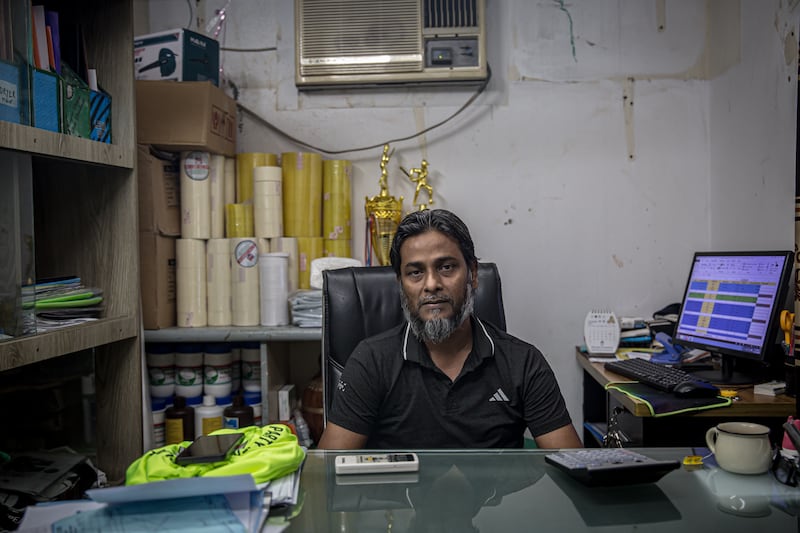 Mohammad Mojibur Rahman (48), the CEO of a printing factory in Dhaka, says he is trying to improve the industry
Mohammad Mojibur Rahman (48), the CEO of a garment printing factory, said he wanted to be honest about the reality of what happens there.
That truth is complicated. Some of his workers are underage, but Rahman sees their employment as a humanitarian effort, because otherwise the girls would have no way to survive at all. Bangladesh is not a country where there are state supports for people like them. Meem said she has mixed feelings about prohibitions on minors working.
“There are a lot of families like me with no other way. They need support. How else are they meant to survive?” she asks.
Rahman said he is always making plans for how to improve the industry, including introducing different types of benefits and forming a new association for clothes printing factories, like his.
But conditions are tough, Rahman acknowledged. At the same time, global market forces mean businesses in Bangladesh have a keen awareness around the importance of providing cheap labour, because otherwise international buyers will reallocate business to other countries in the region.
Child labour scandals and safety incidents already encouraged buyers to look elsewhere, leading to a negative impact on Bangladesh’s people and economy, Rahman said, who desperately need this work. A portion of the money is also lost to sourcing agents – he would like to see international buyers purchase goods in a more direct way.
There have been other incidents which prompted international attention and condemnation, most notably the Rana Plaza collapse in 2013. Around five garment factories were operating in the plaza at the time. At least 1,134 people were killed and about 2,500 injured, with a 19-day search for survivors. Cracks had been discovered in the building and publicised the day before the collapse, but the garment factories continued operating and workers were ordered to keep coming. Afterwards, there were protests about safety standards and widespread calls for better conditions.
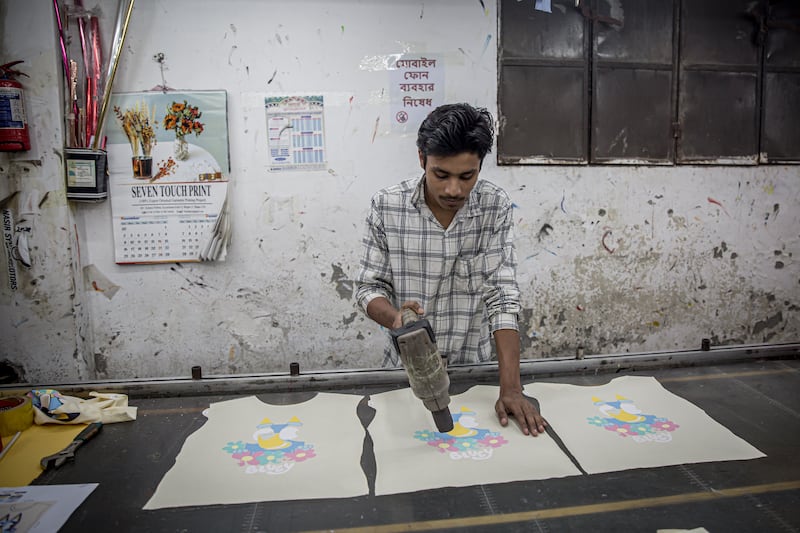 A man working in a garment printing factory in Dhaka, Bangladesh
There have been many more incidents that got much less attention. In mid-October this year, at least 16 people died in a fire in a garment factory and chemical warehouse in Dhaka’s Mirpur area, where we visited.
Political uncertainty is also causing fear that buyers will move their business elsewhere. In August 2024, prime minister Sheikh Hasina fled the country after 15 years of rule, following weeks of unrest and protests which the UN said left as many as 1,400 dead – the vast majority shot by security forces.
Elections are scheduled to take place in February 2026. Over the past two months, there have been dozens of cases of arson reported across Dhaka.
I reached out to H&M, Penneys/Primark and Dunnes Stores – three brands which source clothing from Bangladesh.
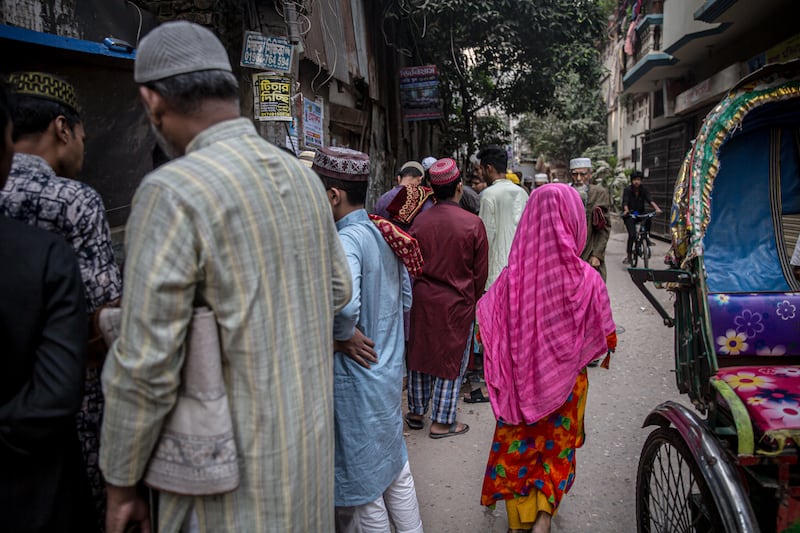 Sally Hayden Bangladeshi garment industry brings poor conditions Eti Akhtar (18) worries about harassment when she goes to and from her job in a garment factory.
A H&M spokeswoman said the company has one of the highest standards and requirements in the fashion industry, and “one of the most advanced and ambitious climate agendas”. Suppliers must comply with a commitment which “clearly states that child and/or forced labour is unacceptable, and that any overtime must be voluntary, among many other requirements”.
Dedicated teams in Bangladesh ensure those requirements are being met, the spokeswoman said. “Empowering workers and trade unions, preventing and resolving conflicts at factory level and improving conditions for thousands of garment workers worldwide remains one of the cornerstones of our social agenda.”
A Primark spokeswoman said the company was committed to supporting safe and decent working conditions, including in Bangladesh. “While we don’t own the factories where our clothes are made, we work closely with our suppliers, factories and partners to assess building safety and working conditions, including through regular social audits.”
Dunnes Stores had not responded to a request for comment at the time of publication.
[ The shocking waste in the clothes we wearOpens in new window ]
Meanwhile, millions of Bangladeshi workers continue to work long hours for low pay to make the clothes we wear.
Yasim’s three sons – the youngest of whom is 18 – all work in the garment industry too. When they have time off, they sleep on a bed in one room – the walls around it streaked with the blood of mosquitos.
Meem, the baby of the family, dreams of returning to their rural area and rebuilding the mud home they used to live in using brick. It pains her mother – whom she shares a bedroom with – to see her working so hard.
“I always think about my kids,” Meem’s mother says. “If I could give them the whole world I would, but the situation is not like that … We are still not doing perfectly but it is better than before.”
- Raahat Alam assisted with this reporting.
- This reporting was supported by the Simon Cumbers Media Fund.