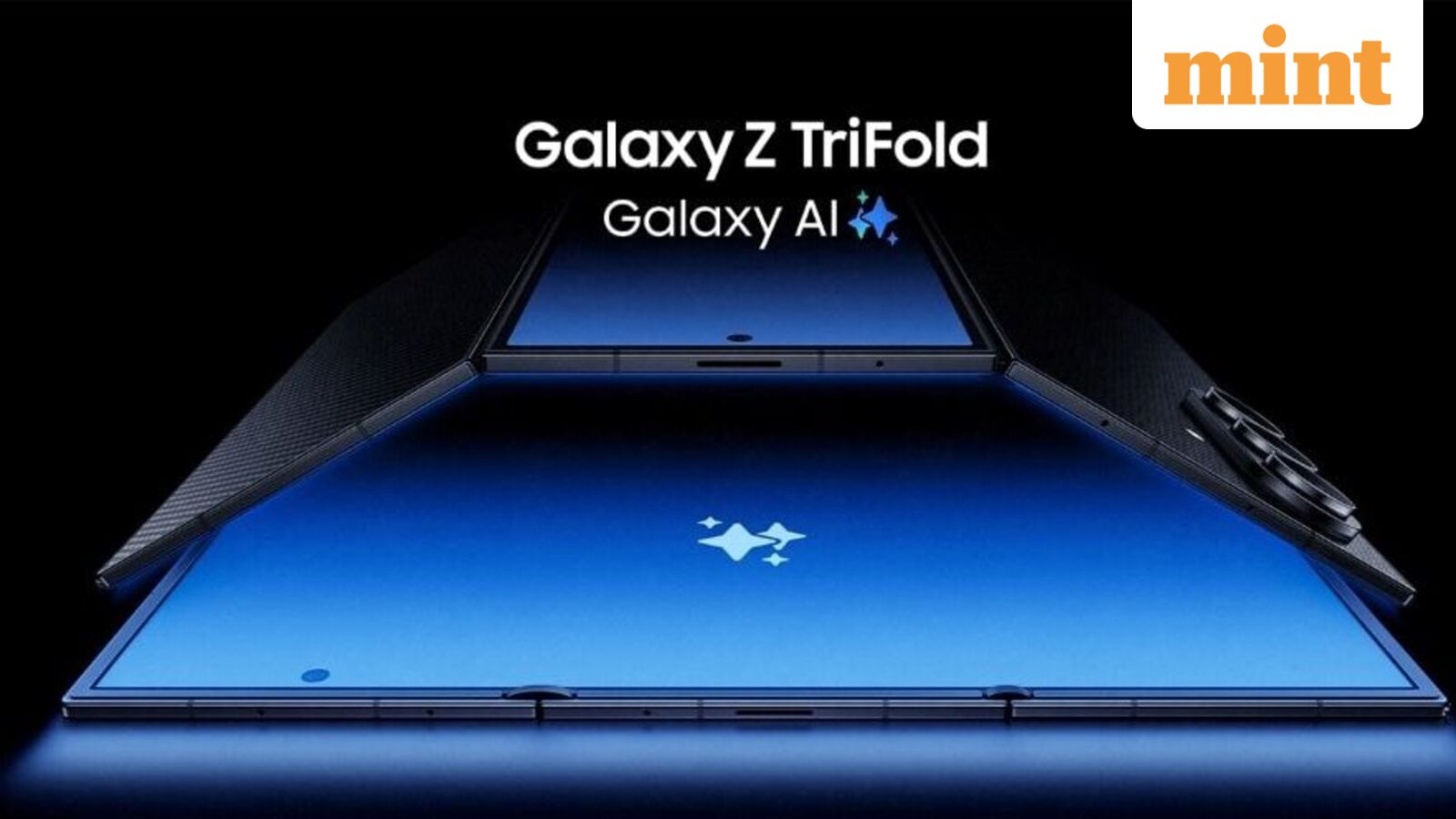
Samsung’s first triple-foldable smartphone, the Galaxy Z TriFold, has come under scrutiny after a widely watched durability test revealed significant weaknesses, despite the company’s claims of improved toughness.
Scratches appear sooner than expected
In a new video by popular tech YouTuber Zack Nelson, better known as JerryRigEverything, the Galaxy Z TriFold was subjected to a series of standard durability tests. The outer display, protected by Gorilla Glass Ceramic 2, began showing visible scratches at level six on the Mohs hardness scale, with deeper marks appearing at level seven. This behaviour aligns with conventional smartphone glass rather than any next-generation protection.
The inner flexible display proved even more vulnerable. Light scratches appeared at level two, while deeper grooves formed at level three. According to Nelson, this means everyday items such as keys, coins or fingernails could easily damage the inner screen.
Fire test reveals fragility
The fire resistance test further raised concerns. The outer OLED display began to show permanent damage after around 17 seconds of exposure to a lighter flame, with pixels turning dark and failing to recover. The inner display fared worse, showing visible damage after just 10 seconds. Neither screen recovered once the heat source was removed.
Dirt and dust cause audible damage
During the dirt test, Nelson poured loose debris onto the unfolded display and moved it around. The result was an audible crunching sound coming from the hinge mechanism. Dust also collected around the internal magnets, suggesting that the complex folding system may be particularly vulnerable to fine particles.
Bend test ends in failure
The most dramatic moment came during the bend test. While the Galaxy Z Fold 7 had previously survived similar stress, the Galaxy Z TriFold did not. When pressure was applied from one corner, the device visibly warped. Bending it in the opposite direction caused a loud cracking sound, followed by the screen going completely black.
According to Nelson, this marks the first time a Samsung smartphone has completely failed his durability test. Although the hinge itself remained intact, the phone’s thin frame, particularly around the antenna lines, appeared to be the main point of structural weakness.