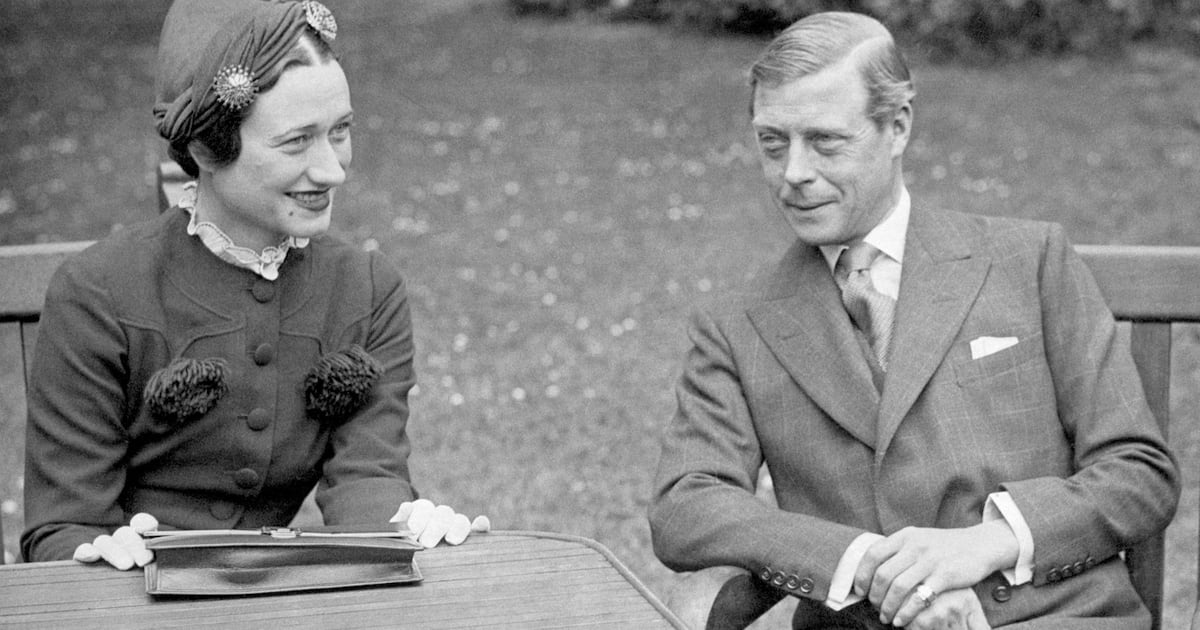
Britain strongly urged the Irish Government nearly fifty years ago not to release key 1936 records about King Edward VIII’s abdication, especially a key conversation between Éamon de Valera and a top British official.
Displaying the sensitivity surrounding the abdication even 30 years on, London was deeply worried in June 1967 that Irish records could bring an unwelcome public gaze onto the still-sensitive controversy.
In a major constitutional crisis, Edward had stepped down after less than a year on the throne in favour of his younger brother, King George VI, so that he could marry an American divorcée, Wallis Simpson.
London was concerned that “a crucial conversation” about the crisis in 1936 between Éamon de Valera, who was then president of the Executive Council, the role which would later become taoiseach, and a top Dominions Office official, Harry Batterbee, could be revealed, newly-released State papers reveal.
The Irish side did not have a record of the de Valera/Batterbee conversation, as it turned out, but it did have a note marked “secret and personal” sent to de Valera on December 4th 1936 by British prime minister Stanley Baldwin about the looming Constitutional crisis.
[ What did Éamon de Valera ever do for us?Opens in new window ]
In it, Baldwin explained that Edward had sought permission to address the British people on the radio, explaining his reasons, but Baldwin turned it down, saying that such a course of action would be “unconstitutional”.
“He could not go on bearing heavy burdens resting on him as King unless he could be strengthened by a happy married life and he is firmly resolved to marry the woman he loves when she is free to marry him,” he told de Valera.
“Neither Mrs Simpson nor he has ever sought to insist that she should be Queen. All their desire was that their happiness should carry with it a proper and for her befitting wife,” he went on, adding that the idea of such a radio broadcast was “quite improper”.
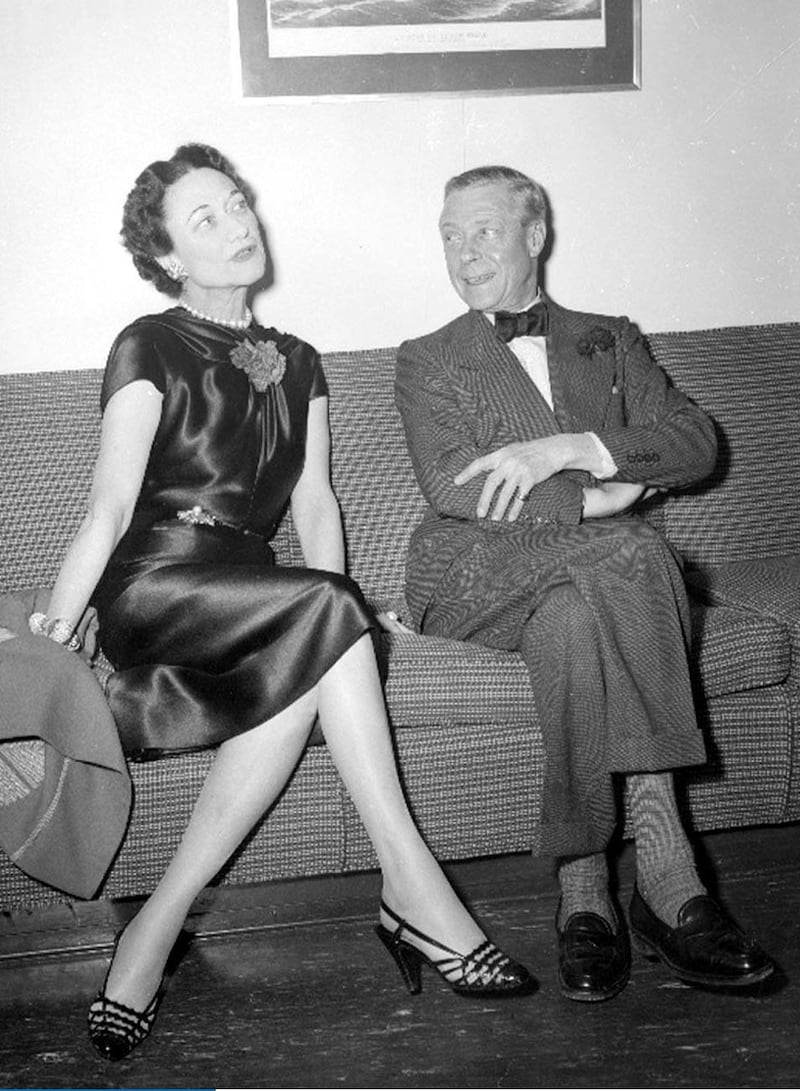 The Duke of Windsor, formerly Edward the VIII, and Duchess of Windsor Wallis Simpson. Photograph: PA
De Valera kept most of the documentation from the time, especially sensitive telegrams in his personal papers, for over three decades, but he did not release them to the Department of the Taoiseach’s record-keepers until September 30th 1965 when he was president.
Edward was still the head of state of the Irish Free State, which explains why de Valera was briefed in the same way as other leaders of the Commonwealth nations, including those of Canada, Australia and New Zealand.
The records are only now being released since they have been included in the Department of the Taoiseach’s release of its 1995 papers to the National Archives, which are now available for public viewing.
The Fianna Fáil government led by Jack Lynch was contacted on June 16th 1967 by the British Ambassador to Ireland, Adam Gilchrist, who told them that London would not be releasing its abdication records and requesting that Dublin should follow suit.
The British decision, Gilchrist told the then Department of External Affairs, “was in accordance with the normal principle that records concerning the Royal family are withheld indefinitely”, before expressing hope that Dublin would “feel able” to do the same.
Saying that it was “desirable” that all the governments concerned at the time “should march in step”, Gilchrist urged that Dublin would “feel able to withhold similarly from public inspection all official records relating to the abdication.”
The Irish side were willing to help from the off, with an External Affairs official noting that the secretary of the department, HJ McCann “was disposed to fall in with the British wishes in this respect”.
In early January 1968, officials reporting to Mr McCann told him that they could “see no likelihood in the foreseeable future” whereby files held by the Irish about the abdication would be released, noting that they had “carefully recorded” London’s concerns.
A December 4th 1936 secret telegram to Dublin warned that a decision on the King’s status was now becoming necessary: “Feel certain postponement decision much longer would have disastrous results throughout British Commonwealth.”
The secret note also indicated that Edward now appeared to be “wavering” in his previous determination to abdicate – and that he wanted to marry Mrs Simpson without her becoming Queen.
Such a proposal was “impractical”, Baldwin told de Valera: “In order to avert danger further delay … Cabinet have decided I should tell King this afternoon that he must make very early decision.
“Present choice before him is give up Mrs S or voluntarily abdicate. We would have preferred consulted further with you before taking this step. But situation has become so grave that it brooks no delay.” Edward abdicated six days later.
[ Are we still living in De Valera’s Ireland?Opens in new window ]