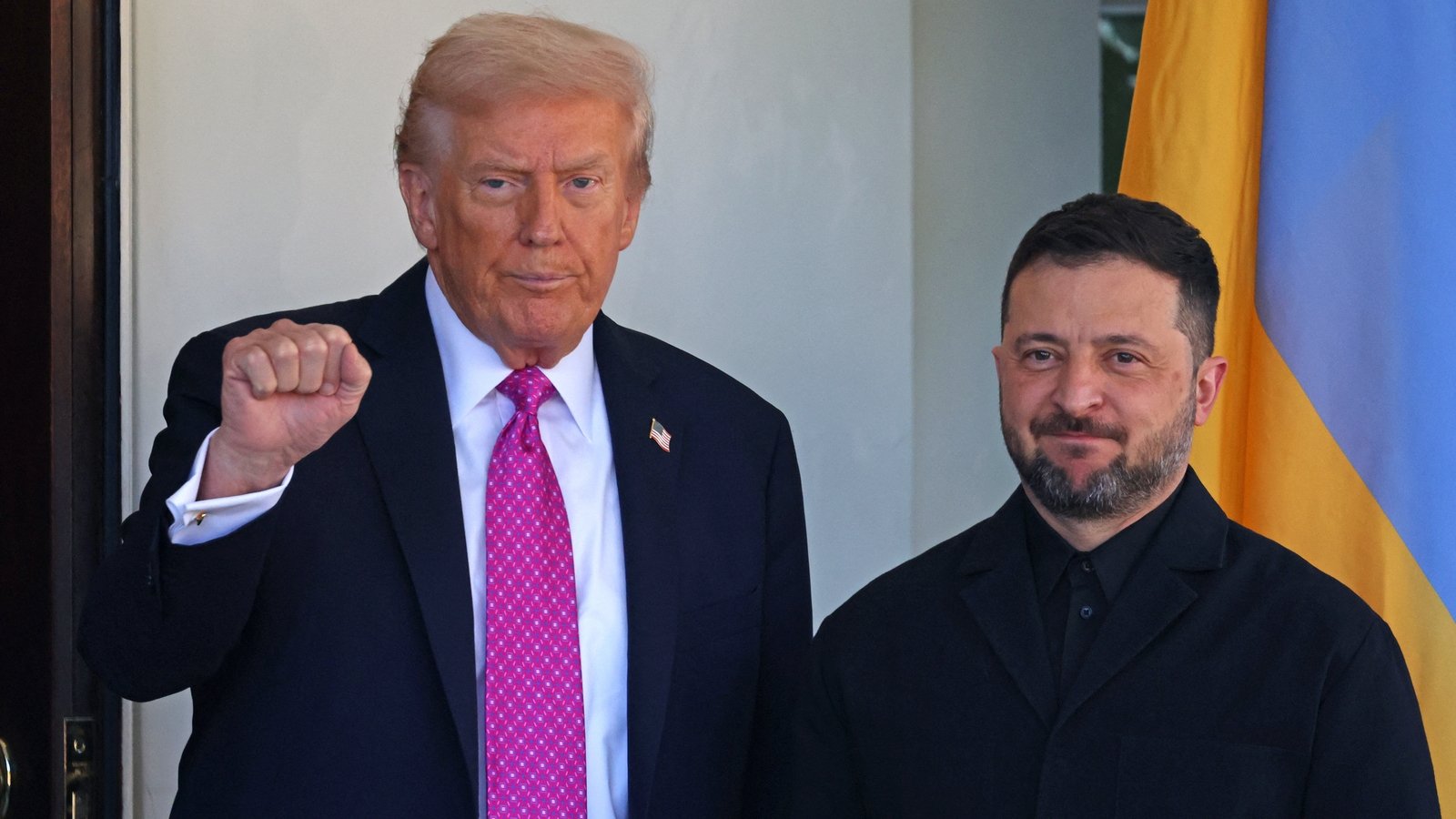
Ukrainian President Volodymyr Zelensky and US President Donald Trump will meet in Florida to hammer out a plan to end the war in Ukraine, but face major differences on crucial issues and provocations from Russian air attacks.
Russia struck Kyiv and other parts of Ukraine with hundreds of missiles and drones yesterday, knocking out power and heat in parts of the capital. Mr Zelensky called it Russia’s response to the ongoing US-brokered peace efforts.
He has told journalists that he plans to discuss the fate of eastern Ukraine’s contested Donbas region during the meeting at Mr Trump’s Florida residence, as well as the future of the Zaporizhzhia nuclear power plant and other topics.
The Ukrainian president and his delegation arrived in Florida last night, Ukraine’s Deputy Foreign Minister Serhiy Kyslytsya said on X.
“Good evening, Florida!” Mr Kyslytsya wrote, accompanying the post with a photo of an aircraft bearing the US president’s surname on the fuselage.
Russia has repeatedly insisted that Ukraine yield all of the Donbas, even areas still under Kyiv’s control, and Russian officials have objected to other parts of the latest proposal, sparking doubts about whether Russian President Vladimir Putin would accept whatever today’s talks might produce.
The Ukrainian president told Axios on Friday he still hopes to soften a US proposal for Ukrainian forces to withdraw completely from the Donbas. Failing that, Mr Zelensky said the entire 20-point plan, the result of weeks of negotiations, should be put to a referendum vote.
Axios said US officials viewed Mr Zelensky’s willingness to hold a referendum as a major step forward and a sign that he was no longer ruling out territorial concessions, although he said Russia would need to agree to a 60-day ceasefire to allow Ukraine to prepare for and hold such a vote. A recent poll suggests that Ukrainian voters may also reject the plan.
Good evening Florida! pic.twitter.com/u80obRknFQ
— Sergiy Kyslytsya 🇺🇦 (@SergiyKyslytsya) December 27, 2025
Mr Zelensky’s in-person meeting with Mr Trump, scheduled for 1pm (6pm Irish time), follows weeks of diplomatic efforts. European allies, while at times cut out of the loop, have stepped up efforts to sketch out the contours of a post-war security guarantee for Ukraine that would be supported by the United States.
Ukraine and the US have agreed on many issues, and Mr Zelensky said on Friday that the 20-point plan was 90% finished. But the issue of what territory, if any, will be ceded to Russia remains unresolved.
While Russia insists on getting all of the Donbas, Ukraine wants the map frozen at current battle lines.
The United States, seeking a compromise, has proposed a free economic zone if Ukraine leaves the area, although it remains unclear how that zone would function in practical terms.
Mr Zelensky, whose past meetings with Mr Trump have not always gone smoothly, worries along with his European allies that Mr Trump could sell out Ukraine and leave European powers to foot the bill for supporting a devastated nation, after Russian forces took 12 to 17sq.km of its territory per day in 2025.
Russia controls all of Crimea, which it annexed in 2014, and since its invasion of Ukraine nearly four years ago has taken control of about 12% of its territory, including about 90% of Donbas, 75% of the Zaporizhzhia and Kherson regions, and slivers of the Kharkiv, Sumy, Mykolaiv and Dnipropetrovsk regions, according to Russian estimates.
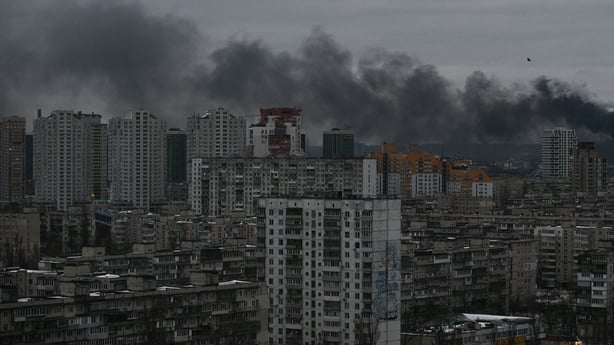
Yesterday’s attack on Kyiv killed one person and left dozens of others injured
Mr Putin said on 19 December that he thought a peace deal should be based on conditions he set out in 2024: Ukraine withdrawing from all of the Donbas, Zaporizhzhia and Kherson regions, and Ukraine officially renouncing its aim to join NATO.
Ukrainian officials and European leaders view the war as an imperial-style land grab by Moscow and have warned that if Russia gets its way with Ukraine, it will one day attack NATO members.
The 20-point plan was spun off from a Russian-led 28-point plan, which emerged from talks between US special envoy Steve Witkoff, Mr Trump’s son-in-law Jared Kushner and Russian special envoy Kirill Dmitriev, and which became public in November.
Subsequent talks between Ukrainian officials and US negotiators have produced the more Ukraine-friendly 20-point plan.
Yesterday’s air attacks show that Mr Putin does not want peace, Mr Zelensky said to reporters after arriving in Halifax, Nova Scotia, where he met Canadian Prime Minister Mark Carney.
In a brief statement with Mr Zelensky by his side, Mr Carney said peace “requires a willing Russia.”
“The barbarism that we saw overnight – the attack on Kyiv – shows just how important it is that we stand with Ukraine in this difficult time,” Mr Carney said, pledging C$2.5 billion (€1.55bn) in additional economic aid to Ukraine.
European Commission President Ursula von der Leyen, who spoke with Mr Zelensky along with other European leaders yesterday, said on X that their shared objective remained “a just and lasting peace” that preserved Ukraine’s sovereignty and territorial integrity, while strengthening the country’s security and defence capabilities.
Mr Zelensky said he would speak with European leaders again after his meeting with Mr Trump.