Earlier this month Australia became the first country in the world to ban social media for children under the age of 16. It’s a move that’s being watched closely around the globe, not least by those aged under 16, wondering if this could become their reality too.
Here, Taoiseach Micheál Martin said “there needs to be more debate on whether blanket bans are the way to go”, while Tánaiste Simon Harris said he is “very supportive of the idea of social media being restricted to people above a certain age”.
But what do those likely to be affected if a similar ban was to happen in Ireland think?
Sarah Davitt (15), from Blackrock, Co Dublin, recently returned from a trip to Brussels with the Webwise Youth Panel, which is focused on raising awareness of online safety.
“I personally would be against it [the ban] being brought in to Ireland,” she says. “By banning something outright, less education is going to be put forward. If we’re trying to educate our youth on social media, we cannot do that unless we have the use of social media.”
She says “restrictions and safety by design” are more appropriate. If a ban was to happen, however, she feels it should be geared towards 12- and 13-year-olds.
She believes a ban will make social media “more attractive”.
“Strict parents create sneaky children … If you bring in the ban you’ll really see that being played out.
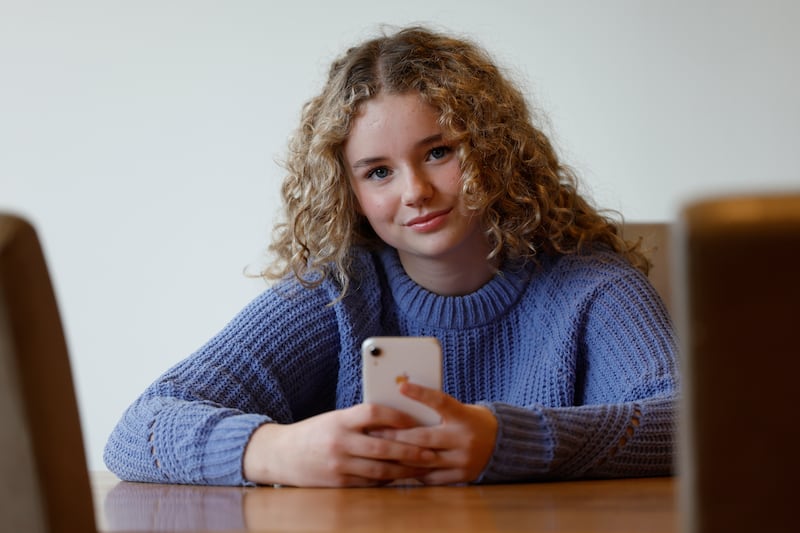 Sarah Davitt (15) says banning social media for children up to 16 is ‘not the solution’. Photograph: Nick Bradshaw/ The Irish Times
“I don’t think people realise how easy it is to work a VPN,” Sarah says, referring to a virtual private network. “Changing the country’s location is so phenomenally easy … I’ve seen my friends do it when their parents are really strict on social media … Most people my age, even if they’re allowed or not allowed social media by their parents, have accounts.”
She says there needs to be more education and “digital media literacy”.
Strict parents create sneaky children … If you bring in the ban you’ll really see that being played out
— Sarah Davitt
“If we bring in this ban we’re just going to presume kids aren’t on social media, because they shouldn’t be there, which then just creates a worse social media space … Without having social media companies held accountable for keeping online safe for kids, it’s not going to be created safe for anyone else.”
She points also to the opportunities social media creates for people who are part of minority groups to connect.
“Most people have seen harmful videos on the internet. I think most of my friends and I saw the video of when Charlie Kirk was shot … Obviously the trad wife trend, that has been very prevalent on social media recently. I understand that the Government is trying to help us and trying to protect us. And I do agree that something has to be done, and done soon … banning it at 16 is just not the solution.”
Zach Moore (14), from Greenhills, Dublin, uses WhatsApp, Snapchat and YouTube mostly. Social media is important to him. He too is part of the Webwise Youth Panel.
That Andrew Tate fella. I remember getting a load of his videos at one point for a while, and then they just stopped
— Zach Moore
“If I’m bored, I’d probably go on social media. If I needed to know something, I’d look it up. And I talk to my friends as well,” Zach says. If he comes across misogynistic, racist or other unacceptable content he says he ignores it or reports it.
“That Andrew Tate fella. I remember getting a load of his videos at one point for a while, and then they just stopped. He seems like a bit of an extremist,” Zach says. He can see how this material can target boys.
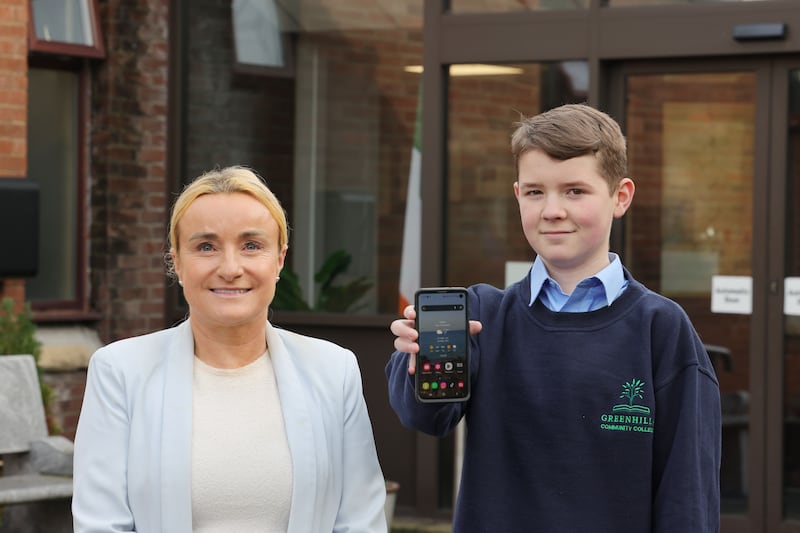 Maria Donoghue, business teacher and Webwise programme co-ordinator at Greenhills Community College, and third-year student Zach Moore (14). Photograph: Alan Betson
“I can definitely why they’d want to ban it, but to be honest I don’t think a complete ban would solve anything … I think they would have been better to have mandatory parental controls. Leave it up to the parents.”
Zach worries he spends too much time on social media sometimes. But he thinks if a ban was introduced in Ireland young people might spend more time trying to get around the ban rather than doing other things.
He thinks some adults understand how important social media is to young people. “But some think that it’s all bad,” he says. “I don’t think that it’s all bad, but there definitely are certain areas that are malicious, or there’s no good intent.”
[ Could Ireland follow Australia and ban under-16s from social media?Opens in new window ]
He’d like to see “stricter moderation on platforms” and more education and support provided to teenagers on how to navigate problematic content that they might come across.
He thinks the youth voice is important. “It’s definitely good to hear from people who are going to be directly affected, or people who are at risk of coming under the ban.” He expects adults and younger people may hold polar opposite views.
Zach doesn’t think adults necessarily know best on this. “Especially with social media because it’s only really gained this much traction over the past 15 years.”
Eve Cullen, from Tipperary, is 15. She uses TikTok, Instagram and Snapchat.
I go online and I’m able to find thousands of other people who also enjoy that hobby and I can talk to them about it
— Even Cullen
She feels “in theory it’s a good idea to stop letting kids use social media” but argues that a cut-off age of 16 is too high. “Eleven or 12 would be perfect.” At 15, she says, “a lot of our lives revolve around social media and it’s important to have”. She believes people will easily find a way around any ban. “I feel like a lot of the people who brought in this ban might not have kids themselves. Parents might know more about how kids are going to get around it.”
Many young people find their “community” online, Eve says. She uses Snapchat to call and text people she already knows. “It’s great to meet new people on TikTok.” Eve says most young people have their wits about them when it comes to the danger of being contacted by strangers who may not be who they claim to be. “I don’t think it’s as big a problem as a lot of people make it out to be.”
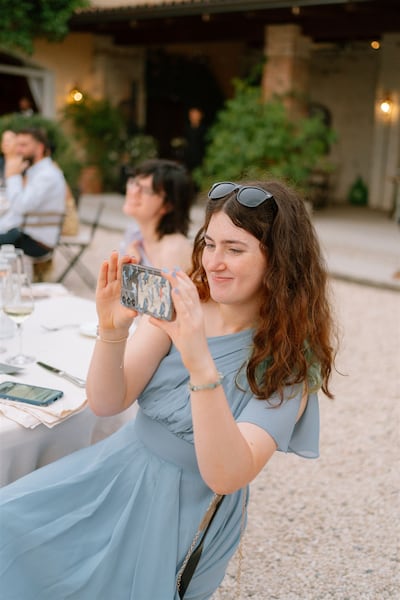 Eve Cullen (15): ‘It’s great to meet new people on TikTok’
Eve has seen some upsetting content online. “I figure a way to go around it and ignore it. It’s not a huge thing online for me.” She insists she’s not hugely influenced by political, health or wellness content she sees online, saying she’s more likely to try out a recipe.
She believes there are lots of positives to social media. “I love doing knitting and crochet and stuff like that. And there’s not many people in Thurles, where I live, that would be into that as well. I go online and I’m able to find thousands of other people who also enjoy that hobby and I can talk to them about it. But if social media was banned then I’d be very lonely in that hobby.”
At school, Eve uses Instagram for her transition year (TY) mini-company. “Everyone in TY in our school [uses Instagram] to promote and advertise our products,” she explains.
Her social media “used to be controlled when I was younger. There was an app on my phone that would block screen time,” Eve explains. But she feels at this age she is able to “self-police”.
She worries that if teenagers weren’t granted access to social media until the age of 16, they wouldn’t know what things they “should look out for. They might get scammed, even, because they’ve never been exposed to it,” she says.
Holly Heneghan (16) lives in Westmeath. She says she would hate a ban.
“With Snapchat, Instagram and TikTok, the main three for me, it’s entertainment. Snapchat is for communicating with my friends … I call and text on Snapchat.”
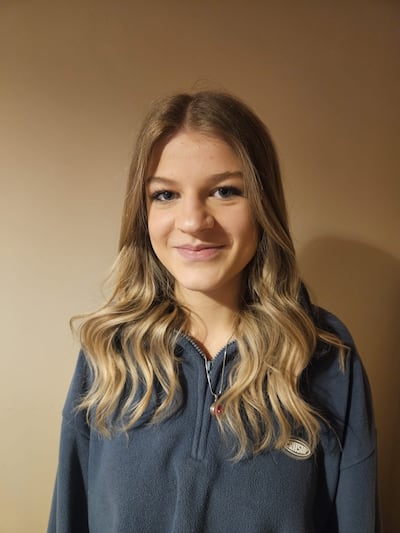 Holly Heneghan (16): ‘On TikTok there is a Stem site’
She has seen things on social media that she doesn’t feel are appropriate for 12- and 13-year-olds to see, but feels things have improved. “There is still a lot of body positive stuff on social media now. [More] than there was when I was 12.”
She has come across problematic material but “not necessarily in the apps that have been banned”. Inappropriate material can show up in advertisements that crop up in games, she explains.
“There are times I’ve spent too much time on social media,” Holly admits, “but I go on social media because it shows me things I’m interested in. It gives me a break from the world because it shows sides that I like.”
She doesn’t believe teens will accept the ban. “I think they’ll try and figure out a way to keep their social media.”
Holly thinks a ban would make those under 16 more secretive about their social media use. She feels adults don’t necessarily understand the huge support social media can offer, including academically.
“On TikTok there is a Stem site. It can teach you maths, science and engineering.” She believes the positives of social media outweigh the negatives.
[Social media] gives me a break from the world because it shows sides that I like
— Holly Heneghan
Hannah Goff (16) from Dublin, thinks a social media ban “is a really good idea” for younger people, but feels 14 or 15 may be a more appropriate cut-off age.
“I don’t think people under 16 actually need phones to function.”
She thinks younger teens could organise meet-ups through parents. “I think it might be easier as well for parents to understand where their child is and what their child might be doing.”
She feels not having a phone could lead to under-16s meeting up with their friends in person more frequently. “However, I do think in Ireland there’s a lack of things to do for people under 16.”
Hannah has learned a lot about content awareness in school. “If you know how to use social media, you’re better off with it, but I think people a lot of the time were just handing their kids phones … and then they’re not really prepared for what they come across.
[ A grand social media experiment begins in Australia. Will it work?Opens in new window ]
“During the elections in the US I did see a lot of propaganda for Trump and Kamala. But I would just scroll past that. I don’t think I’ve seen anything that has been particularly disturbing or upsetting. But also I’ve been very careful to avoid that.”
“You do see a lot of people online who are very different to how they normally look. They’re edited.” She feels younger people could be vulnerable to this. “I’ve seen a lot of eight- to 10-year-olds now who are using all the internet make-up”.
Hannah believes the under-16s “will definitely” try to get around any ban “considering when the Yondr pouch was brought in. Everyone’s gotten around it at this point.
“Teenagers, you tell them something to do and they will do the opposite. You give them a barrier and they’re going to go under it, over it, through it,” she says.
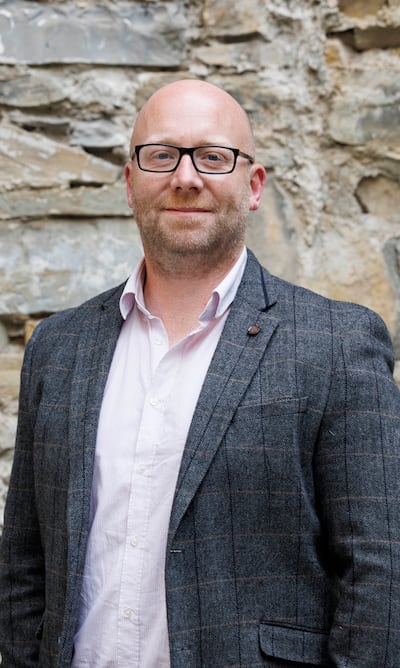 Dr Colman Noctor: ‘The damage of social media is happening now’
Dr Colman Noctor, child and adolescent psychotherapist, says delaying access until a young person is mature enough “is the right thing to do”. But, he adds, “the how you do that is more complex”.
He feels the Australian strategy, “while well intended, may not work”.
“Imposing bans will always meet resistance and so some form of alliance with young people is far more likely to be successful. However, the difficulty is that young people think adults don’t have a clue about social media, and adults don’t think young people have a clue about real life. And both are probably true, but meeting a consensus will take time.
“While I’m not sure the ban is the answer, waiting around for another 15 years to gain consensus is not a workable solution either,” Noctor says. “The damage of social media is happening now.
“For me the only way this will be resolved is if the social media companies take the lead and invest in meaningfully protecting children, but that does not fit with their financial models so we have to do what we can in the meantime.”