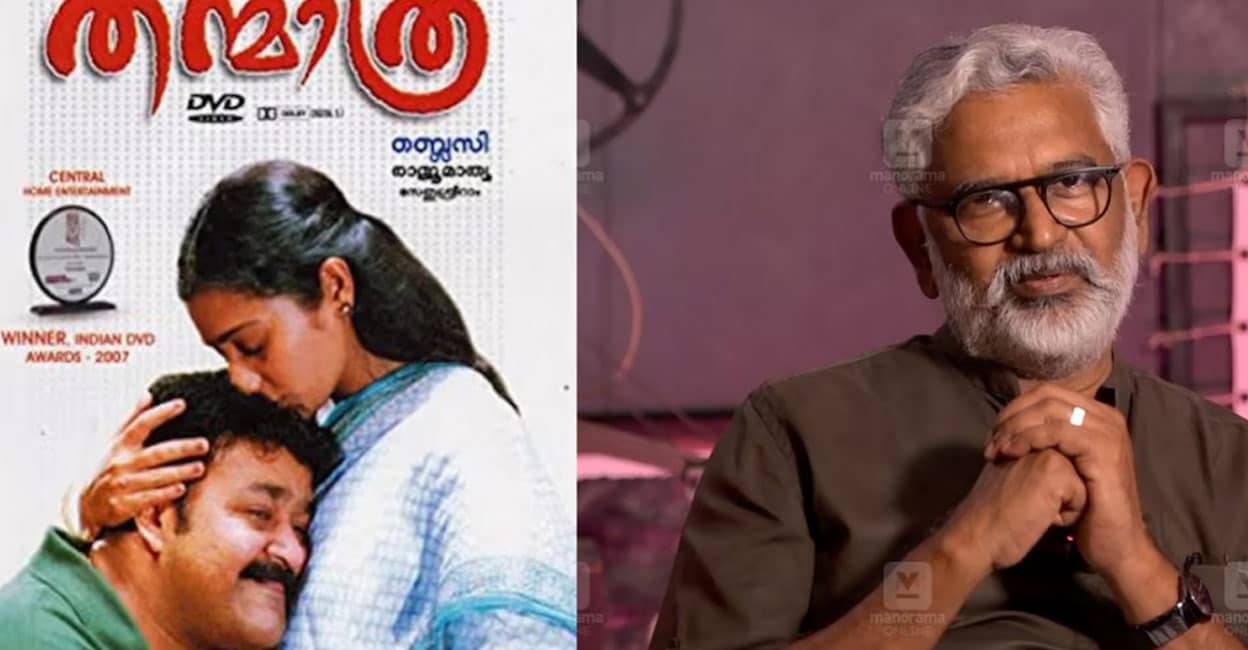
Filmmaker Director Blessy has shared some of the lesser-known stories behind his masterpiece, ‘Thanmathra.’ During an interview for ‘ Rewind Reels’, a special video program by Manorama Online, the veteran director opened up about the scenes that had to be deleted from the film and the controversies they sparked.
Blessy recalled the significant backlash surrounding the film’s interval sequence, which eventually led to its removal. He made it clear that he was deeply reluctant to cut the scene. Century Kochumon, who produced the movie, further explained the situation to Manorama Online. When the scene depicting the physical intimacy between the characters Rameshan Nair and Lekha appeared on screen, it met with loud jeers and chaos from the audience. “We were eventually forced to cut the scene following intense pressure from theatre owners,” he said.
Blessy also reminisced about the initial hurdles he faced during the scripting phase. “The first discussion took place at the Union Club in Kottayam with producers Century Raju Mathew, Kochumon, the owner of Plakkattu Films. The producers were initially sceptical of Mohanlal’s introduction scene. They questioned whether the audience would accept a superstar like Mohanlal walking at the back of a protest march. They were also unable to digest the protagonist’s death in the climax. At one point, the producers became so frustrated that they told Blessy not to read the script any further.
As a newcomer at the time, Blessy felt he had limited options. However, the turning point came during the filming of the movie ‘Naran,’ when he narrated the script to Mohanlal. After hearing the story, Mohanlal took a firm stand, stating, “I will not act in this film if even a single word is changed from this script.” It was this firm support from the actor that ultimately allowed ‘Thanmathra’ to be made exactly as the director envisioned.
A climax born of tears
“I remember writing the climax of Thanmathra in the quiet, early hours of the morning, while a heavy rain lashed down outside,” Director Blessy recalled. “I wrote that entire sequence with tears streaming down my face. As a writer, I was living through the harrowing reality of the condition our characters faced, and the weight of that situation was passing through me as I wrote. I had already wept through the entire process, long before any of you shed a tear watching it on the screen.”
The controversy over the interval sequence
Blessy also addressed the controversy surrounding a pivotal scene near the film’s midpoint. “The scene depicting the physical intimacy between Rameshan Nair and his wife occurs just before the interval. In that sequence, while they are together, Rameshan’s attention suddenly drifts to a lizard moving across the wall. In a moment of regression, he picks up a peacock feather and begins to follow it. The shot captured Mohanlal’s bare back and showed Meera Vasudevan’s character, Lekha, rising in tears.
When the film was released in theatres, this particular sequence sparked a major outcry. The producers informed me that theatre owners were reporting significant discomfort and protests from the audience. Under intense pressure from the exhibitors, we were forced to remove the sequence only two days after the release. I cut that scene with great reluctance. However, the complete, unedited sequence is still available in the film’s DVD version.
“In those days, if the runtime of a movie exceeded two hours and fifteen minutes, it was viewed as if a great mistake had been committed. There was even a prevailing trend where theatre owners took it upon themselves to edit down scenes just to shorten the duration.
In ‘Thanmathra,’ I had also filmed several other sequences that never made it into the final cut. One example was a scene following the death of Joseph (played by Jagathy Sreekumar). Upon returning home, Rameshan Nair happens to come across Joseph’s obituary in the newspaper. The sight of it triggers a total loss of control, leading to an explosive emotional reaction. It was a powerful sequence, yet it was ultimately omitted solely to manage the film’s total runtime, ” he added.