Empires rise and fall, fashions come and go, The Wolfe Tones announce their retirement and then change their minds, but in this ever-changing world there’s one enduring truth: television will continue to assail our ears with horrific Irish accents.
The begorrah gods were especially vengeful in 2025, inflicting a triple play of rogue brogues.
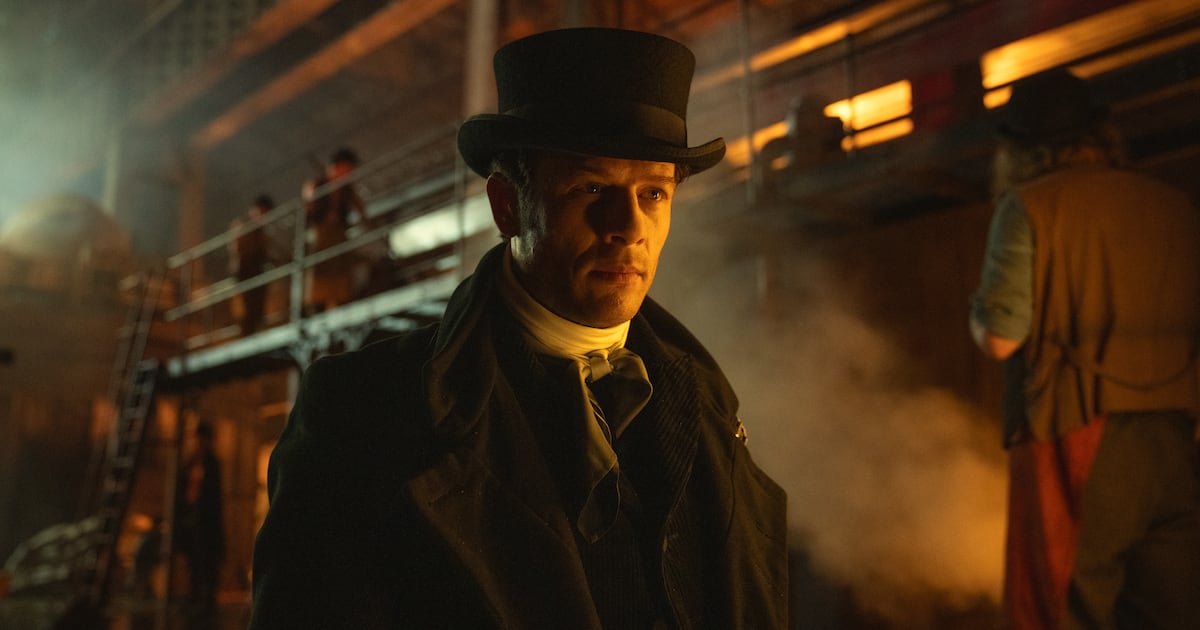
The highest-profile example came in House of Guinness, Netflix’s porter palaver, which seemingly featured James Norton as a leprechaun auditioning for Fair City and made the mid-19th-century Anglo-Irish sound like a bunch of south Dubliners back from their J-1s and hoarse from all the horseplay.
That was only the start of the problems bedevilling this series from Steven Knight, which reduced the political and cultural reawakening of the post-Famine era to a ragtag of potato-headed paddies having a punch-up and had about as much resemblance to the real Guinness story as Bohemian FC do to potential League of Ireland winners.
Like a Tayto sandwich left out in the rain, House of Guinness was squeezed between two other 2025 shows that likewise dragged the Irish accent back to the dark ages. First came Pierce Brosnan and whatever he was going for in Guy Ritchie’s MobLand. Despite spending his early childhood in Navan, Brosnan nonetheless managed to sound like a mid-1970s British comedian’s idea of how an Irish person should speak. It came as a surprise to discover his character was supposedly from Co Kerry rather than from the front of a box of Lucky Charms.
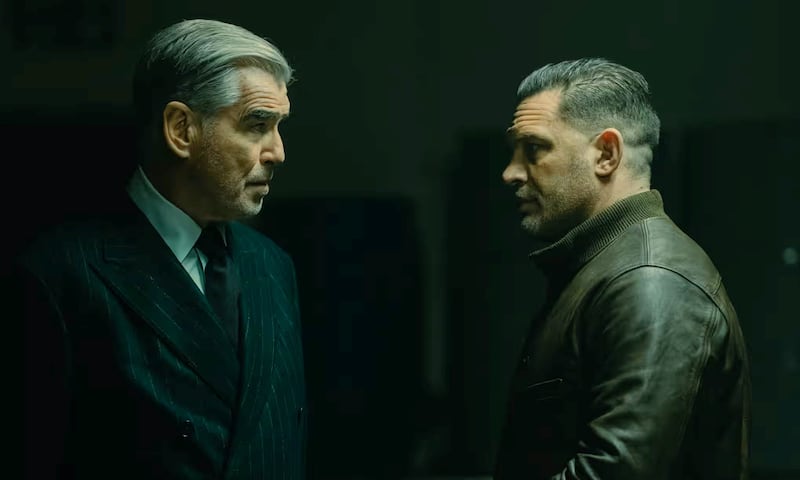 Pierce Brosnan and Tom Hardy in MobLand. Photograph: Luke Varley/Paramount+
Then, just this month, we were treated to the fantastically diabolical third part of the terrible-accent trilogy from Lena Headey. The Game of Thrones actor, who was supposedly playing a Dublin expat in the gritty Netflix Western The Abandons, apparently worked with a voice coach for the part of Fiona Nolan. We can only wonder how bad she would have sounded had she worked without one.
Irish accents aside, 2025 was the year when television took a temporary break from its obsession with blockbusters. Two of Netflix’s biggest franchises, Squid Game and Stranger Things, took their final bows, and the industry is clearly going to have a tough time replacing them.
The attempts of Disney+ to expand its Star Wars and Marvel universes to the small screen, for instance, remained a work in progress.
 Lena Heady in The Abandons. Photograph: Matthias Clamer/Netflix
Series two of Andor was a chilling portrait of fascism run amok that had a lot to say about where real-world politics is heading, yet few people seem to have bothered to stream it. Did series two even exist or was it just a mirage? Disney’s Marvel universe struck rock bottom with the forgettable Ironheart, a spin-off of the second Black Panther film that instantly erased itself from the memory of everyone who watched.
Prestige TV had a tough time, too. With Succession having taken its leave, HBO has struggled to create another viral hit. The Stephen King prequel It: Welcome to Derry delivered splenetic thrills and spills, concluding its first episode with shock deaths to rival Game of Thrones’. But it didn’t punch through to the wider culture to any extent.
Back home, RTÉ’s drama output was about as reliable as a suburban commuter service: either it didn’t turn up at all or it did so in a form that wasn’t much use to anyone. The Walsh Sisters, a much-hyped adaptation of Marian Keyes stories, removed all the charm from a source material that hadn’t much beyond charm to go on in the first place.
Worse yet was The Dry, a coproduction with ITV that celebrated the stereotype of Irish people as merrily dysfunctional drunks.
It was a reminder of the extent to which the national broadcaster is failing in its remit to reflect Ireland’s struggles and aspirations through the medium of drama. This matters because, as House of Guinness demonstrates, when others see fit to tell our stories, they’ll do so in the most caricatured way possible.
It’s up to TV producers in Ireland to reflect real Irish life and history for audiences at home and abroad. Is RTÉ up to the task when it so often suffers the same “will this do?” malaise that characterises many of our public services? Don’t expect a timely answer: everyone could well be on a two-hour lunch break.
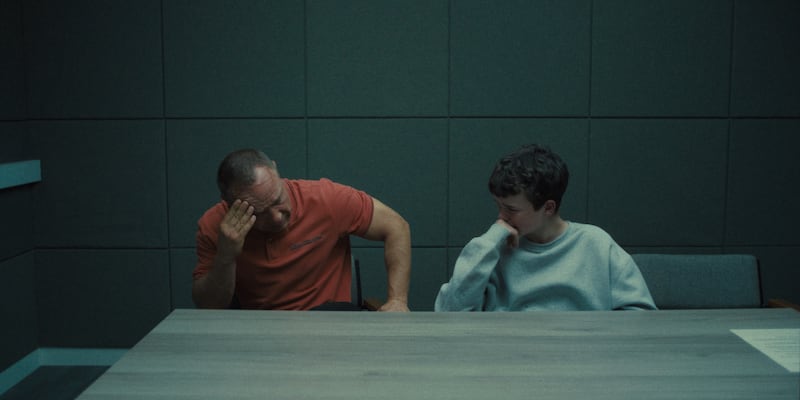 Adolescence: Stephen Graham and Owen Cooper. Photograph: Netflix
The biggest show of the year became so huge that it fuelled a moral panic. That was, of course, Jack Thorne’s Adolescence, on Netflix, an exploration of online toxic masculinity that made the error of projecting the evils of the manosphere on to a 13-year-old boy.
There were two entirely different stories to be told here. One concerned the dangers of incel culture; the other had to do with the struggles of growing up as a young boy in a complicated world. But the archetypal incel is more likely to be a 30-year-old who spends all day on 4Chan than a confused preteen just out of short pants. Yet Adolescence conflated the two – and bagged a string of Emmys in the process.
The year’s best television was often sublime and sometimes scary. Perhaps the most daring was series two of Nathan Fielder’s The Rehearsal, on Sky Comedy, in which this champion of cringe comedy embarked on an apparently earnest attempt to explain (and solve) the potentially fatal phenomenon of communication lapses between pilots and copilots on passenger planes and along the way ended up staging a fake X Factor talent contest (for reasons that, in the immediate context, made perfect sense).
It was mind-bendingly strange – all the more so because, far from poking fun at the world, Fielder seemed genuinely to be trying to make air travel safer.
The year ended with Netflix announcing its $83 billion takeover of Warner Bros – and, with it, HBO. Quite how that affects HBO’s plans for its many Game of Thrones spin-offs, the DC Universe and a much-trumpeted Harry Potter reboot remains to be seen. There is also the small matter of a hostile rival bid from Paramount, which could delay the acquisition by years.
Whatever happens, the real winner of the content wars in 2025 was surely Apple TV, which (besides dropping the + from its name) has emerged as the closest thing on TV to a prestige streamer.
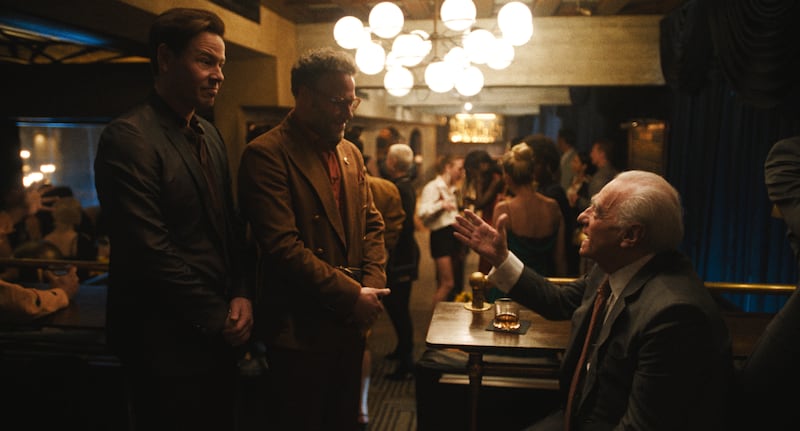 The Studio: Ike Barinholtz, Seth Rogen and Martin Scorsese. Photograph: Apple TV
Apple clocked up critical hit after critical hit. Seth Rogen’s The Studio was both a love letter to Hollywood and a lament of what has been lost as cinema turns to the eternal tentpole. (It also features an all-time-great cameo by Martin Scorsese.)
Just as delightful was the zingy sci-fi comedy Murderbot, adapted from the Martha Wells’s novella, a timely take on artificial intelligence and how it’s going to change all our lives.
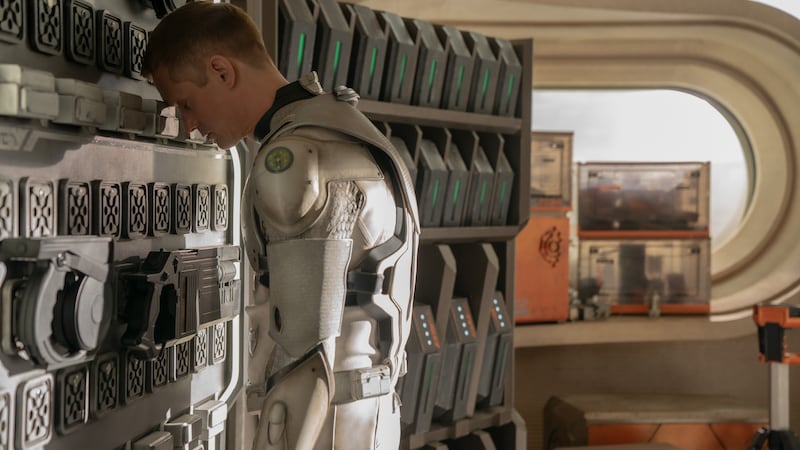 Alexander Skarsgård in Murderbot. Photograph: Apple TV
 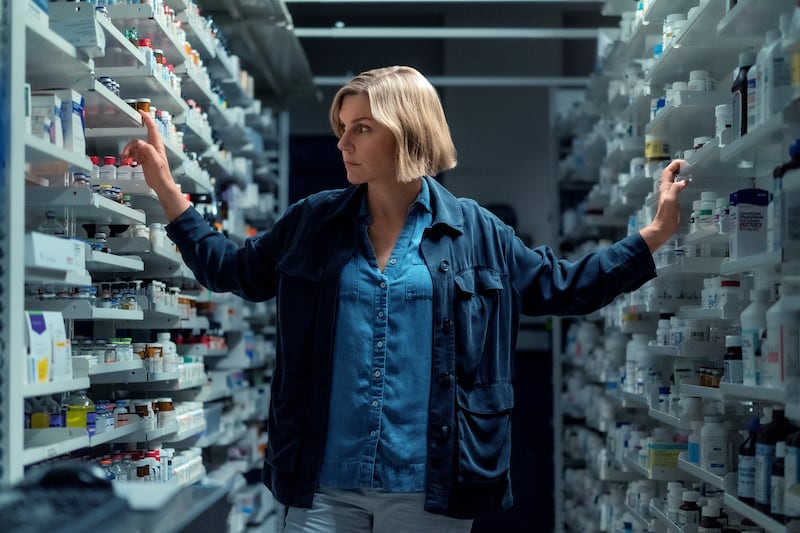 Pluribus: Rhea Seehorn. Photograph: Apple TV
Best of all was Pluribus, the new project from Vince Gilligan, the creator of Breaking Bad and Better Call Saul. A sci-fi satire starring Rhea Seehorn as one of the last sane individuals left in a world overrun by a zombie virus that turns people into horrific grinning optimists, it has the gonzo quality of a great Kurt Vonnegut novel.
But, if experimental, it was also exceedingly bingeable. Unfortunately, getting an airing on the only modestly watched Apple TV remains the television equivalent of a tree falling in an empty forest. What’s the point of making great drama if it’s greeted with a howling silence?
Five best TV shows of 2025
1. Pluribus (Apple TV)
2. The Studio (Apple TV)
3: The Rehearsal season two (Sky Comedy)
4: Dept Q (Netflix) Read Ed Power’s review here
5: It: Welcome to Derry (HBO/Sky Atlantic)
Five worst TV shows of 2025
1. House of Guinness (Netflix)
2. The Walsh Sisters (RTÉ)
3. All’s Fair (Disney+) Read Ed Power’s review here
4. Victoria Beckham (Netflix) Read Ed Power’s review here
5: The 2 Johnnies Late Night Lock In (RTÉ)