The attorney general (AG) in 1994 believed Fianna Fáil ministers had withheld information and deliberately intended to mislead the Dáil during a controversy surrounding the extradition of paedophile priest Fr Brendan Smyth.
Smyth was a Catholic priest and convicted sex offender. He died in prison in August 1997.
According to newly-released files from this year’s State Papers, AG Eoghan Fitzsimons was left “disturbed” after he found the contents of a statement on the scandal by then-taoiseach Albert Reynolds “seriously misleading”.
Mr Fitzsimons formed the view that ministers had withheld information that challenged an explanation given by his predecessor Harry Whelehan for the delay in extraditing Smyth to Northern Ireland.
Mr Whelehan had claimed that the delay in Smyth’s extradition was due to it being the first case of its kind relating to historical abuse cases that was covered by new legislation.
However, Mr Fitzsimons found that there had been a previously similar case relating to Fr John Duggan, which had been personally dealt with by Mr Whelehan.
Mr Reynolds subsequently made a statement to deny that there was a conspiracy to mislead the Dáil or conceal the truth.
He accused Mr Whelehan of misleading the government, and said he would not have proposed appointing Mr Whelehan to the role of the president of the High Court if he had been aware of the Duggan case.
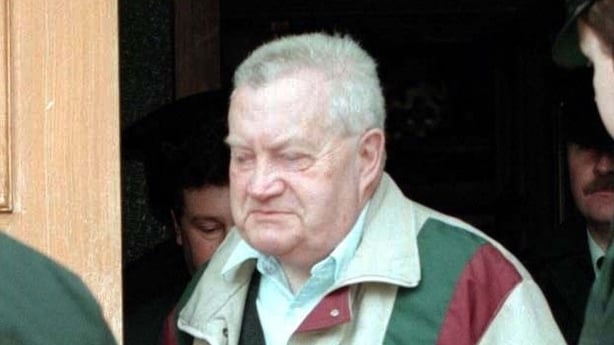
Brendan Smyth
Mr Whelehan’s nomination to the position following this revelation ultimately led to the collapse of the Fianna Fáil-Labour Party government.
On 6 December 1994, Mr Fitzsimons wrote to then-tánaiste and minister for finance Bertie Ahern saying it was his firm understanding, up to around midday on 15 November 1994, that the Dáil would be informed about the existence of the Duggan case.
He said he had informed the taoiseach on 14 November 1994 that consideration of the same provision in the Extradition Act as the Smyth case had been examined in relation to the Duggan case two years prior.
Mr Fitzsimons said: “I had no reason to believe that anyone doubted the simple advice that I had given, namely, that the Smyth case was not the first case in which the section had been considered.”
He pointed out that he was asked to draft an answer to the question causing the controversy, by the minister for justice at the time Máire Geoghegan-Quinn – namely whether the Smyth case was the first time that this section of the Extradition Act had been applied.
Mr Fitzsimons said he found the requested odd, causing him to become “immediately suspicious.”
He said he recalled saying “What about the Duggan case?” to Ms Geoghegan-Quinn, to which he said she replied: “We are not using the Duggan case.”
“I was very concerned about this in view of what I knew,” he added.
He said he prepared an answer and a “very strong letter of advice”, which he intended for it to “clearly indicate that the Dáíl was not to be misled in relation to the Duggan case”.
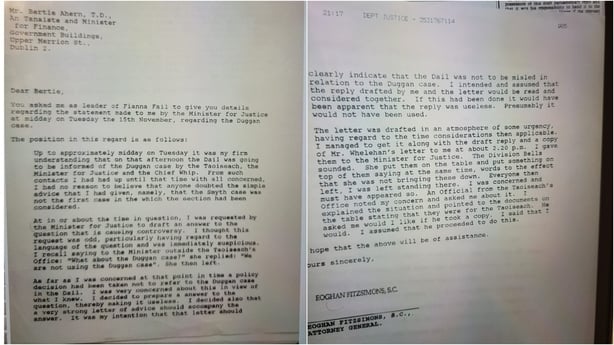
Mr Fitzsimons told Mr Ahern he presumed both his draft answer and letter would be read and considered together, which would have made it clear that the draft answer would be “useless”.
He said the draft reply was given to Ms Geoghegan-Quinn before the Dáil division bells sounded and that the minister put them on a table with something on top of them before stating words to the effect that she was “not bringing these down”.
Everyone then left, he said, adding he must have appeared concerned as an official from the taoiseach’s office asked him if he was OK.
In another letter on 6 December 1994 to the taoiseach, Mr Fitzsimons said his advice on the precedent of the Duggan case was “clear and simple”.
He described as “totally misleading” an implication by the taoiseach in his statement that he, Mr Fitzsimons, had invited Mr Whelehan to provide comments in writing on the issue.
Mr Fitzsimons said Mr Whelehan had written his own letter on his own initiative.
He said that he had been informed by someone on behalf of Mr Reynolds that the journalist Vincent Browne had been told that the AG had read and approved three drafts of the speech in which he failed to refer to the Duggan case.
Mr Fitzsimons added: “It must be put firmly on the record that I was neither asked to nor did approve your Tuesday’s speech.”
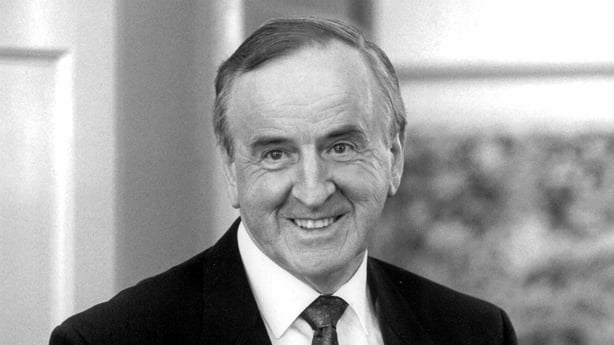
Albert Reynolds served as taoiseach between 1992 and 194
He said it was “seriously misleading” if the Taoiseach also had meant to imply that his draft reply had arrived “too late”.
He added that he, Mr Fitzsimons, would be “seriously compromised” if Mr Reynolds repeated comments he made in his statement in the Dáil or elsewhere.
He said: “If anything like this happens, I will be placed in an impossible situation and would, as I am sure you will understand, have to take steps to put the record straight.”
Mr Reynolds would address the issue of not referring to the letter on 6 December 1994. He said Mr Fitzsimon’s answer to the question “reflected persistent disagreement in the Attorney General’s Office about the real significance of the case”.
He added: “The reply would not have been enlightening, even if it had been incorporated in the main body of my speech.”
The taoiseach noted the draft answer was accompanied by the letter expressing Mr Fitzsimons’ dissatisfaction with the reply with some emphasis on the Duggan case.
Mr Reynolds said it was “unfortunate” the letter had arrived “too late to be reflected in my speech”.
He stressed he had no intention or desire to mislead the Dáil and that he had realised the seriousness of the letter after reading it on his return from the chamber.
[Files: 2025/115/977; 2025/115/980 and 2025/115/981]
Read more from the State Papers