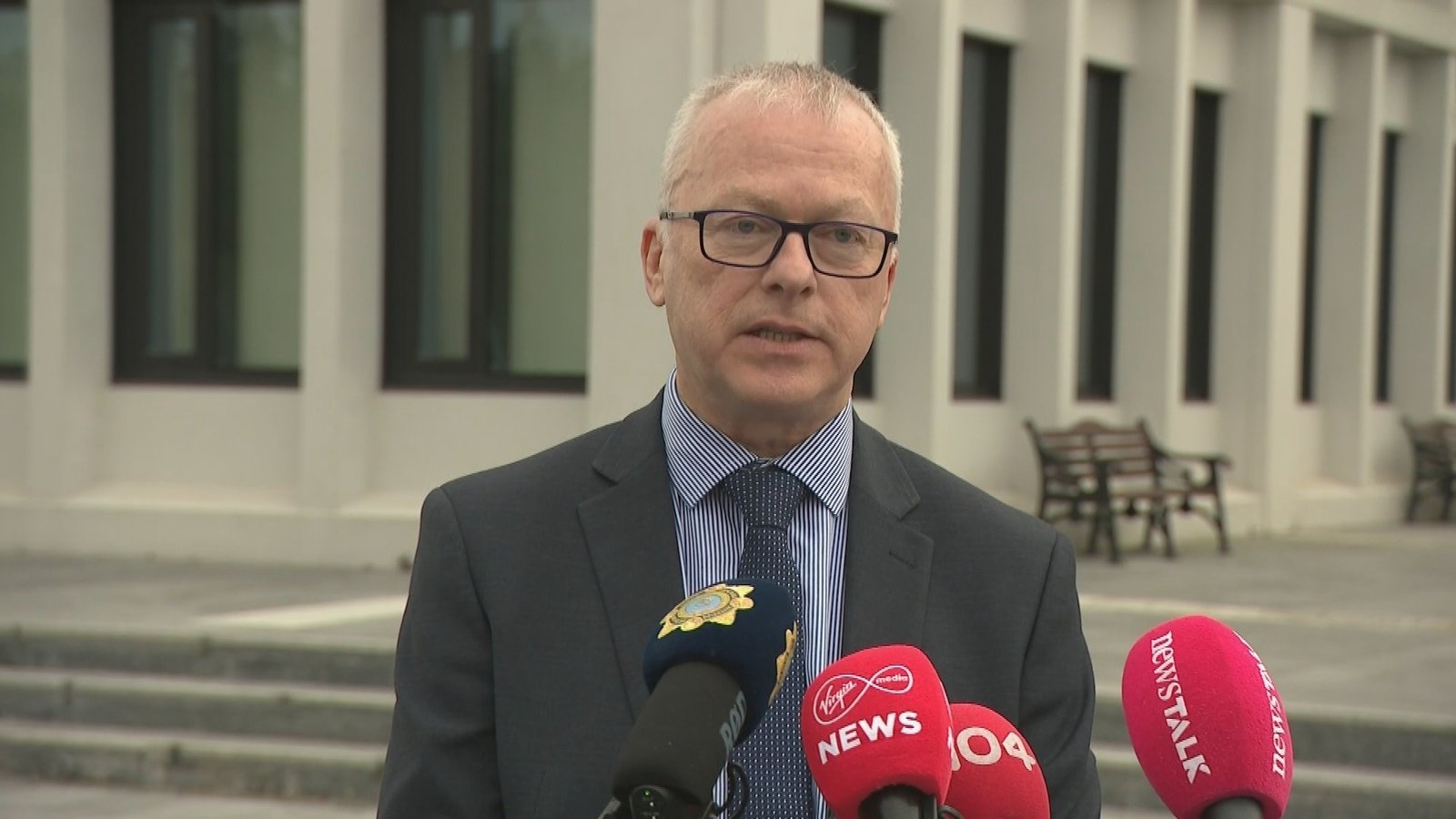
The head of An Garda Síochána’s Drugs and Organised Crime Bureau has said gardaí are actively targeting those involved in drugs-related intimidation and violence and are identifying, through a research project, who is involved and why.
Detective Chief Superintendent Séamus Boland said the majority of organised crime gangs in the country are involved in drug trafficking and that 24 of them are high-priority targets.
He also warned about the dangers of sanitising the activities of the Hutch Organised Crime Group and the threat to democracy posed by organised crime seeking political power.
The bureau has identified 169 organised crime groups operating in Ireland, with 65% of them involved in drug trafficking, which represents their major source of income, higher than the EU rate which shows 50% of criminal gangs involved in drugs.
Det Chief Supt Boland said they are currently targeting those at the highest level and there are currently 17 national priority operations targeting those at the top end of the scale causing the most harm in communities, such as the Kinahan and Hutch Organised Crime Groups and ‘The Family’.
The bureau is also targeting seven other significant criminal gangs in the State through secondary operations, but said many of these gangs are interconnected and work with each other.
They cooperate in smuggling operations, thereby broadening the selection of drugs imported and lessening the potential financial loss if the drugs are intercepted.
Analysis of drug shipments by Forensic Science Ireland has shown an average of five different drugs per shipment.
Majority being intimidated are females between 40 and 60
Gardaí say they have been dealing with drug-related intimidation for over 20 years, since the establishment of inspectors in garda divisions as contact points for people to talk to in confidence.
Det Chief Supt Boland said gardaí are currently working with other agencies on a research project to identify the scale of the problem, the people involved, the victims targeted and the locations where the attacks are carried out.
He said the Drug Related Intimidation Violent Reporting Project, known as the DRIVE project, has so far found that the majority of the people being intimidated are females between the ages of 40 and 60, and that those carrying out the intimidation and violence are mainly young men between the ages of 18 and 24.
He also said that while the majority of these attacks have taken place in Dublin and the eastern region where most of the population is based, there have also been violent and reckless attacks in rural Ireland, such as the murders in Edenderry, Co Offaly of 60-year-old Mary Holt and four-year-old Tadhg Farrell.
He also said the attacks tend to happen at people’s homes, where people should “feel their safest” and that it has become easier to intimidate people over social media and mobile phones, and easier to bring fear into a community when everyone is connected.
Det Chief Supt Boland insists, however, that tackling this violence is “a huge priority” for gardaí.
He said they are anxious that people come forward and report all instances of drug-related violence and intimidation as early reporting can help them to intervene earlier and prevent such attacks.
He also said the research being carried out as part of the DRIVE project is important, and the methodology being used has yielded success for gardaí in dealing with other organised crime offences such as gangland shootings and murders, and the activities of burglary gangs.
“When I talk about research, we are not sitting on our hands, just letting research take place,” he said.
“If I go back to the Hutch-Kinahan feud, 2016, the levels of organised crime, the murders taking place, our identification of the groups that were involved, the decision makers, the people who were willing to pull the triggers, their support structures; our analysis and identification of that, allowed us to target those groups which resulted in many of them being intercepted as they were about to carry out murders,” Det Chief Supt Boland said.
Cocaine has now replaced heroin as the primary drug of choice across Europe
“We prevented so many murders, incarcerated for many years some of the most violent people that are alive in Ireland at the moment, and we have seen a significant drop to a generational low for organised crime murders,” he added.
He also said gardaí had the same issue in 2015 with domestic burglaries but that investigations and prosecutions based on the analysis of data led to a 50% drop in the crime.
“An Garda Síochána established Operation Thor and at the same time working on a body of analysis to ensure that we identified who were the main perpetrators, who were the main groups,” he said, “and all the resources were then focused on those groups to dismantle them and bring them before the courts, and lock them up.”
Rise in cocaine use
The European Union has said that organised crime poses a major risk to the security of the EU because of the amount of money it generates and its ability to pervade and corrupt all aspects of society.
Cocaine has now replaced heroin as the primary drug of choice across Europe and it has never been cheaper as the South American cartels continue to flood the continent with multi-tonne shipments of the drug.
A kilo of cocaine, which previously cost between €20,000 and €40,000 wholesale, can now be bought in Europe for €13,000.
Irish gangs are availing of it at that price and maximising their profits by continuing to cut it down and sell it retail for €70,000.
The wholesale reduction has not been reflected in the retail price.
A street deal of 1.3g of cocaine sells for around €100 but gardaí say that while the purity averages at 58%, some deals have been found to contain as little as 2% cocaine.
They are instead laced with paracetamol, lidocaine (a dentist’s anaesthetic), caffeine and benzodiazepines.
Many drug users are now buying on social media and having the drug delivered to them, often in pubs and because of the amount of alcohol they have consumed, they do not notice being ripped off.
Many still think they are getting high on the ingredients of tea and coffee that they are actually consuming.
Gardaí say the “normalisation of cocaine” is now a major problem.
Det Chief Supt Boland points to a 20% and 80% divide between those who take and do not take drugs and that all these organised crime-related issues are “emanating from the decision of the 20% to consume drugs”.
“Casual drug use is the issue, socialising, using cocaine but taking no responsibility,” he said.
“I would ask everyone to do their piece, stop socially using drugs and the money stops going into the organised crime groups,” he said.
The largest consignment of cocaine in the history of the state on the MV Mathew cargo ship has illustrated the global nature of organised crime and its impact on Ireland.
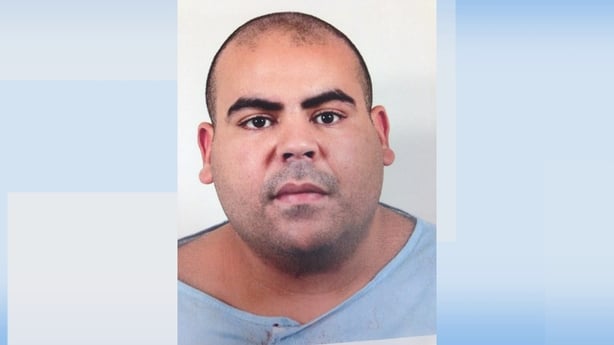
Hitman Naoufal Fassih was part of a plot which resulted in the murder of an Iranian dissident living in the Netherlands
The involvement of Iranian nationals in smuggling drugs to Ireland was something that had never been seen here before.
The investigations also led gardaí to the Middle East and to people with a history in the Islamic Republic of Iran’s sanctioned shipping lines were also identified.
The hitman Naoufal Fassih, whom the Kinahans brought to Dublin but who is currently serving life in prison in the Netherlands, was part of a plot which resulted in the murder of an Iranian dissident living in the Netherlands.
Mohammad Reza Kolahi Samadi had been living under an assumed name after he had been sentenced to death in his absence after fleeing Iran in 1981, accused of planting a bomb that killed 73 people at the Islamic Republican Party’s headquarters.
He was shot in the head on 15 December 2015 in Almere.
“Phone evidence showed they didn’t even know why they were targeting this individual,” Det Chief Supt Boland said, “except one of the text messages said ‘cos the Iranians wanted him’.”
He also said that Irish criminal gangs are working with Russians and Ukrainians through refugee networks and laundering their money through Russian networks.
“We’ve seen Russian money laundering heavily involved in using Ukrainian refugees across Europe for the transportation of bulk cash which emanates from drug trafficking,” he said.
“The Russian war in Ukraine has created a situation where there’s a vast number of Ukrainian refugees spread out all across Europe, and unfortunately, criminal organisations will attempt to use those networks to further their goals,” Det Chief Supt Boland added.
Gardaí seized over €1.3m in cash in three seizures between April 2024 and April 2025.
Seven people have been arrested and charged and are currently before the courts.
An eighth person, Igor Logvinov, who was a courier for the network, was sentenced to three years in prison in July 2023 and €57,200, the proceeds of drug trafficking, was forfeited to the State.
It is almost ten years since the murder by the Hutch Organised Crime Group of Kinahan gang member David Byrne at the Regency Hotel in February 2016 but Det Chief Supt Boland said their investigations are continuing.
The leadership of the Kinahan Organised Crime Group is based in Dubai but Mr Boland said he recently spoke with the UAE Ambassador to Ireland and that gardaí had recently visited the UAE, and that “assistance is progressing matters at a swift pace”.
“I would hope 2026, the 10th anniversary of the murderous attack, will be a significant year,” he said.
He also said that the threat to democracy from organised crime has already been recognised and Ireland “has to be conscious of that going forward”.
He warned of the dangers of sanitising the activities of the Hutch Organised Crime Group and the threat to democracy posed by organised crime seeking political power.
“The Hutch Organised Crime Gang is the group that was behind the most audacious, murderous attack in the history of this state,” he said. “I think it’s important that history isn’t allowed to be rewritten at times.”
Det Chief Supt Boland would not be drawn on the potential candidacy of Gerard Hutch in the forthcoming by-election in Dublin Central because he said gardaí were apolitical and that was a matter for the electorate.
However, he acknowledged that Hutch had been found by the Special Criminal Court to have been in control of the guns used in the murder of David Byrne at the Regency Hotel in February 2016.
“Organised Crime has been seen internationally in the efforts to corrupt at local and higher level,” he said, “the threat potentially from that is recognised, and Ireland just needs to be conscious of that going forward.”