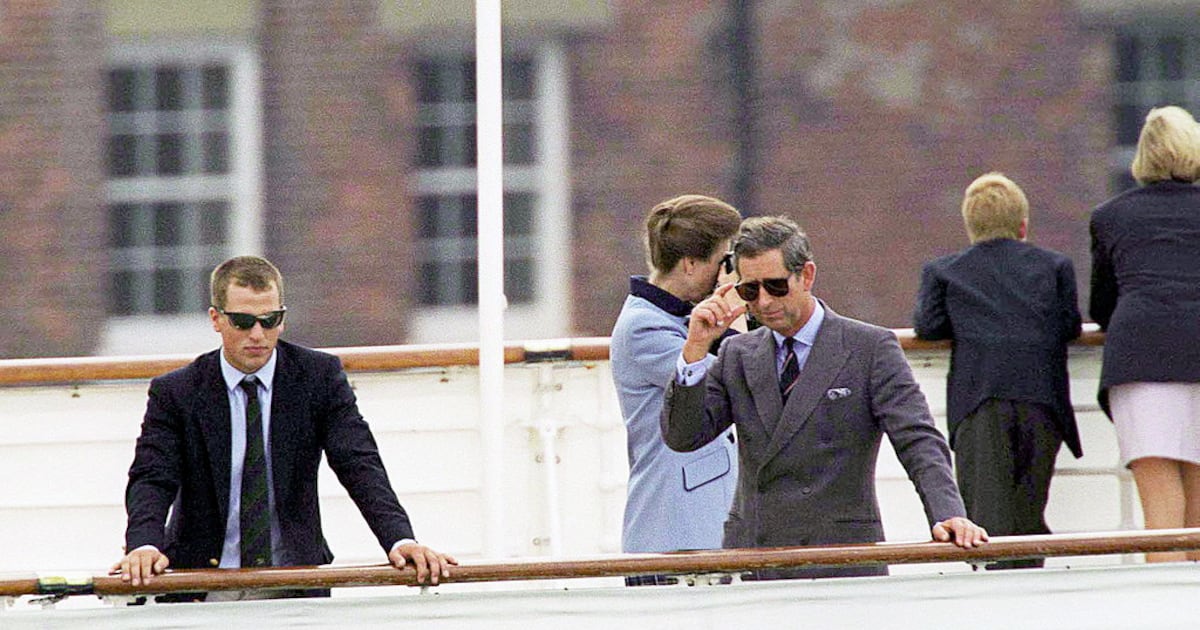
Plans by then-Prince Charles to visit Ireland in 1996 a year after his first official visit to Ireland provoked mounting exasperation within Irish government circles as the “opulence” of the trip grew.
Five years ago, previously classified State Papers released in London revealed that the visit planned for late June/early July 1996 had been cancelled because of security fears about the prince’s safety.
However, newly released documents paint a different picture, with Dublin becoming increasingly concerned about an ever-expanding itinerary – including the prince’s desire to bring the Royal Yacht into Galway Bay and Cork Harbour.
In a hand-written note, then-taoiseach John Bruton was clearly exasperated, saying that Ireland was “the last place” Charles should bring the Royal Yacht, suggesting instead that the heir to the throne fly into one of the State’s regional airports, helping to promote them.
In a letter in March that year, the British ambassador to Ireland, Veronica Sutherland revealed the wish list of Prince Charles – now King Charles III – to the secretary to the government, Frank Murray.
He would, she said, “like to arrive in Her Majesty’s Yacht Britannia” and to put ashore in Galway Bay” on Friday, June 28th, before looking at “farming, countryside and environmental matters” locally.
“In the evening, he would like to offer hospitality on board Britannia, which would then sail late in the evening for a private weekend in Kerry and Cork, having disembarked the guests,” she told Murray.
There had been some contacts before the letter about Prince Charles coming to Cork onboard the Britannia, and the government had already offered to host a lunch in his honour given by the minister for defence, Sean Barrett.
[ ‘The logistics were nightmarish’: first Irish visit by Prince Charles rememberedOpens in new window ]
Saying that the prince was “grateful” for the office, the ambassador said he also wanted to “explore other possibilities” there, such as visits to urban regeneration districts, meeting with young people, hospice care, etc.
“He would also like to offer hospitality that evening, either a reception alongside (the yacht at Cork from 17.45 to 19.15, or a dinner at anchor at Cobh, having sailed from Cork at 18.00).”
In her letter, then-ambassador Sutherland noted the growing ambitions of the trip: “These are rather more elaborate arrangements than you and I have so far discussed,” she told the secretary to the government.
The ambassador had rightly interpreted the private thoughts of Murray, who shortly afterwards told Bruton: “This visit is far more extensive than we were led to believe at first.”
Having checked with the Department of Foreign Affairs’s chief of protocol, he said: “It would appear to both of us that we have to proceed with the programme as now envisaged unless there are security or political considerations which would dictate otherwise.”
Clearly weary, the taoiseach wrote a hand-written reply to Murray, where he wondered if the arrival of the Royal Yacht in Galway would spark debate about the Treaty ports that were finally handed over to the Free State in 1938.
[ King Charles has ‘profound’ personal connection with IrelandOpens in new window ]
“I think the symbolism of the Royal Yacht coming into Galway Bay is not good. Will it revive arguments about ‘the ports’ in the ‘30s? The yacht suggests opulence and superiority. It’s not the image that should be conveyed.
“Why can’t the Prince just fly in by plane to one of the regional airports? That would give them a boost commercially,” Bruton said to Murray, one of his closest and most influential civil servants.
“The yacht is, I think, controversial in Britain of late because of its costs. Ireland is the last place he should be bringing it,” said Bruton, who had warmly welcomed the prince to Ireland the year before.
The trip was eventually cancelled after the Irish side had “had expressed concern about the risks His Royal Highness would face” if the visit went ahead without an IRA ceasefire in place, given the heightened tensions.
However, the British side were conscious, too, about the use of Britannia, with classified papers released in London in 2020 showing that its arrival “would be unwelcome to parts of the population”.