Review our top 10 personal gadgets of 2025
In our TOP 10 personal gadgets for 2025, many of the devices are specific to the users’ needs, portable enough to bring, use single materials, and revive the styles of old technologies. At times, there are no extra components or parts needed to make these gadgets work, like the GamiFries holder that uses magnets to connect to the game console, or the PP-1 turntable, which is made from one block of aluminum. Some of them preview the possible future of compact devices, as is the case with the Zero mini smartphone, which folds into a card-sized device.
Many of the devices in our TOP 10 personal gadgets of 2025 remove familiar components, such as Studio Waiting for Ideas’ PP-1 turntable, which deletes the tonearm and flips the record upside down, or the Atomic Keyboard that cancels out the Escape key and mouse. Even Google Japan’s rotary-dial keyboard also revisits older interfaces, replacing keys with rotating discs. Even speculative projects follow the same logic. Kodak’s Charmera compresses a camera into a keychain object, while the fungi-based 79th Organ imagines a wearable system that filters microplastics like a removable body part. Together, these designs show a shared interest in simplifying interaction, exposing function, and reshaping everyday objects into tools that feel direct, personal, and intentional.
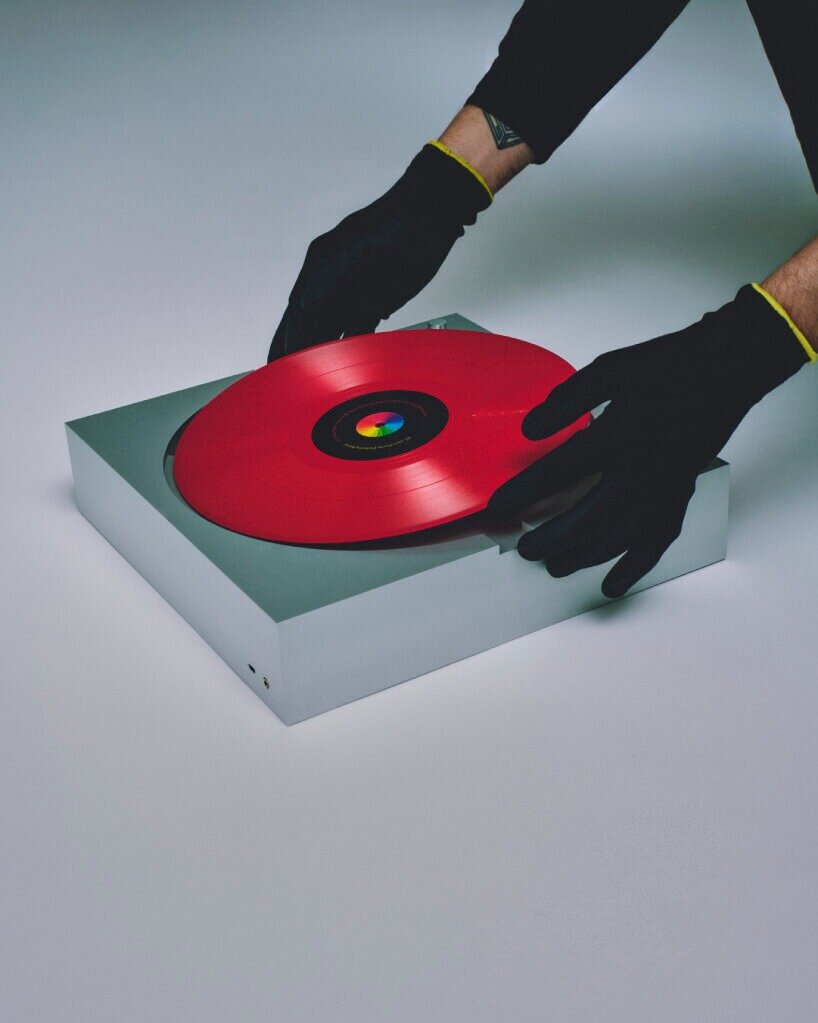
image courtesy of Waiting for Ideas | all photos by Mathilde Hiley
The PP-1, a turntable made by Studio Waiting for Ideas, is made from one solid block of aluminum, cut and shaped to form the body. The device has no tonearm, so the user plugs it in, puts the vinyl record upside down on the surface, and presses the play button on the side. It reads the record, then, using its internal sensors, which can identify the record speed of 33 or 45 RPM. The PP-1 can also move from one track to another without user input. The device, which forms part of our top 10 personal gadgets, comes with two buttons: the left button sets the speed or lets the system detect it, while the right one controls play, pause, next, previous, and volume.
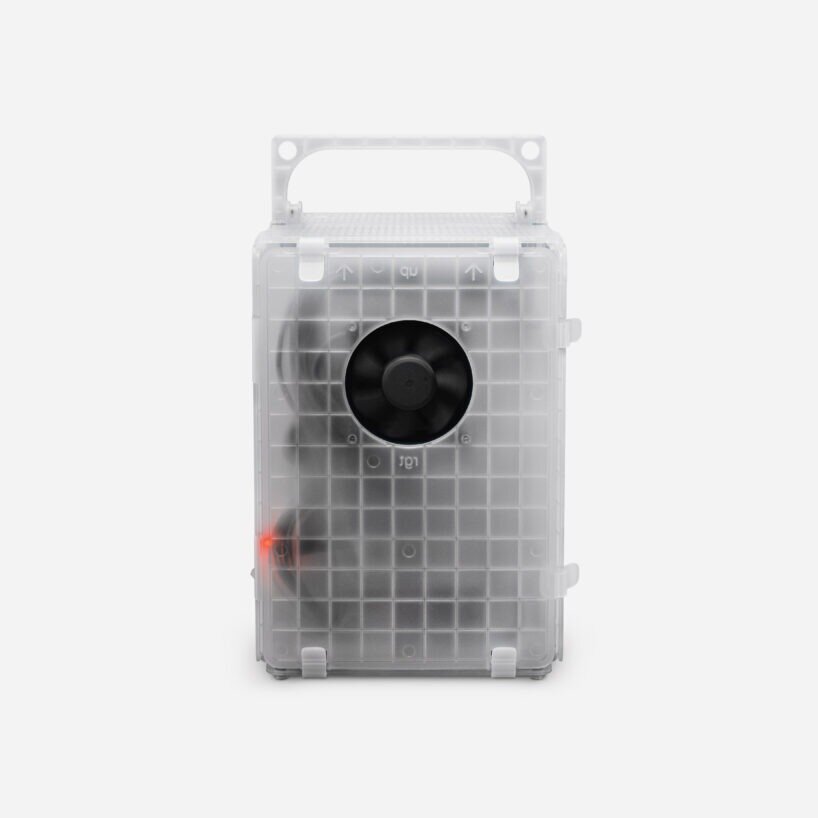
image courtesy of Teenage Engineering
Teenage Engineering presents computer–2, a mini-ITX computer case made from one sheet of polypropylene plastic. The company cuts the sheet into a flat shape with lines that work as living hinges, letting the sheet bend without breaking. The latter also has snap hooks that hold the parts together, and because of this system, the case does not need screws, tools, or extra fasteners. Computer–2 is part of the company’s ‘25 the flipped out year’ campaign, which explores how to reduce production cost. By using one sheet of PP plastic, the team removes metal parts, machining, and multi-step assembly, bringing the production cost to zero.
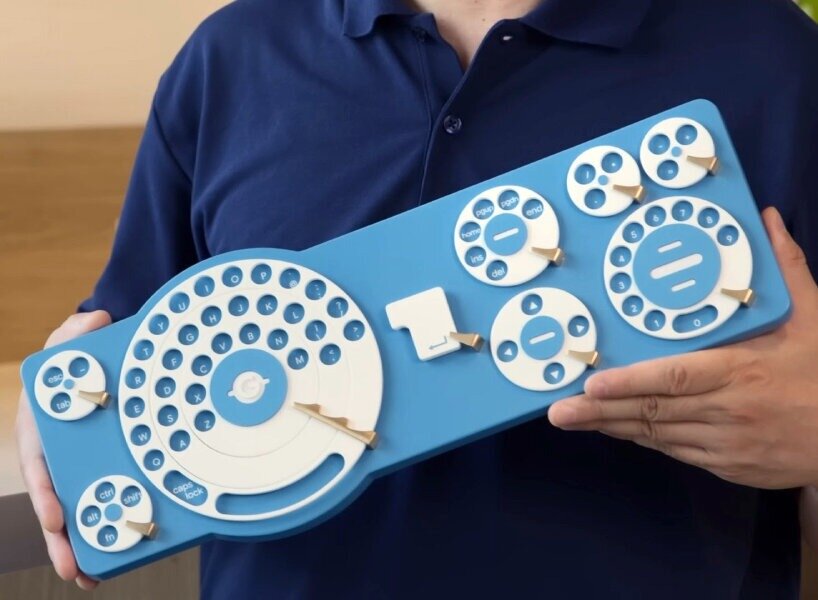
image courtesy of Google Japan
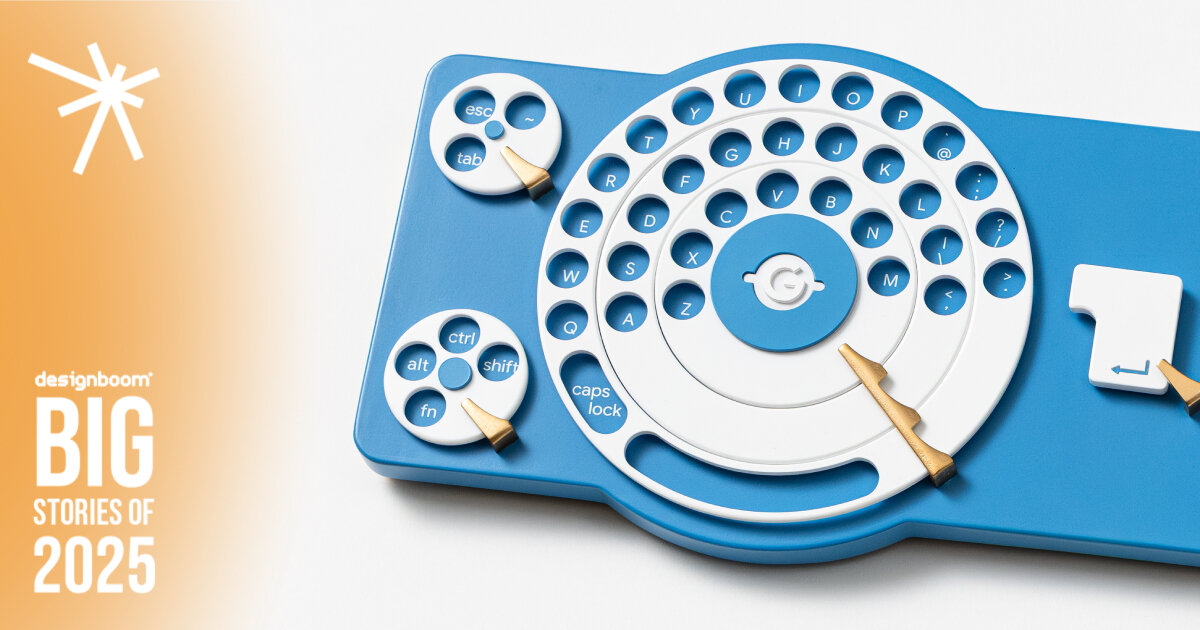
Google Japan creates Gboard Dial Version, an experimental keyboard that reimagines rotary phones as keyboards. Its design draws heavily from the retro aesthetic and mechanical function of rotary phones, and in fact, the central feature is a large circular dial designed for character input. The user inserts a finger into a keyhole and rotates the dial to select letters. To minimize the device’s footprint while retaining a full character set, the dial is divided into three stacked, parallel layers. This layered design allows for inputs to be registered faster than pressing keys across a wide surface and even permits parallel operations. For supplementary functions, smaller dials are placed around the main unit for the Enter, number, and cursor keys, allowing simultaneous, multi-rotary control.
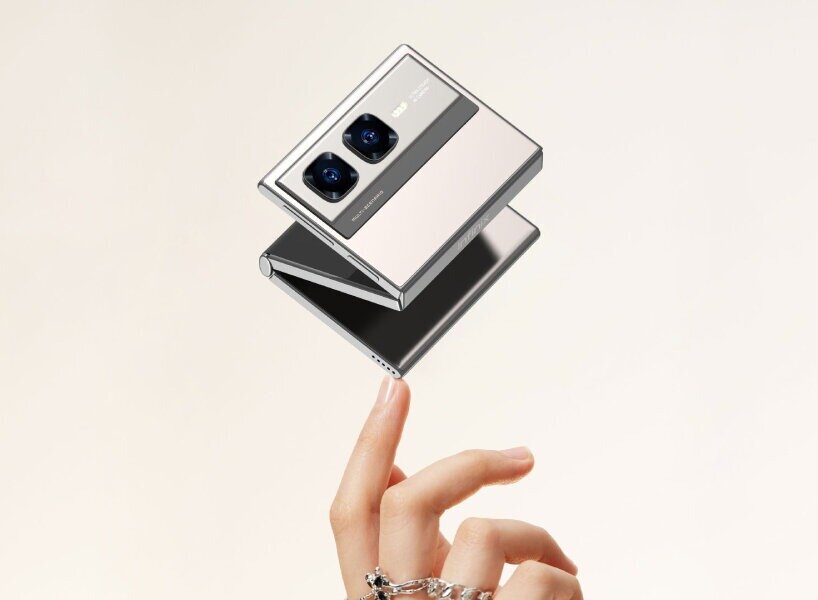
all images courtesy of Infinix Mobility
Infinix’s Zero mini smartphone uses a triple-folding system to transform into a card-sized device. The structure includes two hinges that let the phone fold and unfold vertically, and this system changes the shape of the phone depending on how the user positions the hinges. When the device is folded, the user can attach it to gym machines, bike handlebars, or backpack straps. Infinix includes a strap that connects to the phone, which also works as a mount, so the phone can clip onto different objects. The Zero mini smartphone, which is included in our top 10 personal gadgets of 2025 list, can stand upright on a flat surface to support hands-free calls and video viewing. The dual-hinge layout also allows the phone to act as a dashboard camera to record the road driving activities.
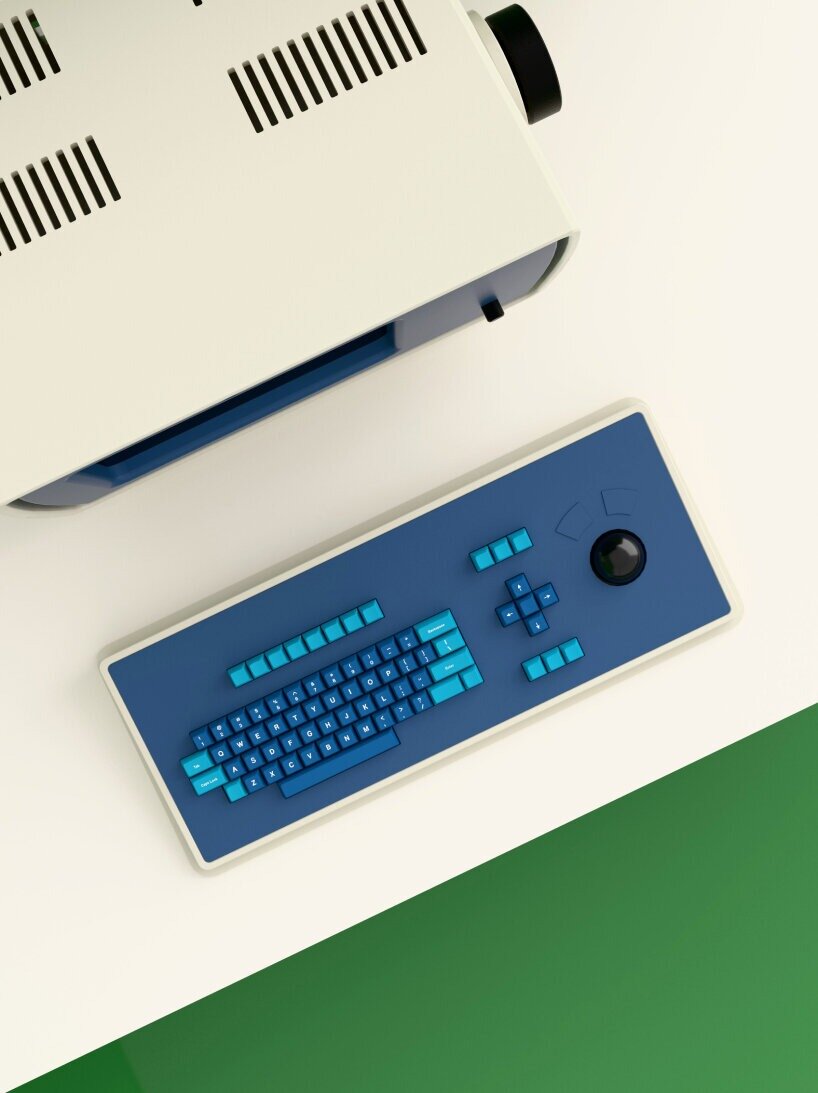
image courtesy of Atomic Keyboard
Atomic Keyboard makes a real version of the keyboard shown in the TV series Severance. Called MDR Dasher, its design is based on the Data General Dasher terminal from the 1970s and 1980s. Even if it has 73 keys, it doesn’t include Escape, Control, or Option keys. The case has a dark blue top surface and a white border, and the key layout uses two blue tones. The main typing keys use a lighter blue, and the other keys use a darker blue. On the right side, the number pad has no numbers. It only has arrow keys arranged in a cross shape. Next to the number pad, Atomic Keyboard places a trackball, replacing the mouse and still following the design used in the show.