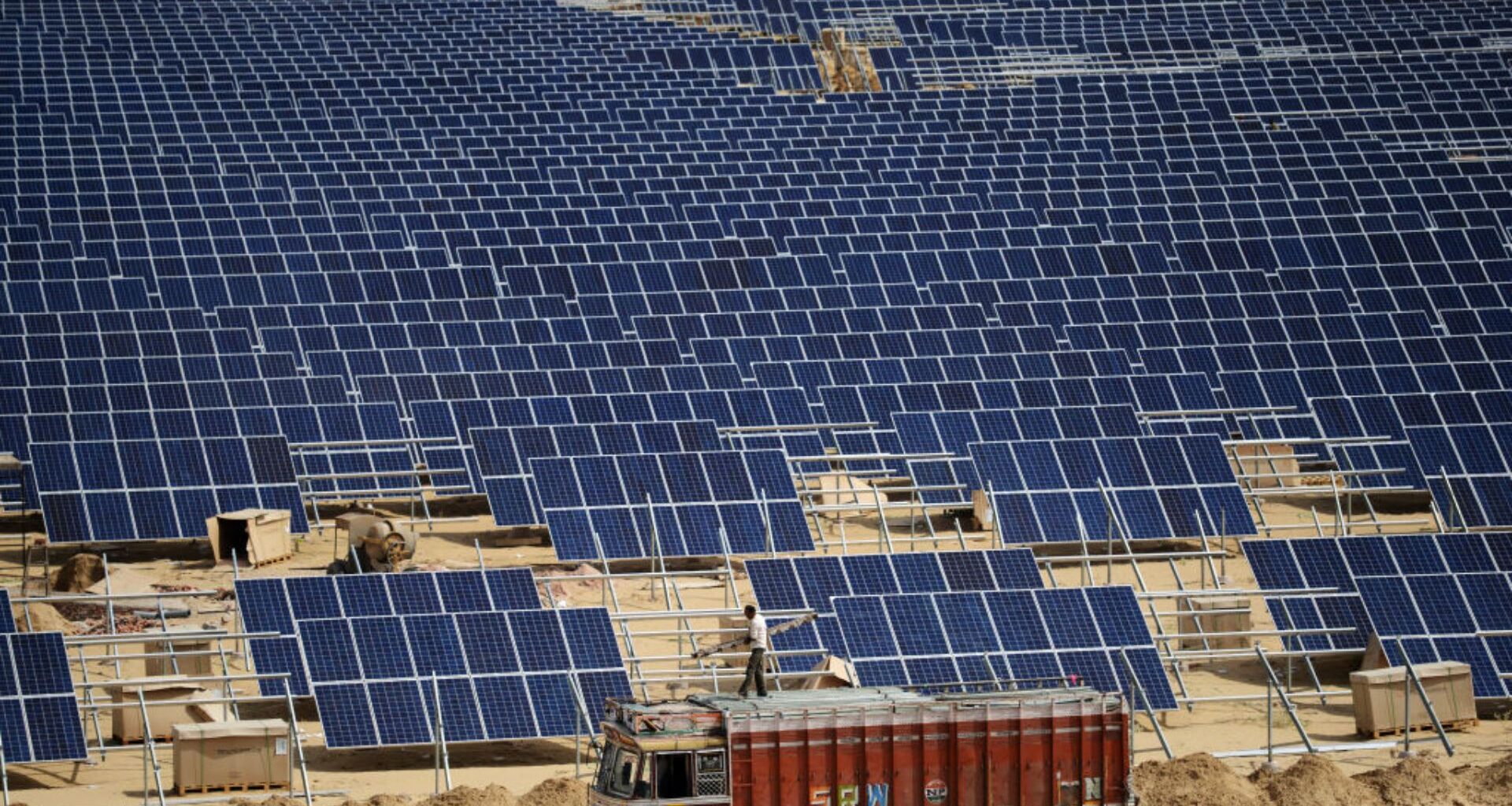
India is currently basking in a golden age of solar power. A decade-long solar surge has carried India from the bottom of the ranks to the global top three.
Miles of shimmering blue panels now blanket the Thar Desert, while millions of urban rooftops hum with subsidized energy.
With this rise, there is also a waste problem. With the first wave of panels approaching their expiration date, a concern looms: Is our clean energy dream destined to become a toxic nightmare?
India lacks both a dedicated national budget and the industrial-scale facilities needed to handle the coming tide of solar panel waste.
Dark side of the bright side
Fueled by government subsidies, nearly 2.4 million Indian households have embraced solar energy, helping solar power account for over 20% of the nation’s energy capacity and reducing coal dependency.
However, this success hides a looming environmental threat.
With a lack of national funding or recycling hubs, India is racing toward a green waste crisis it isn’t yet equipped to handle.
Reportedly, India’s solar waste was estimated at a manageable 110,000 US tons (100,000 tonnes) in 2023, but that figure is a trick of the light. It could rise to 661,386 US tons (600,000 tonnes) by 2030.
According to India’s think tank Council on Energy, Environment and Water (CEEW), the volume is set to explode to over 12 million US tons (11 million tonnes) by 2047.
Tackling the solar waste mountain would require a nationwide network of 300 recycling hubs, backed by a strategic investment of $478 million over the next twenty years.
“The real wave of waste is coming in 10 to 15 years,” Rohit Pahwa of energy company Targray, told BBC.
Most of India’s mega-solar parks were commissioned in the mid-2010s. These modules have a 25-year shelf life, and the countdown has already begun.
Recycling waste
Solar panels contain high-value silver and copper, as well as trace amounts of lead and cadmium.
When panels are smashed in unauthorized scrap yards or tossed into landfills, these toxins seep into groundwater and eventually enter the food chain.
Currently, India’s recycling scene is the wild west of basic recovery.
Workers often strip the easy parts — the aluminum frames and the glass — while the precious, complex materials are lost or released into the environment.
Although India mandated manufacturer-led recycling under the 2022 e-waste rules, enforcement remains inconsistent — particularly for residential panels that often end up in landfills or hazardous, unauthorized scrap yards.
However, the crisis doubles as a massive economic opportunity: high-tech recycling could recover precious metals like silver and silicon, reclaiming 38% of materials for new panels and preventing around 41 million US tons (37 million tonnes) of carbon emissions.
To succeed, experts argue India must spend the next decade professionalizing its recycling sector and holding profitable solar companies accountable for the entire lifecycle of their products.
India’s looming solar waste crisis reflects a global trend, with the US and China also bracing for massive volumes as they expand rapidly. However, regulatory responses vary widely across borders.
India’s energy future looks bright. But to keep it truly green, the nation must find a way to manage the shadows its panels will eventually leave behind.