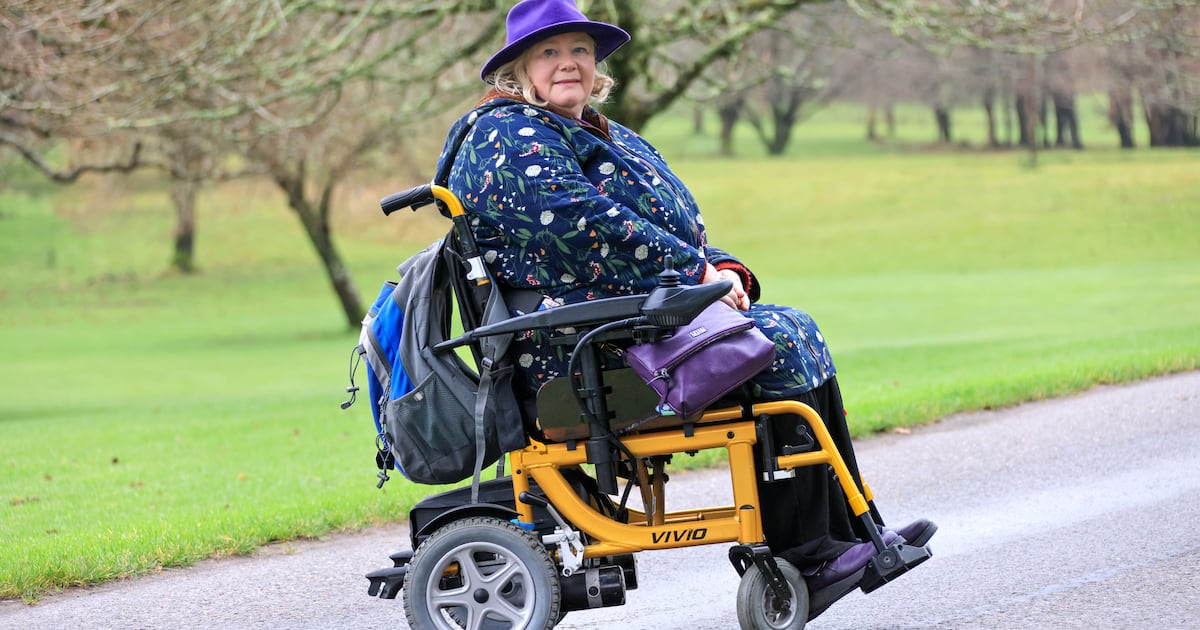
For Niamh Ní Mhaoileoin (50), a wheelchair user for 14 years, being disabled is the reason she had to move back in with her elderly parents. And it’s the reason she cannot move out.
The Co Kerry woman is a single mother to 19-year-old Joshua, who has a serious heart condition.
“My marriage broke down before Covid which meant we lost our rented home. I couldn’t afford the rent on my own,” she said.
“I found a smaller private-rented house which was far from ideal but I could afford it with HAP [Housing Assistance Payment].
“It was wheelchair accessible in the sense that I could get in and out the front door and I could access the bathroom reasonably easily. We made it our home and thought we’d be there long-term, or until we got a council house.
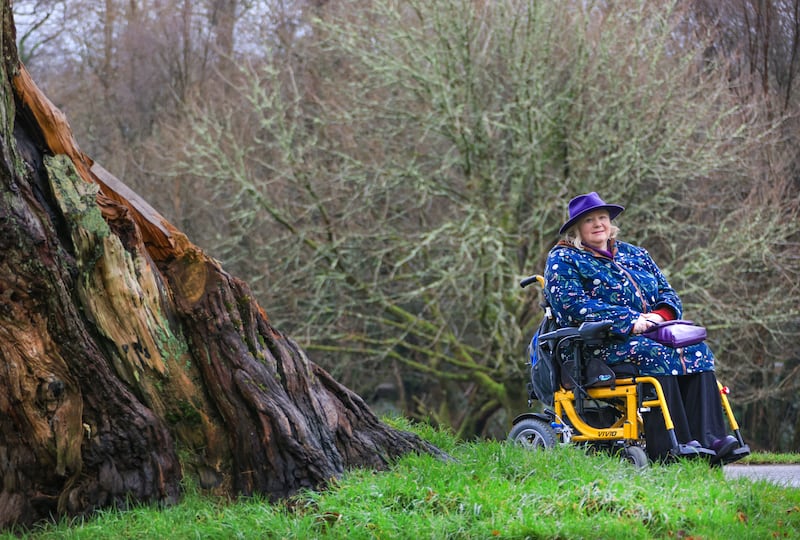 Niamh Ní Mhaoileoin: ‘There is a housing crisis, but it’s another level of housing crisis for disabled people.’ Photograph: Valerie O’Sullivan
“But after three years the landlord died and the tenancy was terminated. Coming just as we were getting our lives on track, to lose our home again, it was crushing.
“I couldn’t find a single property to rent. So, I had to ring my parents and ask if we could move in for a few weeks until we sorted our accommodation. That was three years ago.”
The family house, in a village outside Killarney, is less accessible than their previous home. “To get in and out I had to buy a ramp and my son has to help me. The front door has three big, steep steps so the ramp is into the patio door at the back.
“My bedroom is on the ground floor, but the house has narrow corridors. I need help leaving the bedroom and have to take footrests off the chair when I try to turn the chair. Doors are too narrow and I can’t reach cupboards in the kitchen.”
A “constant worry” is that Joshua could have an “episode” at any stage where he would need CPR. She is trained to administer it but “wouldn’t be able to get to him quickly in the house”.
“It’s a challenge for my parents, who are in their 80s, as much as it is for us,” she said. “They had never lived with me with my disability.”
Ms Ní Mhaoileoin has been on Kerry County Council’s housing list, where it is noted she needs a wheelchair-liveable home, since 2018. “I have been told a minimum of 11 years waiting,” she said.
A wheelchair-liveable home is one where the wheelchair user can access all rooms, where countertops and cupboards are reachable and the bathroom is usable, as opposed to accessible where a wheelchair user can just visit.
Ms Ní Mhaoileoin’s search for suitable private-rented accommodation has left her “soul-destroyed”.
“At this stage I would take any home if its accessible. I’d make it work. But I get to the viewing, the landlord sees the wheelchair and they are afraid I’ll damage their floors, their walls – not that these are palaces,” she said.
[ Some disabled people are going to libraries to stay warm, protest hearsOpens in new window ]
“You see it in their faces. There’s the sharp intake of breath, the hands go into their pockets. They suddenly need to check something. They come back. ‘Sorry the wife’s just told me it’s already let.’ And it’s still being advertised a week later.”
Ms Ní Mhaoileoin works as an administrator with a Killarney-based charity providing services to families of intellectually disabled people.
“I am a mom trying to show my son disability won’t hold us back, that disability is just a different way of doing things. But the truth is my disability means I can’t even put a roof over his head,” she said.
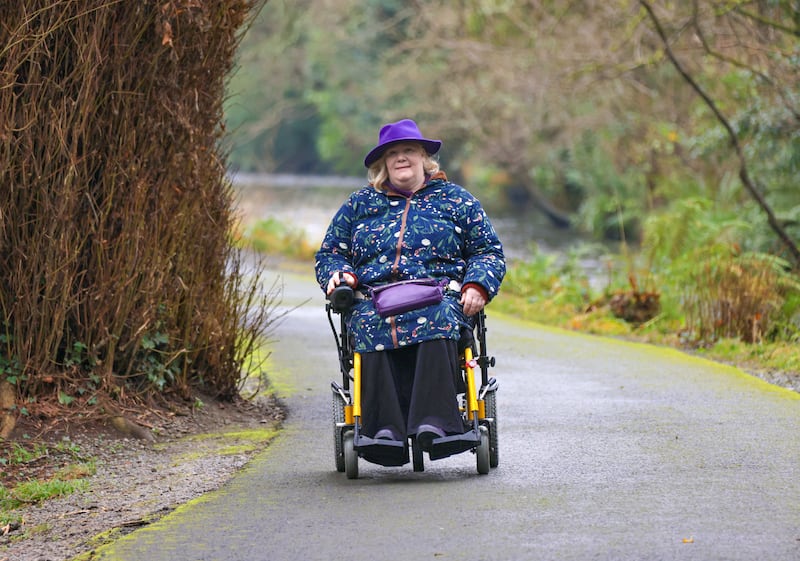 Asked if she has hope of finding a suitable home any time soon, Ms Ní Mhaoileoin says: ‘I have to hope because we need it so badly.’ Photograph: Valerie O’Sullivan
“We are on the brink of homelessness. There is a housing crisis, but it’s another level of housing crisis for disabled people.”
A search on property website daft.ie in the past fortnight showed of 13,160 dwellings for sale nationally just 1.7 per cent (227) were “wheelchair accessible”.
Of 1,773 properties available to rent, 6.5 per cent (116) were “wheelchair accessible”. Of the 116, two were in Co Kerry and from the photos it was clear neither was wheelchair liveable.
Ms Ní Mhaoileoin’s is one of 5,928 households for whom disability is the basis of their need for social housing – 9.9 per cent of the national housing waiting list. This number is up from 5,239 in 2023.
While accepting the majority of homes in Ireland were built before modern building regulations required them to be “wheelchair accessible”, groups like the Irish Wheelchair Association (IWA) say even the latest building regulations are “leaving disabled people behind”.
“Current regulations only require new homes to be wheelchair accessible. That is not wheelchair liveable. It is shocking in this day and age,” said Rosaleen Lally, IWA access programme manager.
It was “astonishing”, she said, that the Government’s recently published housing plan Delivering Homes, Building Communities 2025-2030, includes provisions for pets but lacks specific, mandated provisions for wheelchair users in new developments.
[ Housing plan aims to deliver 90,000 ‘starter homes’ over five yearsOpens in new window ]
The IWA has called for legally binding regulations stipulating that at least 30 per cent of all new homes be built to universal design (UD) standards, meaning they can be lived in to the greatest extent possible by all people regardless of their age, size, ability or disability.
The National Human Rights Strategy for Disabled People, published in September, says on housing: “We will enhance the effective delivery of the National Housing Strategy for Disabled People (2022-2027).”
That strategy, published three years ago, makes no mention of regulations compelling developers to provide UD-standard housing or to increase supply of such housing.
However, the National Standards Authority of Ireland is working on “developing a new national standards for universal design dwellings”.
Asked if she has hope of finding a suitable home any time soon, Ms Ní Mhaoileoin said she has to. “I have to hope because we need it so badly.”
A spokesman for Kerry County Council said the authority had a “strategic plan for housing people with a disability 2021-2026″.
“[The] council has committed in the plan to allocate an average of no less than 15 per cent of all available properties to households with a disability. We have consistently exceeded this target over the past number of years,” he said.
This article is part of a series highlighting the barriers faced by disabled people in Ireland to realising their rights to participate fully in education, employment, housing, transport and society. Tomorrow: Stream of rejection letters from special schools is ‘soul destroying’, says father of son with additional needs.