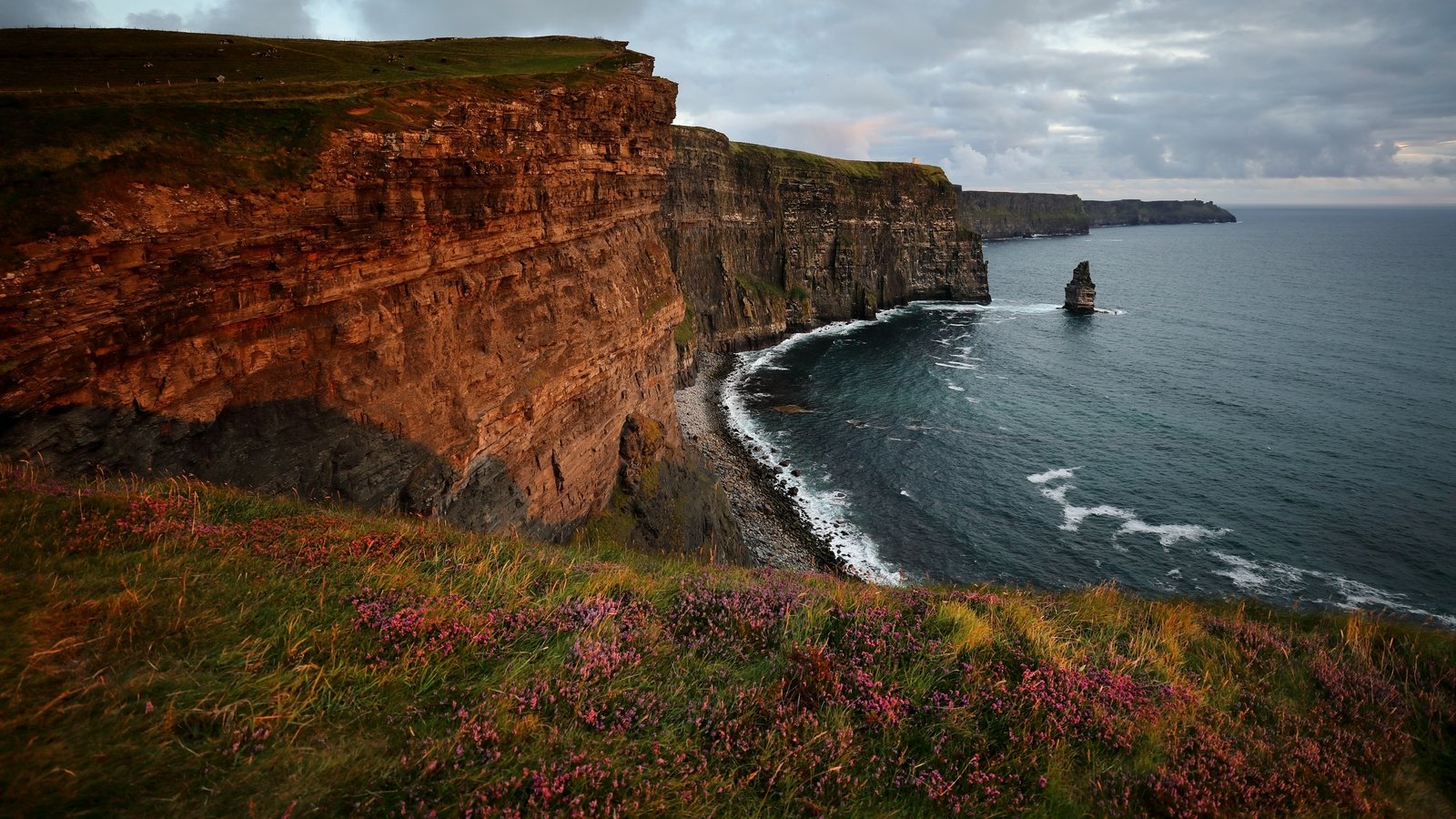
The Irish tourism sector has slowed in the past year, with the number of people visiting Ireland estimated at 6.16 million in 2025, down 6% on 2024 levels.
In its year-end bulletin, The Irish Tourism Industry Confederation estimates the loss to the Irish economy at around €685 million, with tourists spending 13% less in 2025 than in the previous 12-month period.
The CEO of the Irish Tourism Industry Confederation, Eoghan O’Meara Walsh, told RTÉ News that there are several factors contributing to this.
“We are an island nation, you can only get here by air and sea,” he said. “Air access is weaker from Europe and Great Britain this year.
“We are also a more expensive nation. The Eurostat figures came out during the year, showing us as the second-most expensive country in the EU, second to Denmark. Obviously, that deters a certain segment of the market.”
However, Mr O’ Mara Walsh believes there is reason to be optimistic, with a continued strong showing from the North American market – US and Canadian visitor numbers rose by 4% and 8% respectively – on the back of relatively strong exchange rates, excellent air access, and targeted marketing campaigns.
“It has been a challenging year. The good news is that the North American market is really strong. That is really important because they tour the regions, they spend quite a lot of money, they spend quite a lot of time in Ireland.
“Generally, when tourists are surveyed when they leave the country, they still find Ireland good value for money and they still find Ireland a really quality holiday experience and that is encouraging.”
But other overseas markets proved weaker with UK visitor numbers down 4%, while French visitors were down 13% and German tourists declined by 8%.
ITIC data estimates the sector will be worth €8.89 billion to the national economy in 2025, when accounting for overseas visits and domestic tourism, employing 225,000 people nationally.
The most valuable market was North America, which was worth almost €2 billion with the Continental European market next most valuable at €1.73bn and the British market worth €1.61bn. New and emerging markets were worth €445m.
Inflation in the overall tourism sector is up 6% per annum for the last three years, which Mr O’Mara Walsh attributes to State-induced costs such as labour, insurance and energy, among others.
We need your consent to load this rte-player contentWe use rte-player to manage extra content that can set cookies on your device and collect data about your activity. Please review their details and accept them to load the content.Manage Preferences
The ITIC Chief Executive encouraged the Government to continue “pro-competitiveness policies” such as the move to reduce the VAT rate on hospitality and food services to 9%, which will come into effect from July.
“We have to be very mindful that we are never going to be the cheapest destination,” he said. “We can’t compete against the cheapest destinations, but we always have to offer value for money, that is absolutely critical.”
He also stressed that Ireland may be becoming too dependent on the North American market: “If there was volatility in the US stock market, or the dollar-euro exchange rate changed dramatically, Irish tourism would certainly be exposed.”
In response, Mr O’Meara Walsh advocates for a market diversification strategy to mitigate against the impact of such a scenario.
“The industry is up for that, the tourism agencies are up for it. We need increased market expenditure, I think, in European markets and we need to incentivise airlines to fly in from those key European, and indeed, Asian markets,” he said.
Mr O’Mara Walsh also noted the shortage of tourism accommodation and high hotel prices due to “demand outstripping supply”.
“We need to incentivise new hotel stock,” he said. “We need to make sure the curb on short term rentals is done in an appropriate and sensible manner.
“We need to encourage Government to pursue those competitive measures to keep costs down.”