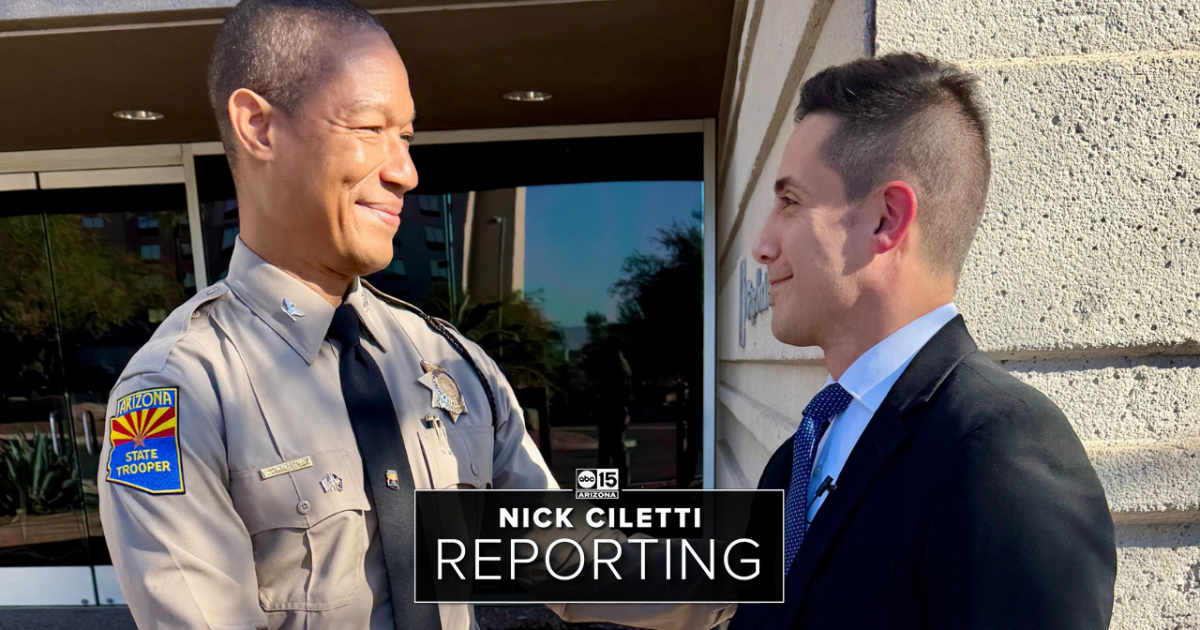
PHOENIX — The men and women who protect and serve communities across Arizona and across America face challenges that often go unseen.
Studies show law enforcement officers are significantly more likely than others to suffer from post-traumatic stress disorder (PTSD) and depression.
According to a 2024 study published by the National Library of Medicine, public safety personnel experience PTSD and depression at nearly twice the rate of civilians. Click here for the study.
In response, the Arizona Department of Public Safety (DPS) says it is taking steps to address mental health concerns, morale issues, and burnout among troopers.
“We have done a lot in terms of the mental health side of the job,” said DPS Director Colonel Jeffrey Glover. “We’re ensuring we are putting things in place that will help enhance the role they’re in and give them assurances that when they come in and don’t feel they’re in the right headspace, we’re there to help them do a good job in the field.”
Colonel Glover says in 2020, many law enforcement departments struggled.
“It comes back to public trust,” Glover said. “Some of it stems from 2020 and George Floyd and the upheaval during that time. We lost a lot of credibility. Now, instead of shying away from that, we have to engage our communities and talk about how they want to be policed.”
Burnout is another major issue DPS is working to address, according to Col. Glover.
One tool the department has is a program called “Truleo,” which Col. Glover says can analyze body camera footage to monitor officer interactions; Glover tells ABC15 it can even evaluate tone, disposition, and engagement with the public, helping supervisors identify early signs of stress or burnout.
ABC15 spoke to a representative from Truleo, who says the technology essentially acts like a “digital workforce,” reviewing footage while officers are off duty, and using A.I. to provide intelligence briefings when officers begin their next shifts. Truleo says they’re already working with several other departments across the state, from Apache Junction to Snowflake.
Another program DPS uses is called “Vitanya.”
“Basically, it’s a monitoring system where they can go in, before they start their shift, and they have an opportunity to sit down, and they are in a room with a screen, and they put their hand on a cradle, and it actually sends an electrical pulse through the body,” explains Col. Glover. “It monitors the brain, gives them feedback, and then a personal clinician gets on the screen and gives them feedback on exactly how they are doing that day.”
Starting in 2026, Col. Glover says DPS will begin offering a one-month, fully paid “wellness reprieve” for troopers who have been with DPS for at least 15 years (they are eligible for one leave period at that point and another one at 25 years, according to Glover).
To see our extended interview with DPS Col. Jeffrey Glover, click here.