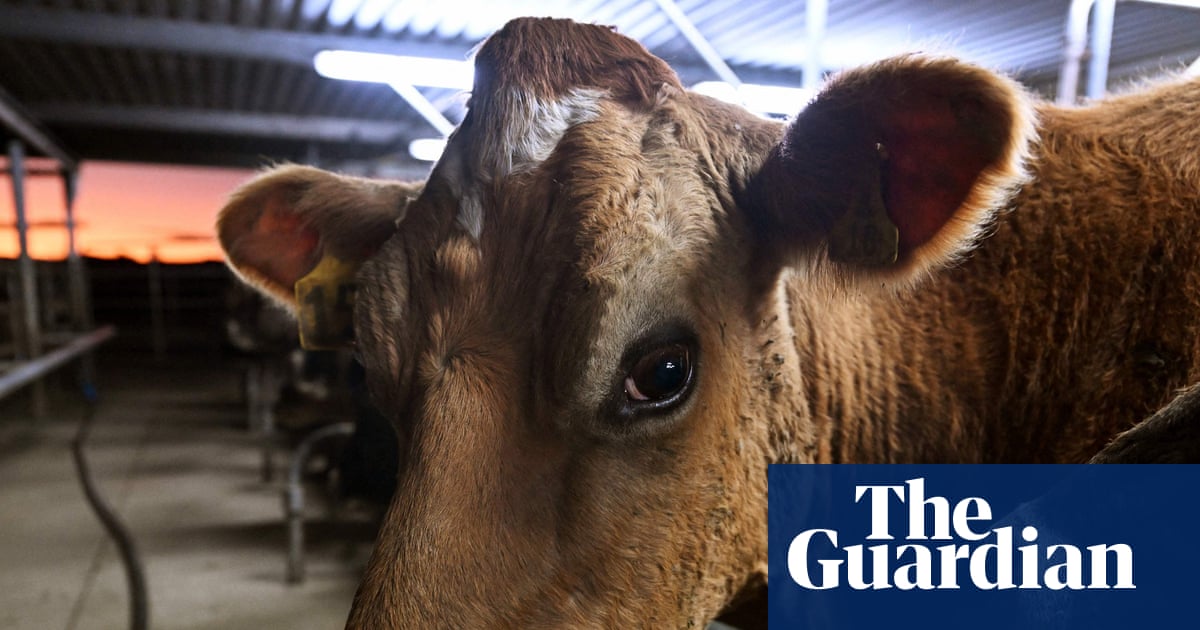
Your editorial applauds the government for rearranging the furniture in a burning house (The Guardian view on animal welfare: a timely reminder that cruelty is wrong, 23 December). Fewer cages, gentler gas, a close season for hares. All very civilised. Yet the central obscenity remains untouched. We are still breeding, confining and killing animals by the billion, then praising ourselves for marginally reducing the panic and pain along the way.
This strategy treats animal suffering the way Victorian engineers treated cholera. Add a valve here, a filter there, and never question the sewer itself. One billion chickens a year is not an ethical problem that can be solved with better regulations. It is a moral failure so large it has become invisible, like traffic noise. The state recognises animals as “sentient beings” while organising their lives around maximised throughput and minimised cost. That is not compassion. It is bureaucratic anaesthesia.
Your editorial gestures toward the real issues – climate damage, wildlife loss, the need to reduce meat consumption – then hurriedly looks away. This is the familiar dance of British politics. Everyone knows the answer, but nobody wants to say it out loud because it might upset farmers, voters or the ghost of Sunday roast. So we get a strategy that asks how to kill animals more nicely instead of why we insist on killing them at all.
Veganism is not a lifestyle garnish or a boutique moral pose. It is the obvious conclusion of everything that this strategy claims to care about. If animals matter, stop eating them. If carbon emissions matter, stop propping up livestock farming – one of the most wasteful systems ever invented. If wildlife matters, stop turning land into feedlots and monocrop deserts to support cheap meat.
This is not radicalism. It is arithmetic. Until policy reflects that, animal welfare will remain what it is now: a polite cover story for continued slaughter.
Dean Weston
Rowhedge, Essex
Degrees of separation are the issue here – relating the food on our plates to the animals they once were. As a rehomer of over 50 ex-battery hens, I stopped eating eggs the moment I stepped into a battery farm. I visited a dairy farm as part of my job, and watched as a cow, depressed after her twelfth calf was taken away from her, was sent “up the road” in the slaughter lorry. I stopped eating dairy from that moment.
I would never expect the world to go vegan, as I now am, but transparency and truth about where our food comes from, how it lives and dies, would benefit not just us humans but the beautiful creatures we share our planet with. Non-human animals are sentient beings and we humans should be intelligent enough to respect and realise that.
Jo Barlow
Camborne, Cornwall
Your article (Do prawns feel pain? Why scientists are urging a rethink of Australia’s favoured festive food, 22 December) highlights what science has made increasingly clear: prawns and other crustaceans are sentient individuals who can learn, remember, form relationships and experience pain. Their hard shells don’t make them unfeeling – only easier for humans to ignore.
Yet every festive season, billions of these animals are treated as disposable commodities, boiled alive, mutilated or transported under extreme stress. If we acknowledge that prawns feel fear and distress, then continuing to subject them to these practices becomes impossible to justify.
Recognising crustaceans as individuals – not food items – requires more than minor welfare tweaks. It calls for a fundamental shift in how we view and use other animals. The most ethical choice is simple: leave prawns off our plates and choose vegan foods that don’t require anyone to suffer.
Scott Miller
Research specialist, fishing and waterways, the Peta Foundation
Have an opinion on anything you’ve read in the Guardian today? Please email us your letter and it will be considered for publication in our letters section.