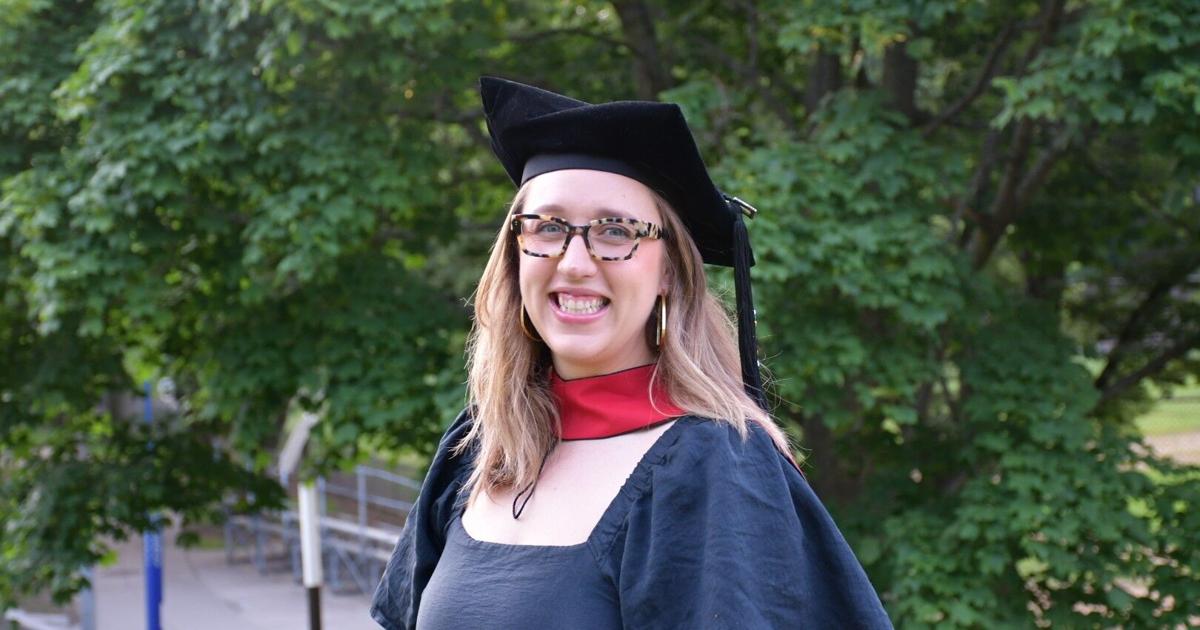
Jennifer Cruz knew when she graduated from Wapato High School in 2012 that she wanted to work with cancer patients and their families. Her focus on that goal began when she lost her mother, Sheila Cruz, to brain and breast cancer in 2007. Cruz was 13 years old.
Cruz hasn’t wavered from that goal. After graduating from Seattle University with a degree in psychology, Cruz won a Fulbright U.S. Student Program grant and spent 2016-17 in India. There, she conducted research as part of a project to evaluate the effectiveness of a cancer prevention tool created for community health providers.
She graduated in May with a Ph.D. from the Kenneth C. Griffin Graduate School of Arts and Sciences at Harvard University. Her Ph.D. is in population health sciences. Cruz wants to address health inequities and improve health care access in rural communities like Wapato, according to a November profile of her and her research by Sydney Sauer.
With her mother in mind, Cruz wanted to focus on breast cancer. She wanted to discover the barriers and challenges residents in rural communities face in getting breast cancer screening, treatment and other support.
Her research for her Ph.D. showed that rural communities differ in key ways, which can be crucial in improving breast cancer screening rates and in addressing other health issues. Her research included talking to Yakima Valley residents, who spoke about their needs and challenges.
Acknowledging the diversity of rural communities and the particular needs of their residents is important to determining the best interventions to benefit their residents’ health, as Sauer noted in her profile of Cruz, “Fighting Breast Cancer in Rural America.”
Cruz is associate director in the Noncommunicable Diseases Research Department of the New York Academy of Medicine in New York City. She started in that role before she graduated from Harvard in May. With her Ph.D. work done, she hopes to come back to the Valley more to see family and friends.


Jennifer Cruz, Ph.D. with her beagle-wiener dog, Agnes Maple Cruz, celebrating her graduation from Harvard University. (submitted photo)
“It’s a place that’s continued to support me no matter what,” she said. “People showed up for me and continue to, even now.”
Here are a few questions and answers with Cruz.
What does your current professional role involve?
I’m a public health researcher focused on chronic disease prevention and health equity. In my role at the New York Academy of Medicine, I work with health systems and community-based organizations to find things that make it harder or easier for people to have good health. My day to day is never the same, which is very exciting! Some days I’m behind my computer doing statistical analyses and other days I’m in my neighborhood working with organizations that provide resources to community members.
How do rural communities differ from each other and why is that important?
Just as we see across the Valley, different rural communities have varying degrees of resources … and access to resources directly shapes health. For example, White Swan has very different incomes, housing quality, and demographic makeup compared to Selah, but both are considered rural. However, access to healthy foods, safe places to exercise, and health care is drastically different between these two communities as a result, which allows some people to have good health and others to have poorer health.
What aspects of your work could benefit rural communities such as Wapato?

Headlines, puzzles and death notices from the Valley delivered to your inbox 7 a.m. daily.
Some of my recent research really highlighted how we need to be thinking about where is the need for health-supporting resources is greatest and working to ensure that those communities are being centered when trying to figure out who needs extra support.
I was really focused on understanding what different rural communities, specifically in the Lower Valley, need to be able to access breast cancer screening and found that places like Wapato often experienced barriers like lack of transportation or working jobs that don’t allow for time off for screenings, whereas places like Zillah were more concerned with having choice in where they were screened and how comfortable they were.
There is such a need to address growing health inequities that are only being intensified currently with ongoing cuts to public benefits like SNAP and Medicaid.
How are rural communities disregarded in social epidemiology?
In my eight years of graduate training in social epidemiology I didn’t have a single class that discussed rural communities and what are the sociocultural factors shaping health outcomes. This lack of attention really feeds into the narrative that rural is just the opposite of urban, which anyone from the Valley would know is not true.
Rural folks have our own culture, knowledge, and way of seeing the world that is directly tied to how we care for our health.
What are the real-world repercussions of that disregard?
Not having a deep understanding of the unseen, deeply embedded social systems and structures that lead to differences in health behaviors and access, like racism, capitalism, or colonization, in rural areas is a huge limitation that is only hurting rural communities across the U.S. It is not by chance that folks living on reservations or in farmworking towns have less access to the things they need to be healthy.
This limited attention to rural settings in the field of public health means that rural communities are not getting the same level of investment to finding interventions and best practices. That lack of attention is really driving the clear rural-urban health disparities across pretty much every health condition.
How can your Ph.D. research help women in the Yakima Valley?
I hope that my research that was done directly in the Yakima Valley will make breast cancer screening more accessible to all women, but with particular emphasis on those with lower income and education levels. My mom died from a late detected breast cancer that spread, so it’s really personal to me.
I truly believe that health is a human right and no matter on what language you speak, whether you have insurance or not, or if you were born in the U.S. or not, people deserve to have access to the tools that allow them to be healthy.
What would you tell girls and young women in the Yakima Valley to inspire them to pursue their academic dreams as you did?
Stay rooted in who and where you are from. Being from Wapato is such a point of pride and something that has kept be grounded as I’ve pursued this crazy goal of a Ph.D. I was really scared that leaving the Valley would cut me off from my friends and family back home, but that has not been the case at all. Every time I come home it’s as if I have never left and having that continued support has made me even more driven. Investing in yourself is also investing in your community.