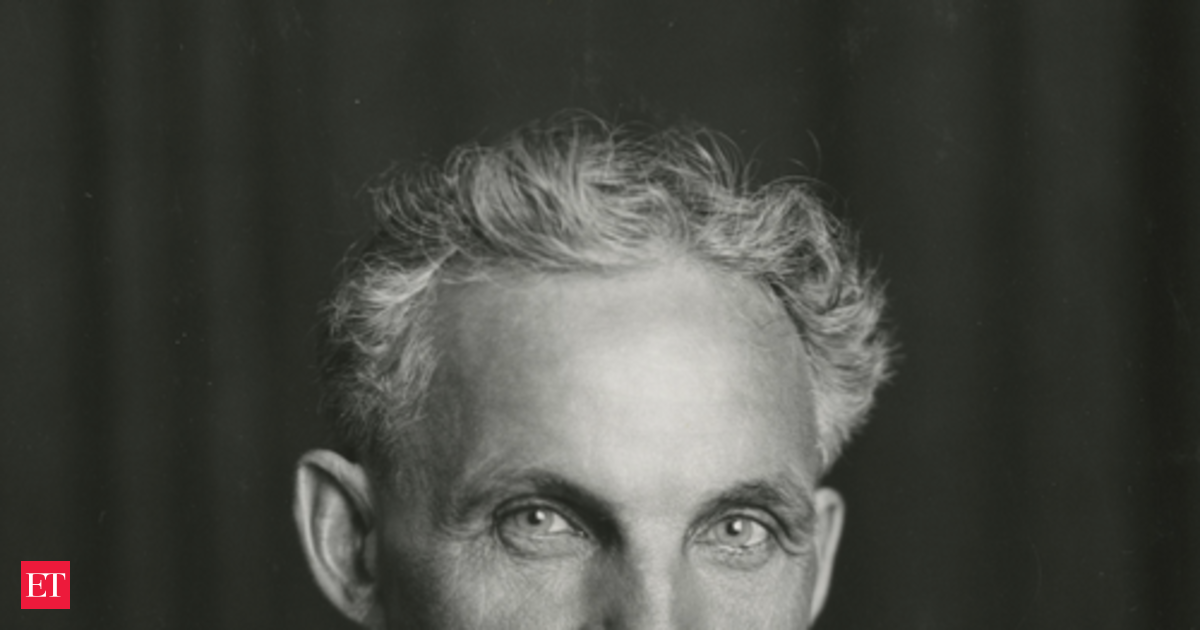
Quote of the Day: A truly enduring Quote of the Day does more than motivate in the moment, it reflects a philosophy shaped by lived experience, struggle, and conviction. Some quotes survive because they are rooted in theory; others endure because they are forged through trial and error. Few figures embody the second category more fully than Henry Ford. His words continue to resonate not because they promise ease, but because they confront resistance head-on. At a time when setbacks feel personal and progress seems stalled, Ford’s perspective offers a reminder that opposition itself can become the force that lifts us forward.
This is why the Quote of the Day matters. It gives language to experiences people struggle to articulate: failure, doubt, pressure, and persistence. A powerful quote reframes difficulty not as proof of defeat but as evidence that momentum is building. In an era defined by uncertainty, economic pressure, and rapid change, a single line can provide clarity, not by simplifying reality, but by sharpening our understanding of it.Quote of the Day Today December 30 Live EventsThe Quote of the Day today by Henry Ford is, “When everything seems to be going against you, remember that the airplane takes off against the wind, not with it.”
The quote questions the widely held belief that success occurs when barriers vanish. Ford countered that barriers are frequently signs that progress is possible. If everything appears to be working against you, you might be ready to take off. Resistance turns into the force that creates momentum, fortifies resolve, and tests direction.
Henry Ford and the Making of Industrial AmericaHenry Ford (born July 30, 1863, in Wayne County, Michigan, died April 7, 1947, in Dearborn, Michigan) was an American industrialist whose innovations permanently reshaped modern life. Best known for revolutionizing factory production through assembly-line methods, Ford was not simply a businessman; he was a symbol of America’s transformation from a rural, agricultural nation into an industrial powerhouse. Over the course of his life, he became one of the most influential and controversial figures of the 20th century, admired as a folk hero by some, criticized as authoritarian by others, but ignored by none, as per information sourced from Britannica.A Farm Boy Drawn to Machines
Ford was born on a farm near Dearborn, Michigan, one of eight children of William and Mary Ford. He attended a one-room schoolhouse for eight years while helping his father with farm work. From an early age, he showed little interest in agriculture and deep fascination with machines. At sixteen, he walked to Detroit to find work in machine shops, exposing himself to the emerging world of engines and mechanical innovation. After several years, he returned to the farm, working part-time for the Westinghouse Engine Company while experimenting in a small workshop of his own.
In time, Ford married Clara Bryant, and the couple had one son, Edsel Bryant Ford. Ford’s professional breakthrough came when he became chief engineer at Detroit Edison Company, a role that gave him both financial stability and the freedom to experiment. By the mid-1890s, he had built his first gasoline-powered vehicle, the Quadricycle. Unlike many early automotive pioneers who clung to their inventions, Ford sold his creations to fund improvements, driven by an obsession with refinement rather than immediate profit, as per information sourced from Britannica.Failure, Persistence, and the Birth of Ford Motor Company
His path was anything but smooth. Early business ventures collapsed as investors grew impatient with his refusal to release cars he felt were unfinished. He built racing cars, set speed records, and alienated wealthy backers who wanted quick returns. Finally, in 1903, the Ford Motor Company was incorporated with modest capital raised largely from ordinary citizens. Even then, Ford faced legal battles from powerful industry groups attempting to shut him down. His eventual victory in the Selden patent case made him a national hero and secured his place in industrial history.
The Model T and a Nation on Wheels
Ford’s greatest achievement came with the Model T, introduced in 1908. His declaration — “I will build a motor car for the great multitude” — reshaped the global economy. Over 15 million Model T automobiles were sold in the United States alone. The car transformed daily life, breaking rural isolation, accelerating urbanization, and fueling the expansion of suburbs and highways. Farmers, workers, and families gained mobility and freedom previously unimaginable, as per information sourced from Britannica.
This success was made possible by Ford’s revolutionary assembly-line system, which reduced production time from over 12 hours to just 93 minutes. The efficiency gains redefined labor, productivity, and manufacturing worldwide. Yet Ford’s later years revealed the limits of his instincts. His resistance to innovation, refusal to adapt quickly, and authoritarian management style allowed competitors to surpass him. Despite introducing new models like the Model A and the V-8, Ford Motor Company eventually lost its industry dominance.
Quote of the Day MeaningThe meaning of Ford’s Quote of the Day lies in its understanding of resistance as a necessary force. The image of an airplane taking off against the wind is precise and intentional. Wind represents pressure, opposition, doubt, and external forces pushing back. Without it, there is no lift. In other words, progress does not come from ease — it comes from tension.
Ford was not romanticizing struggle; he was describing reality as he experienced it. Nearly every defining moment of his career occurred when circumstances were stacked against him: failed companies, hostile competitors, legal threats, public ridicule, and economic downturns. Yet it was precisely those moments that demanded creativity, discipline, and resolve.
The quote challenges a common misconception that success comes when obstacles disappear. Ford argued the opposite, that obstacles are often signals that growth is possible. When everything seems to be going against you, it may mean you are positioned for takeoff. Resistance becomes the force that tests direction, strengthens resolve, and generates momentum.
On a personal level, the quote speaks to resilience. It reframes adversity not as a warning to stop, but as a condition that makes movement possible. On a broader level, it reflects Ford’s belief in honest effort, persistence, and purposeful work as the foundations of prosperity and happiness.
As a Quote of the Day, Ford’s reminder about taking off against the wind remains timeless. It does not promise comfort. It offers something more valuable: perspective. When resistance appears strongest, it may be because momentum is quietly building beneath the surface.
Other Iconic Quotes by Henry Ford
Beyond the Quote of the Day, Henry Ford left behind a body of statements that continue to influence leadership, business, and personal philosophy:
“Before everything else, getting ready is the secret of success.”
“The natural thing to do is to work—to recognize that prosperity and happiness can be obtained only through honest effort.”
“Power and machinery, money and goods, are useful only as they set us free to live.”
“Life, as I see it, is not a location, but a journey.”
“Being greedy for money is the surest way not to get it.”
“It is not usual to speak of an employee as a partner, and yet what else is he?”
“Strive for minimum waste, minimum profit, maximum distribution.”
“That is the way with wise people—they always know why something cannot be done.”
“As long as we look to legislation to cure poverty, we will see poverty grow.”