NEED TO KNOW
- A chance encounter with the aurora borealis sparked Dennis Lehtonen’s journey to becoming a full-time northern lights chaser
- His experiences highlight everything from mystical folklore to the patience of aurora watching demands
- Lehtonen ensures that you don’t need expensive equipment or extensive expertise to capture images of the Northern Lights
The northern lights are one of Mother Nature’s greatest gifts. Rare and elusive, their otherworldly glow makes witnessing the aurora borealis feel like a once-in-a-lifetime encounter.
The first time Dennis Lehtonen, Finnish photographer and aurora chaser, caught a glimpse of the northern lights, it wasn’t on his bucket list. He had been visiting an observatory in Helsinki in 2018 when he stepped outside and caught a green, shimmery ribbon of light dancing across the night sky.
“To me, it was an amazing experience. It was absolutely magical. I had never seen them before,” Lehtonen tells PEOPLE exclusively.
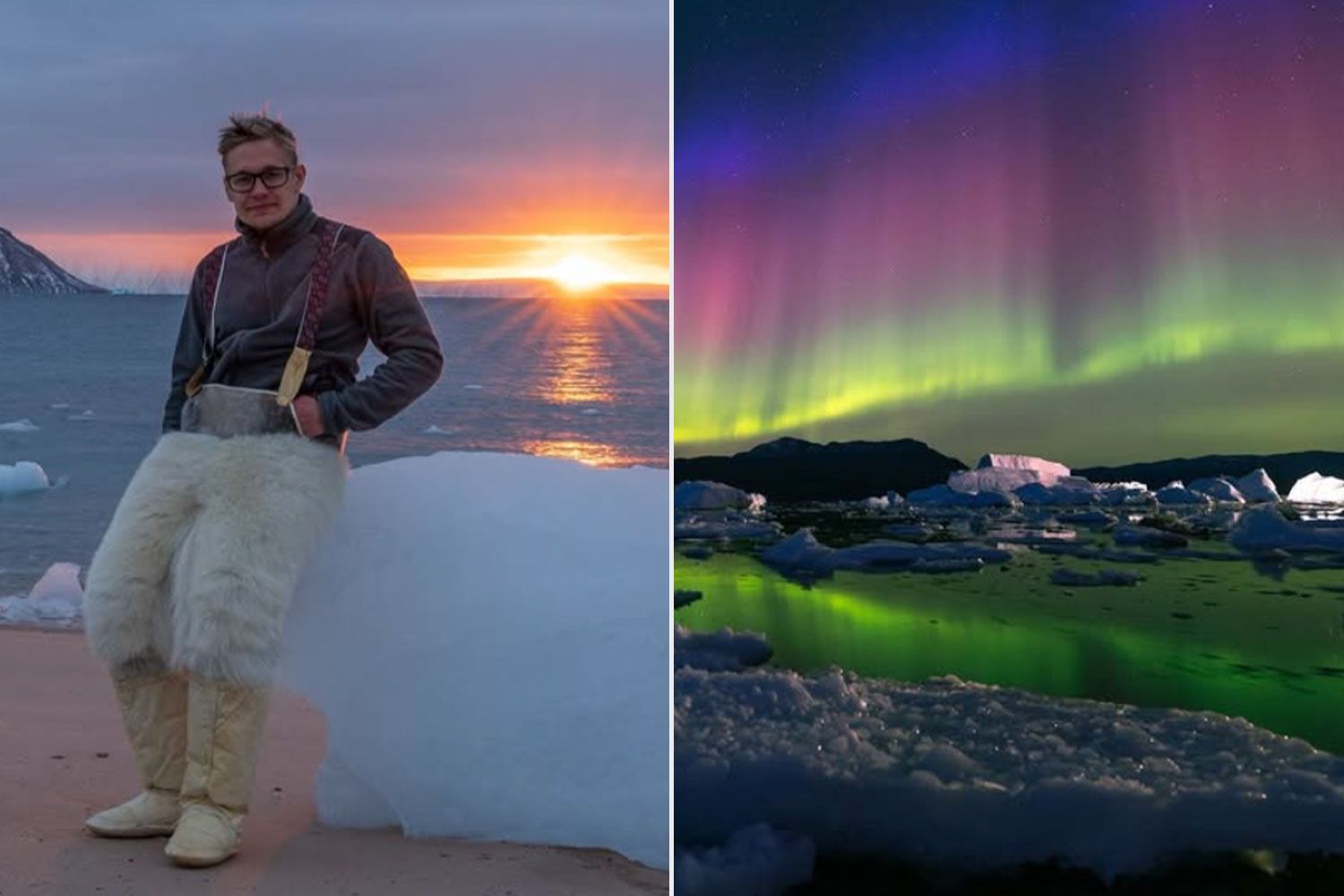
Aurora Borealis Hunter Shares What He’s Learned After Years of Chasing the Northern Lights.
Dennis Lehtonen/Instagram
At that point in time, Lehtonen was “obsessed with space” and “very passionate about the stars,” so seeing the aurora felt like a natural extension of his interests and compelled him to quit his university to continue fulfilling his hobby.
Lehtonen then realized Helsinki wasn’t the right place for his passion. It was too far north for photographing planets and too far south for reliably seeing the northern lights, making it a challenging location for sky-related observation or photography.
“So I had three options, and one of them was farther north. I chose that one because it gave me a better chance of seeing the northern lights,” he says.
“This was during the pandemic in 2020 – it was a new city, I didn’t know anyone and it wasn’t a very fun time. I spent my days studying and in my free time, I would climb up a water tower where there was another observatory. Sometimes you could even see the northern lights over the city, which made it a better location for my hobby.”
From there, Lehtonen made his way to small, remote villages in the far north. He worked basic jobs to get by, but his free time was spent in the wilderness, often at midnight, waiting for the northern lights to appear. That became his way of life for the next three years.
One of his most memorable experiences with the northern lights ties back to an old Finnish legend. “In Finland, we actually believe the northern lights are created by a fox,” he explains. In fact, the Finnish word for aurora is revontulet, which translates to “fox fires.”
According to folklore, a magical fox runs across the snowy wilderness of Lapland, and as its tail brushes against the snowflakes, sparks fly into the sky, creating the lights.
“It was a full moon, and I was photographing very basic northern lights, but a wild fox came up to me and stayed around for about 15 minutes,” he recalls.
“A week later, I was in the same place photographing again, this time with no moon and the same fox came back. I took off my gloves to make it easier to photograph the lights with the fox in the foreground, and when I left my gloves on the snow, it took them — the fox stole my gloves.”
Aurora Borealis Hunter Shares What He’s Learned After Years of Chasing the Northern Lights.
Dennis Lehtonen/Instagram
That mystical encounter with the fox was only the beginning. Spending countless nights under the sky also taught Lehtonen where the northern lights truly reveal their magic.
“Sometimes you’ll see the northern lights as far south as Italy, Spain, China, or even Texas,” Lehtonen says.
“But those places almost never get the fast-moving green auroras. They’ll usually see a red glow, sometimes purple or blue, but mostly red. The red lights are very different — they’re faint, barely visible to the eye and they mostly show up in photos. The green ones can be incredibly bright and fast-moving.”
Lehtonen says photographing the auroras doesn’t require expensive gear. When he first arrived in Lapland, he wasn’t even a photographer, but the northern lights inspired him to start capturing what he saw.
“For photography purposes, you don’t need very expensive equipment,” he explains.
“I never had a camera before going to Lapland. I bought a pre-owned Sony for about $500, and a lens for maybe $200. You don’t need to spend thousands; you can get decent equipment for under a thousand. Even a good smartphone with a small tripod can work.”
Still, capturing the aurora borealis is more than just pointing a camera at the sky. Lehtonen carefully prepares for each shoot, packing for long nights in the cold and scouting locations that can add depth to his images.
“I try to create northern lights photos with an interesting foreground,” he says.
“It’s not only the lights — it can be a person looking at the aurora, a lake reflecting them when it isn’t frozen, a mountain or even a lonely tree. I want the composition to feel artistic. Sometimes I’ll spend seven, eight, even ten hours outside to get the right shot.”
Aurora Borealis Hunter Shares What He’s Learned After Years of Chasing the Northern Lights.
Dennis Lehtonen/Instagram
Rather than relying on apps, Lehtonen studies real-time space weather data to know when the auroras are most likely to appear.
“I don’t always go blindly outside,” he says. “Some people miss out if they only trust apps. I prefer to read the data myself.”
To many northern lights chasers’ surprise, the popular apps they rely on can often be misleading.
“I know many people who saw an app saying there was only a 10 percent chance, but outside there were big northern lights and they missed them,” Lehtonen says. Instead, he studies real-time space weather data, which he finds far more reliable.
When it comes to catching a glimpse of the auroras, location makes all the difference in the world. In some regions, even quiet nights with minor geomagnetic activity can trigger breathtaking displays.
In the best locations — like Fairbanks in Alaska, Yellowknife in Canada, Iceland, Lapland and southern Greenland — you don’t need strong geomagnetic activity to see the northern lights,” Lehtonen explains.
“Even on a quiet day, you can get really beautiful auroras.”