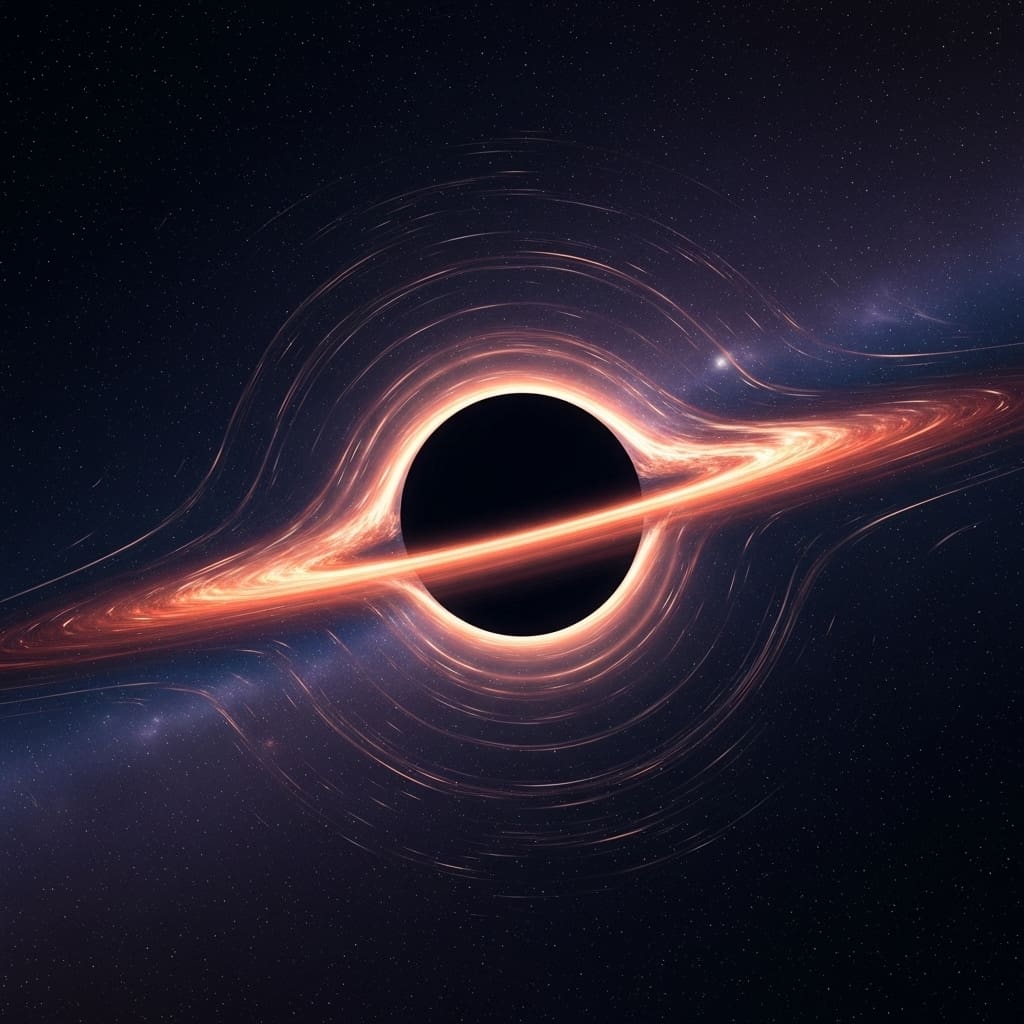
The fundamental connection between gravity, quantum entanglement, and information loss receives fresh scrutiny in new research concerning black holes, specifically a type known as a ‘bumblebee’ black hole arising from spontaneous Lorentz symmetry breaking. A. A. Araújo Filho, from Universidade Federal da Paraíba, Universidade Federal de Campina Grande, and Khazar University, alongside Wentao Liu from Lanzhou University, investigate how information behaves near these exotic objects, revealing subtle distinctions between different quantum vacua despite sharing the same spacetime geometry. Their work demonstrates that even with Lorentz-violating corrections, the equivalence principle, the idea that gravity and acceleration are indistinguishable, remains valid, and extends the concept of horizon-brightened acceleration radiation (HBAR) entropy to these black holes, offering new insights into the production of entropy from infalling matter. This research achieves a deeper understanding of the interplay between quantum information, gravity, and fundamental symmetries, potentially bridging gaps in our knowledge of black hole physics and quantum gravity.
Scientists studied how quantum entanglement degrades for various quantum states, including squeezed states and Gaussian states, as they propagate through the black hole’s intense gravitational field. This analysis reveals how breaking Lorentz symmetry modifies the spectrum of Hawking radiation, the thermal radiation emitted by black holes, and introduces corrections to the black hole’s temperature and entropy. Furthermore, the research explores how the geometry near the black hole affects quantum Fisher information, a measure of how precisely parameters can be estimated, demonstrating a significant reduction in information content due to spacetime distortion and symmetry violation. The findings establish a connection between Lorentz symmetry breaking, quantum entanglement, and the thermodynamic properties of black holes, offering insights into the fundamental nature of quantum gravity and the information paradox.
Black Hole Shadows and Gravity Tests
Research in this area centres on the calculation and analysis of black hole shadows—the dark regions formed when black holes block and bend surrounding light through strong gravitational lensing. These phenomena provide powerful tests of general relativity and offer a framework for exploring alternative theories of gravity. Many studies investigate extensions and modifications of Einstein’s theory, including Scalar–Tensor–Vector Gravity (STVG), Modified Gravity theories, and Effective Quantum Gravity, which seeks to incorporate quantum effects into gravitational interactions. Researchers also examine Hamaus–Sutter–Wandelt void spacetimes, alternative cosmological models, and scenarios involving Lorentz symmetry violation, where fundamental spacetime symmetries are broken.
A major focus of this work is understanding how such theoretical modifications influence black hole properties and their interactions with radiation and quantum phenomena. Strong emphasis is placed on observational tests, particularly using data from the Event Horizon Telescope, which has produced the first direct images of black hole shadows. The research further integrates concepts from quantum information theory to study entanglement, information flow, and radiation processes in curved spacetime near black holes.
Much of this research is led by W. Liu, who frequently appears as first author alongside collaborators D. Wu and J. Wang. S.-M. Wu is a prominent contributor to studies of quantum information and entanglement in curved spacetime, while A. Övgün focuses on black hole radiation and quantum effects. A. Rahaman investigates radiation from atoms falling into black holes, and M. Khodadi studies Lorentz symmetry violation and its implications for black holes and cosmology. Additional collaborations include work by N. Heidari and A. A. Araujo Filho on various aspects of black hole physics.
Entanglement Degradation Near Bumblebee Black Holes
This research investigates entanglement and mutual information within the spacetime surrounding a bumblebee black hole, a theoretical object arising from spontaneous Lorentz symmetry breaking. Scientists measured logarithmic negativity and mutual information to quantify the correlation between two detectors, Alice and Bob, under various conditions. Results demonstrate that even with identical spacetime metrics, different Lorentz-violating vacuum configurations become distinguishable near the black hole’s horizon, particularly at low frequencies. Experiments revealed that logarithmic negativity, a measure of entanglement, decreases rapidly as Bob approaches the event horizon, indicating significant entanglement degradation due to the strong gravitational field.
Notably, the Lorentz-violating bumblebee background consistently exhibited a higher degree of residual entanglement compared to the standard Schwarzschild black hole, suggesting that Lorentz violation partially suppresses gravitational decoherence. Analysis of the logarithmic negativity as a function of mode frequency showed a monotonic increase, indicating that low-frequency modes are more susceptible to horizon-induced noise, while higher frequencies retain more entanglement. Further measurements focused on quantifying the difference between spacelike and lightlike Lorentz-violating branches, using a deviation function. The team discovered that these branches become maximally distinguishable in the near-horizon and low-frequency regimes.
Specifically, the relative deviation of entanglement and mutual information reached a maximum of approximately 10% as the Lorentz-violating parameter increased from zero to unity. The team also examined the impact of the vacuum-orientation parameter, finding that the deviation between branches is sensitive to its value, with larger deviations observed at higher parameter values. These results confirm that Lorentz violation introduces a measurable distinction in the correlation structure of quantum fields near black holes, offering a potential pathway for detecting subtle violations of fundamental symmetries.
Quantum Entanglement Survives Bumblebee Black Hole
This research investigates the behaviour of quantum information near a bumblebee black hole, a theoretical object arising from spontaneous Lorentz symmetry breaking. By analysing quantum fields and atomic responses in the vicinity of the black hole, scientists demonstrate that even with modifications to the standard rules of spacetime, certain core principles remain valid. The team employed a near-horizon approach, focusing on the region immediately surrounding the black hole, and utilized the concept of Rindler correspondence to relate observations from different perspectives, including those of accelerated observers. The results show that while Lorentz symmetry breaking introduces subtle differences in how quantum entanglement is distributed, the fundamental equivalence principle, the idea that the laws of physics are the same for all observers, holds true locally.
Specifically, the response of a freely falling atom near the bumblebee black hole is indistinguishable from its behaviour in flat spacetime. Furthermore, the study extends the concept of horizon-brightened acceleration radiation (HBAR) entropy to this new black hole model, quantifying the production of entropy due to infalling atoms and providing insights into the thermodynamic properties of the system. The authors acknowledge that their analysis relies on specific approximations and assumptions regarding the bumblebee model and the behaviour of quantum fields. Future research could explore the implications of these findings for more complex scenarios, such as rotating black holes or the presence of additional fields. This work contributes to a growing body of research investigating the interplay between quantum information, gravity, and potential violations of fundamental symmetries, offering a deeper understanding of the universe at its most extreme limits.