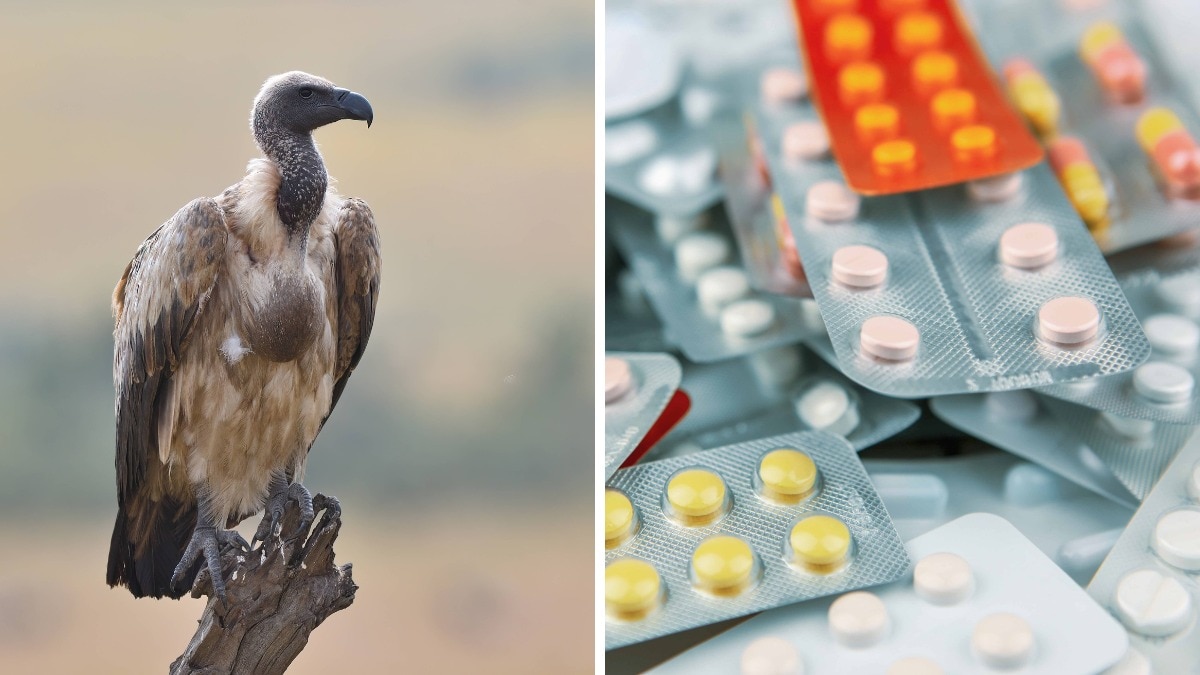
The government has banned nimesulide in doses above 100 mg, citing health risks linked to its use in humans. Nimesulide is a commonly prescribed painkiller and anti-fever medicine in India, but regulators say higher doses may pose serious safety concerns.
The decision follows worries that the drug can cause liver damage in some patients, which, in severe cases, may turn fatal.
A notification to this effect was issued by the Union health ministry on December 29 after a recommendation by an expert committee that included the Indian Council of Medical Research (ICMR). The move was subsequently endorsed by an advisory panel under the Central Drugs Standard Control Organisation (CDSCO).
Earlier this year, in January, the Centre had already banned all veterinary formulations of nimesulide following advice from a CDSCO panel.
That decision was driven largely by environmental concerns, particularly the rapid decline of vulture populations in India. The panel warned that nimesulide, widely used as a painkiller for cattle, remained one of the most significant existing threats to vultures.
The assessment was based on a safety-testing report on vultures conducted jointly by the Bombay Natural History Society and the Indian Council of Agricultural Research–Indian Veterinary Research Institute. The study found that vultures treated with nimesulide died within 24 hours of being administered the drug.
A DRUG DOGGED BY CONTROVERSY
Nimesulide has long been sold in India under brand names such as Nicip, Nimupain, Nimulid, Nodard Plus and several others. First introduced in Italy in 1985, the drug belongs to the non-steroidal anti-inflammatory drugs (NSAIDs) category.
From its early years, nimesulide attracted safety concerns and was never approved for use in countries including the United States, the UK, Canada, Australia, New Zealand and Japan. Doctors note that the drug can cause side effects such as stomach pain, nausea, vomiting, dizziness, skin rashes and diarrhoea.
Medical experts also warn that prolonged use may lead to elevated liver enzymes, liver toxicity, internal bleeding, clotting disorders and severe kidney damage. These risks prompted several countries, including Finland, Spain, Ireland and Singapore, to withdraw the drug between 2002 and 2007.
In 2008, the International Society of Drug Bulletins, a WHO-supported network, called for a global ban on nimesulide. The group said the medicine offered no clear therapeutic advantage over other NSAIDs while exposing patients to a higher risk of potentially fatal liver disorders.
INDIA’S REGULATORY TIGHTENING
India banned the use of nimesulide in children below 12 years of age in 2011 but continued to allow its use in older patients. However, concerns have persisted.
In March 2023, the Indian Pharmacopoeia Commission, the country’s apex drug standards body, warned that nimesulide could cause fixed drug eruptions—recurrent skin rashes appearing at the same site on the body.
The commission had advised that such adverse reactions be reported under its pharmacovigilance programme, underscoring the need for closer monitoring of the drug’s safety.
– Ends
Published On:
Dec 31, 2025