You get better faster when you stop relying on the same “safe” spots and learn how to pull a workable frame out of a place that feels like it has nothing to offer. This video is about that exact problem, and it hits the messy middle most people avoid when the light is harsh and the scene looks ordinary.
Coming to you from Steve O’Nions, this grounded video starts with a decision you probably recognize: a few free hours, the usual locations calling your name, and the quiet push to go somewhere you have not touched in years. O’Nions goes back to a scrappy edge-of-farmland area, not quite woods, not quite open country, and immediately runs into the constraints that change everything. Much of it is private, access is limited, and you cannot just wander into the best-looking clusters of trees. That restriction forces you to work with what is available from the margins, which is where your framing discipline either shows up or collapses. You also get a candid take on mixed results, including the kind of first frame that technically “works” but still feels scattered when you look at it.
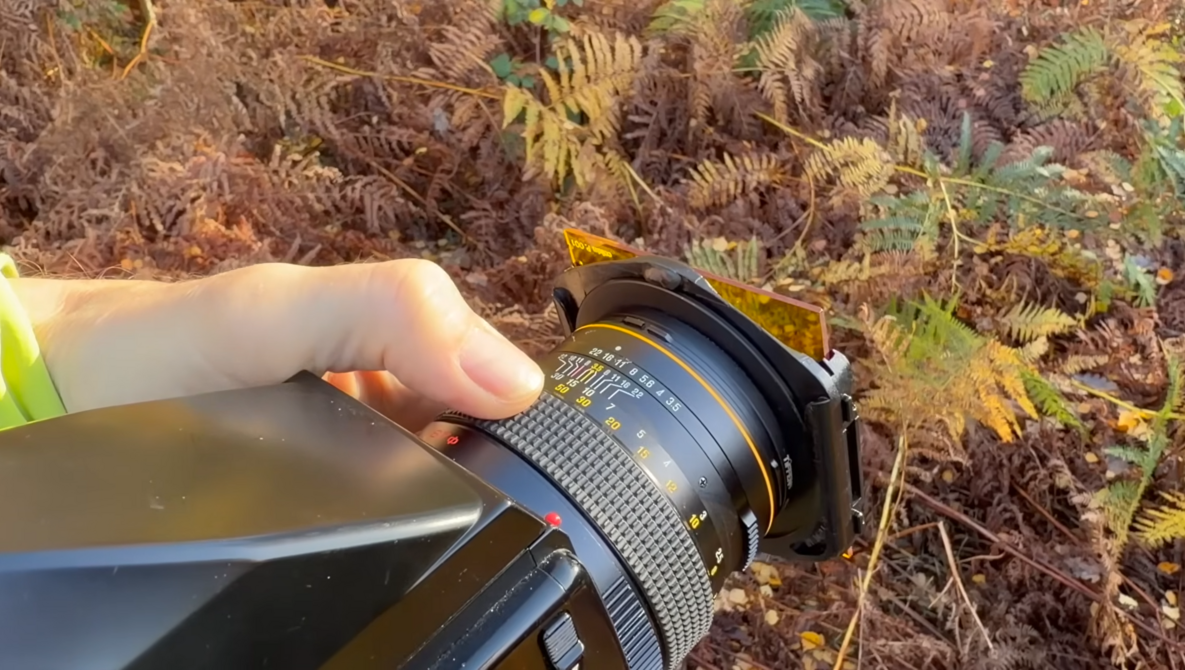
A big part of the lesson is how quickly bright sun can turn a simple idea into a fight with flare, especially on older gear like a Bronica with a wide angle setup. O’Nions shows a hands-on method of blocking stray light using whatever is on hand, then dealing with the annoyance that comes when you lose your view as the mirror comes up. You hear real exposure decisions in plain terms, including f/16 and f/22, and you see how a yellow filter can shape tone when the sky and highlights want to run away. There’s also a useful thought process around when to keep the sky out and when to let it in, even if you usually avoid it. The film choice matters here too, with Ilford XP2 Super brought up as a way to handle bright highlights without treating the whole scene like a lost cause. You do not get a fake “everything was great” storyline, which is exactly what you need when your own shoot starts rough.
The most practical thread is how O’Nions shifts subjects and focal length instead of forcing the first idea to succeed. A small group of trees that looks forgettable becomes more graphic once you tighten up with a 150mm lens, and once you start paying attention to silhouettes and branch structure instead of “pretty scenery.” You also see the value of making near-duplicates on purpose, not as a panic move, but as a way to test balance and highlight placement with tiny compositional changes. Later, a path and fence line show up, and the approach turns into controlled contrast rather than trying to make the light behave. There’s a smart preview of processing intent too, including pushing a high-key look in Lightroom while still protecting detail in dark trunks through generous exposure. The revisit angle is not nostalgia, it’s strategy: you leave with ideas for deeper winter, fewer leaves, cleaner shapes, and a different kind of frame than the one you would have chased on your “favorite” walk. Check out the video above for the full rundown from O’Nions.