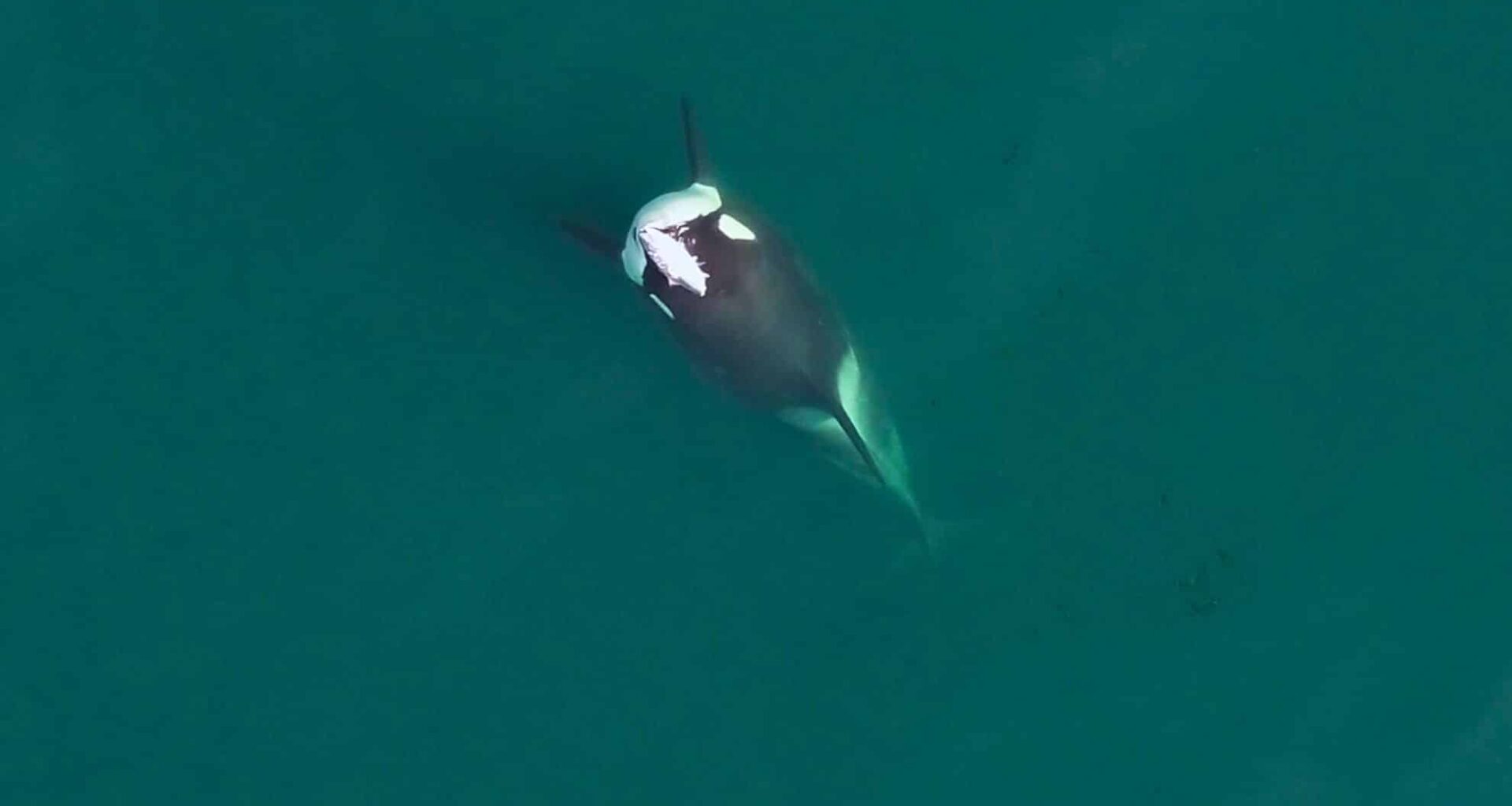
In Puget Sound, Washington, a rare sight has resurfaced involving the region’s endangered Southern Resident killer whales. On 25 October, a local photographer captured an adult male orca, identified as J27 or “Blackberry”, carrying a dead salmon balanced on his head. The image circulated rapidly among marine mammal researchers and long-time observers of this small, at-risk population.
The behaviour echoes similar reports from the 1980s, when several killer whales from the same group were seen repeatedly placing fish on their heads. This unusual display lasted for several weeks before disappearing. Since then, it has remained largely absent from observation records.
With only one recent image documented, researchers are approaching the case with caution. Although many are intrigued by the possible cultural or behavioural implications, experts have not confirmed whether the act is isolated or part of a re-emerging pattern.
The Southern Resident orca population is one of the most closely monitored groups of killer whales worldwide. Any unusual behaviour, especially one linked to feeding or social interaction, often raises questions about ecological conditions or internal group dynamics.
Resurfacing After Decades
The fish-on-head sighting occurred near the tip of a peninsula overlooking Puget Sound, a location frequently visited by these whales during seasonal salmon runs. Observers familiar with the Southern Residents immediately recognised the act and its parallels to earlier accounts from the late 1980s.
At that time, different pods within the population displayed the same behaviour over several weeks. It stopped abruptly and has not been consistently seen since. Stephanie Raymond, programme director at Orca Network, confirmed the significance of the recent image but also noted its singularity.
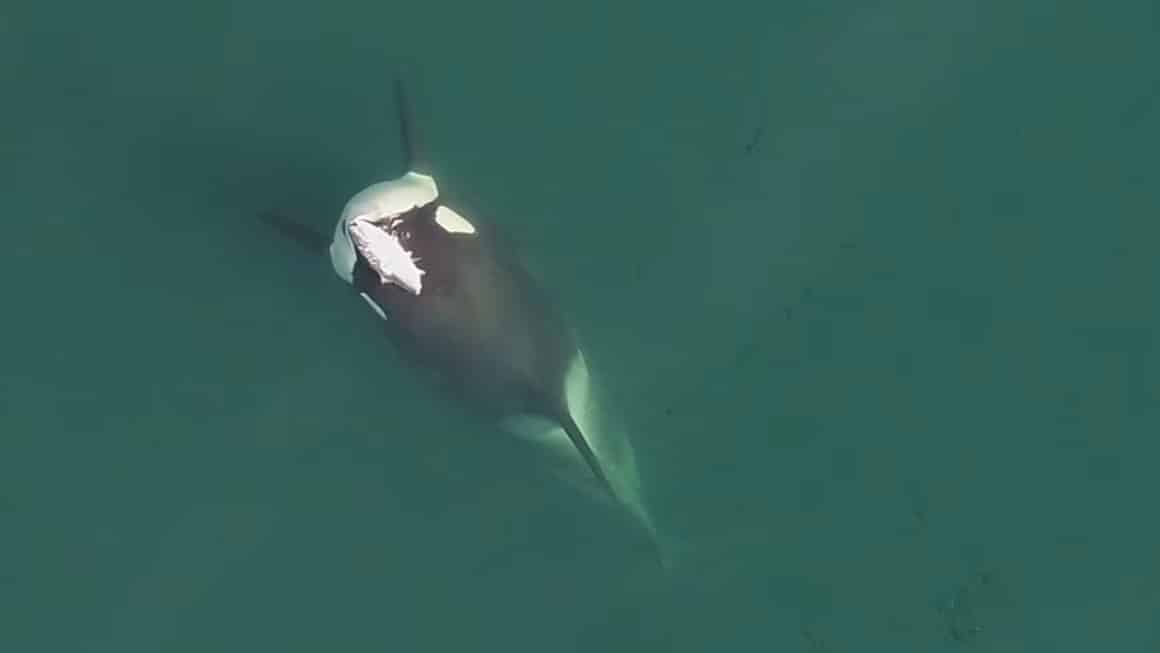 Drone footage from a 2019 research survey shows a young male orca known as A99 “Alder” with a dead salmon on his head. A recent sighting of another salmon-wearing orca also sparked excitement. Credit: Ocean Wise (DFO Marine Mammal License, MML18)
“There have not been any more recent images of these orcas wearing salmon hats,” said Raymond, according to CNN. “There is no shortage of eyes on the water and cameras capturing their visit, in addition to permitted research vessels carefully observing them.” She added that if the trend were returning more broadly, “there would be ample documentation of that.”
A second incident was described by Dr Deborah Giles, science and research director at Wild Orca, during a field research trip. As her team monitored the water using a detection dog to collect floating faecal samples, a member of the group noticed an orca momentarily surfacing with a fish balanced on its head. The individual could not be confirmed before the whale submerged again.
“I had enough time to shout to the front of the boat and say ‘hey, there’s a fish on the head behind me!’” Dr Giles recalled in the Earth.com report.
Interpretation Remains Inconclusive
The meaning behind the salmon-on-head behaviour remains unclear. Experts tracking orca behaviour say this action has not been documented across other killer whale ecotypes, such as Transients or Offshores, in the eastern North Pacific.
The Southern Residents are one of several distinct killer whale populations described in detail by NOAA Fisheries. They are known for strong matrilineal group structures, exclusive reliance on Chinook salmon, and unique acoustic dialects used for group communication and identity.
Howard Garrett, co-founder of Orca Network and a long-time researcher profiled in Read the Dirt, called the image of J27 “a standout photograph” and “a lucky shot.” His work has focused on documenting orca culture and regional conservation since the early 1980s.
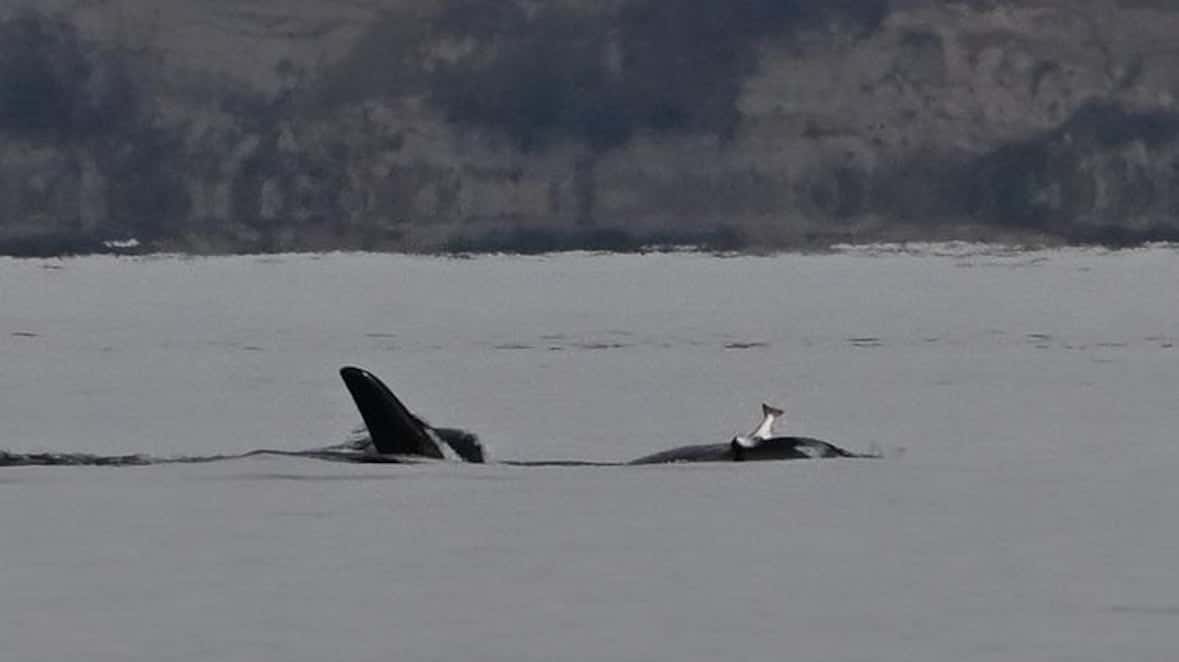 A whale was spotted in Puget Sound near Point No Point, carrying a dead salmon on its head. The image has researchers scratching their heads as to why the whale was doing it. Credit: Jim Pasola/Orca Network
Theories around this behaviour have included explanations related to social bonding or surplus prey availability. Some researchers, including those at Earth.com, have suggested it may occur when prey is abundant enough to allow non-functional actions such as play or experimentation.
Still, there is no confirmed behavioural function, and no consistent recurrence of this action has been seen in decades. Without further sightings, researchers say the phenomenon cannot yet be classified as cultural, social, or behavioural in nature.
Context and Conservation Outlook
The Southern Resident killer whale population has experienced a long-term decline, shaped by ecosystem disruption, prey depletion, and historical live captures for aquariums. NOAA Fisheries data shows the group decreased from an estimated 140 individuals in the mid-20th century to 71 in 1974. Although the number rose briefly in the 1990s, the 2020 census recorded only 72 whales.
These orcas are listed as endangered under the Endangered Species Act and are a focus of NOAA’s Species in the Spotlight programme, which targets marine populations most at risk of extinction.
Researchers and policy teams have launched extensive recovery efforts involving salmon restoration, marine noise mitigation, and habitat protection. Initiatives include non-invasive health assessments via drones, dietary analysis using faecal DNA, and year-round tracking to monitor movement and reproduction.
These efforts are designed to address multiple pressures, including vessel disturbance, pollutant accumulation in orca blubber, and seasonal food shortages. Chinook salmon, the primary prey for this population, is itself a threatened species, further compounding the whales’ vulnerability.