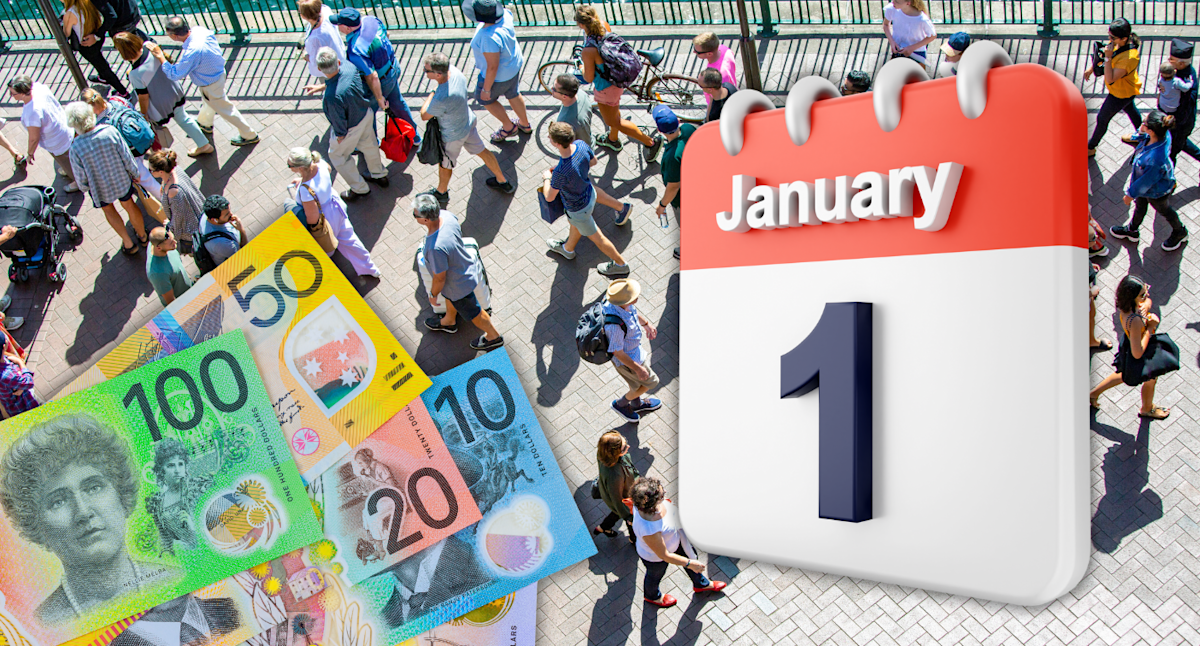
 We’ve entered a new year and there are a bunch of changes coming for Aussies. (Source: Yahoo Finance/Getty)
The new year is here, bringing a raft of changes that will impact Australians’ hip pockets. The start of a new year is usually when a range of government payments and thresholds are indexed, and new laws kick into effect.
Centrelink payments will increase for students and carers, and supermarkets and servos will be required to accept cash payments for transactions from today. More money changes have been flagged for later in the year, including the introduction of payday superannuation, tax cuts and price gouging laws for the big supermarkets.
Here’s a breakdown of all the major money changes happening in Australia from January 1, 2026 and beyond.
RELATED
More than one million Australians will see their Centrelink payments increase from today due to indexation.
Youth Allowance, Austudy, ABSTUDY, Youth Disability Support Pension and Carer Allowance recipients will see changes to their payment rates.
A single adult receiving Youth Allowance with no dependents and who lives away from home, will see their maximum fortnightly payment increase to $684.20. The Carer Allowance will increase to $162.60 per fortnight.
Income thresholds for student payments will also increase, and the parental income test threshold for Youth Allowance and ABSTUDY.
Supermarkets and petrol stations will be required to accept cash payments from today, with the government’s new cash mandate coming into effect.
The cash mandate will apply to in-person transactions of $500 or less between 7am and 9pm.
Small businesses with an annual turnover under $10 million will be exempt from the mandate, except if they share a trademark with a bigger retailer.
All families eligible for the Child Care Subsidy will be able to get three days of subsidised childcare per week from January 5.
The government is scrapping the current activity test, which calculates support based on how much a parent works or studies.
More than 100,000 families are expected to be entitled to more hours of subsidised care under the change.
Families earning between $50,000 and $100,000 are expected to save $1,460 per year on average.
The 3 Day Guarantee will kick in from January 5, to give all eligible families 72 hours of subsidised childcare per week. (Source: AAP)
The amount people have to spend on out-of-pocket medical expenses before qualifying for a rebate is increasing with indexation.
The Original Medicare Safety Net threshold will increase from $576 to $594.40 today.
This is the threshold you need to reach for Medicare to reimburse you 100 per cent of the Medicare Benefits Schedule.
The Extended Medicare Safety Net threshold will increase from $834.50 to $861.20 for people who have a concession car or get Family Tax Benefit Part A, and from $2,615.50 to $2,699.10 for others.
The most a patient will have to pay for a medicine listed on the PBS will drop from $31.60 to $25.00 today. This is for people without a Commonwealth concession card.
The Child Dental Benefits Schedule will cover $1,158 every two years for eligible families, an increase of $26.
The government scheme can cover part or all of the cost of basic dental services for eligible children aged 17 or under.
Passport prices will increase today, as they do each year, based on the consumer price index.
A 10-year adult passport will cost $422, up from $412. This will make it the world’s most expensive, ahead of Mexico at $335.95.
A DFAT spokesperson noted annual indexation had been legislated since 2011 and provided “consistency and transparency in how fees are updated”.
The incentives offered to Aussie apprentices will reduce from $5,000 to $2,500.
The priority hiring incentive for employers of apprentices will also drop from $5,000 to $2,500 at the start of the new year.
The payments are for those in an occupation and a linked qualification on the priority list.
It won’t impact those who started an apprenticeship before January 1, 2026.
Tradie apprentice incentives will be halved from $5,000 to $2,500 from January 1. (Source: AAP)
Looking to changes coming later in the year, payday super will come into effect from July 1, 2026.
This means employers will have to pay super at the same time as wages.
At the moment, employers only need to pay employee’s super contributions at least every three months.
New tax cuts will filter through from next year, with 14 million taxpayers set to benefit from the change.
From July 1, 2026, the 16 per cent rate will be reduced to 15 per cent for income between $18,201 and $45,000.
From July 1, 2027, the 15 per cent rate will be reduced further to 14 per cent.
The government has promised to introduce a $1,000 instant tax deduction for work-related expenses from July 1.
This would be an automatic deduction instead of claiming individual work-related expenses and would not require receipts.
Supermarket price gouging will be banned from July 1.
Supermarkets could face fines of $10 million per breach, three times the value of the benefit derived, or 10 per cent of the company’s turnover during the preceding 12 months.
The laws only cover very large retailers with revenue of more than $30 billion per year, meaning only Coles and Woolworths would currently come under the ban.
The government’s superannuation tax changes are also due to come into effect.
The government has flagged plans to make the total concessional tax rate applied to earnings on balances between $3 million and $10 million 30 per cent from July 1.
The total concessional tax rate applied to earnings on balances over $10 million will be 40 per cent.
Both thresholds would be indexed.
The Reserve Bank of Australia (RBA) has proposed banning surcharging on EFTPOS, Mastercard and Visa cards.
It says consumers and businesses would save $1.2 billion a year from the change.
It has pushed the time for finishing its review to March 2026.
The changes were due to come into effect from July following the review, with no update given on the timing yet.
Get the latest Yahoo Finance news – follow us on Facebook, LinkedIn and Instagram.