Posted on December 31, 2025
Posted by John Scalzi
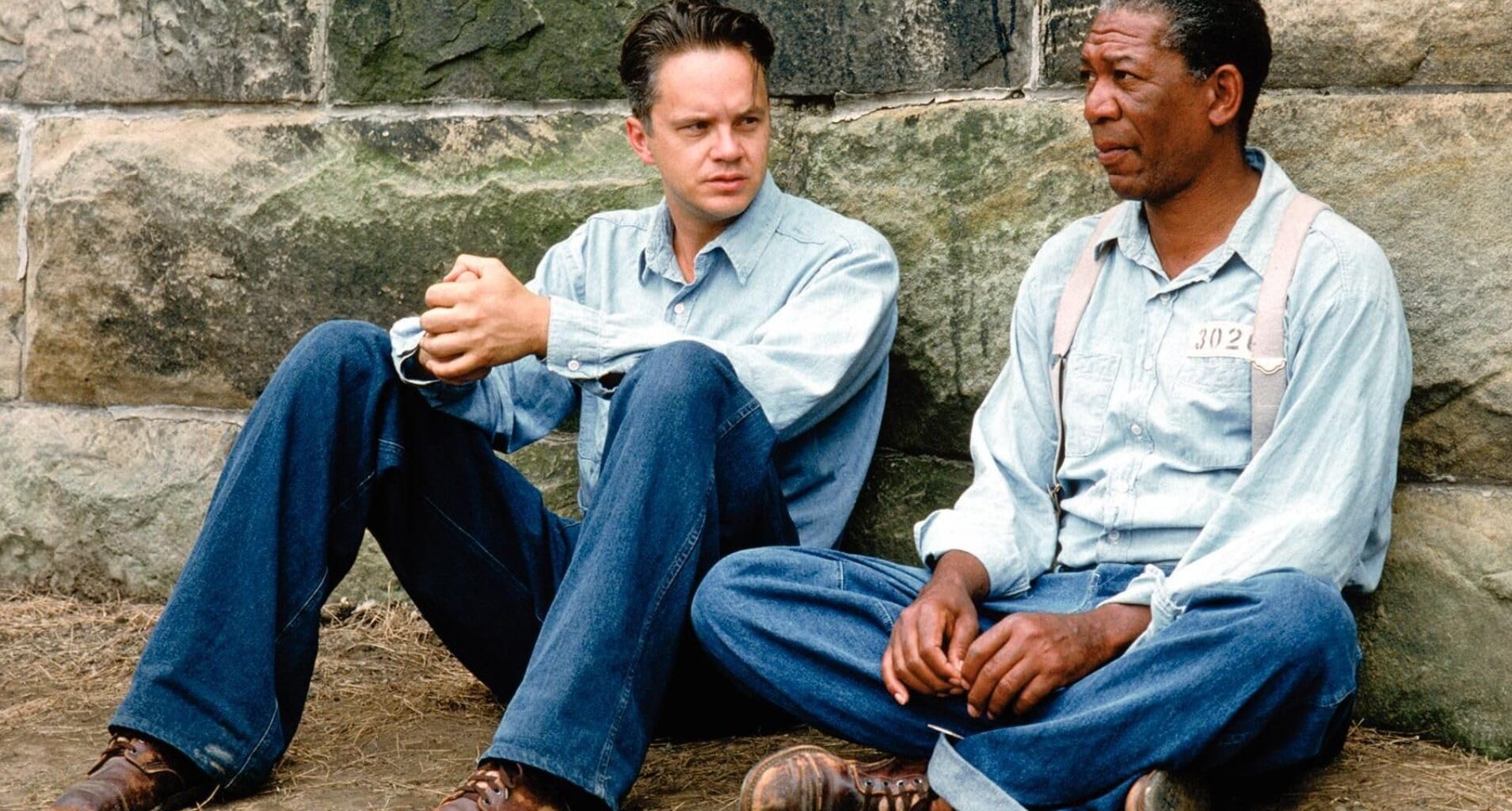
It’s strange, and possibly borderline offensive, to suggest that an at-the-time two-time Academy Award nominee and Golden Globe-winning actor had not arrived before appearing in The Shawshank Redemption. But guess what, this is precisely what I am going to do, right now. The Shawshank Redemption did a number of things: Gave Stephen King arguably his best movie adaptation. Moved Frank Darabont from a middlin’ genre screenwriter to the Hollywood A-list. Grabbed seven Oscar nominations, including Best Picture. Became the top-rated movie of all time on IMDb. This movie did all of these things. But what it truly did, was give the world its current understanding of the phenomenon that is Morgan Freeman. Freeman came into The Shawshank Redemption appreciated, admired, awarded and accomplished. He came out of Shawshank an icon.
It’s the narration, of course. The scaffolding of the entire movie, which Freeman offers in his rich, unhurried voice, offering context and commentary low and slow. Freeman isn’t just saying the words, he’s braising them, making them tender and toothsome but with just enough wry bite to keep the audience coming back. The words Freeman is saying come from Stephen King’s novella, filtered through Darabont’s screenplay. But make no mistake. The moment he starts speaking, they are his. It’s not an exaggeration to say that more than anything else, it’s Morgan Freeman, and his voice, that have made this movie the classic it is today. Take it away, it’s just another prison drama.
Maybe that’s too dismissive. Even without the narration, it would be a very handsome, very accomplished prison drama, and one that in many ways is clearly a labor of love for Frank Darabont. Darabont spent some of the money he got for his first feature film screenplay (A Nightmare on Elm Street 3: Dream Warriors) to secure an option on “Rita Hayworth and the Shawshank Redemption” from its author Stephen King. He reportedly spent $5,000 on the option; King reportedly never cashed the check. Darabont wrote a script and took a meeting at Castle Rock Productions, home of another fellow who liked Stephen King, Rob Reiner. Reiner loved the script and wanted to direct it, offering Darabont a fair amount of money to let him do so. Darabont took less money for the opportunity to direct it himself.
I think this is was a good choice on Darabont’s part. The version of Shawshank that Reiner would have made would, I think, have been good — we have both Stand By Me and Misery to stand testament to that. That said, there’s a lightness to Rob Reiner’s work (yes, even when Annie Wilkes is taking a sledgehammer to Paul Sheldon’s ankles, we’re talking an overall gestalt), in the way he frames and lights and shoots his scenes, and in how he directs his actors. Reiner’s Shawshank would have looked and played very differently, even with the same script in hand.
Darabont doesn’t do “light” — not just in this film but in any of them. He tried to do light in The Majestic and while I like that film quite a lot, actually, boy, was he not the right director for that. Darabont is dark — well, “dark” makes it sound like he’s goth or something, which he’s not. Let’s say “somber.” He’s somber, and his frame is considered, and he doesn’t do a closeup when he’s got a perfectly good medium shot to go to. Shit, even his close-ups aren’t that close up.
I suppose a word that matches well with Shawshank’s pace and bearing is “stately.” Nothing fast, everything considered, all of it moving along in its own time. Which makes sense. Everyone in this movie is doing time. Twenty years, forty years, life. They don’t have to be in a rush for anything. So they’re not, and neither is this film.
(There are fight scenes, and they are violent, and things move fast there. Again, big picture, folks.)
Darabont’s sensibilities as a director are precisely right for the story he wants to tell here, one where we need to feel the whole wide expanse of the time these men have at their disposal, and how time itself disposes of them. One of the most celebrated parts of the film is an interlude where an older convict, one who has spent nearly all his life in the prison, is paroled and loosed upon the world — or more accurately the world is loosed upon him. “The world got itself in a big damn hurry,” he writes his friends, but Darabont doesn’t make the interlude hurry at all. He follows it, stately, to its inevitable conclusion.
There is a larger story here. It’s told mostly by Ellis “Red” Redding (Freeman) in narration, centering on his friend Andy Dufresne (Tim Robbins), who is serving two life sentences for the murder of his estranged wife and her lover. Andy doesn’t fit into prison, and not just because he was a banker in his previous life. There’s something else going on with him that makes him an odd fish. Nevertheless over time Red and his friends warm to Andy, and Andy returns the favor as the skills from his past life start to come in handy for a warden (Bob Gunton) who has big plans, not all of them on the up-and-up.
Andy is a lifer and his life is no cakewalk in prison, but he holds out hope, which is something Red doesn’t approve of. Hope of what? Hope for what? It’s never specified, and then one day an important piece of information comes to light about Andy’s crimes. Things happen not fast after that, but certainly quicker than they had before, and we discover why Red had to be the narrator after all.
In King’s novella, Red is Irish (a throwaway line in the script, played for humor, is all that remains of that), but after this movie there is no way anyone would imagine anyone else but Freeman in the role. Freeman gives the character gravitas, but not at the expense of making you forget he’s in prison, and rightfully so. Red’s a lifer, and has the perspective of a lifer. If he’s maybe a little smarter than most of the other inmates, with somewhat more perspective, it doesn’t make his position any better than theirs, and he knows it. Red has gotten to sit with his own bullshit for years and years, and Freeman’s performance reflects that fact. The character has gravitas because the world and his choices weigh on him.
That comes through, to bring everything ’round again, in the narration. Narration is almost never a very good idea in film. It usually means that you’ve come to the end of production and editing and realized, shit, some very important plot points have been left terribly unwritten in the script, quick, grab the lead and loop in some lines. Bad narration can drag a film down (see: the original version of Blade Runner, where Harrison Ford’s apparently intentional leaden line readings indicated what value he thought they brought to the film) or even make it more confusing than it was before (see: 1984’s version of Dune, which to be fair, no amount of explanatory narration could have salvaged). So why does it work here?
One, because going back all the way to King’s novella, this was always Red’s story, even as he’s telling it about Andy. The frame was always there, and always meant to be there; it wasn’t some rushed last-minute addition from the notes of a panicked studio suit. Two, because it is Morgan Freeman. That voice. That cadence. That intonation. That occasional wry remark. Freeman was nominated for Best Actor for this film, and make no mistake that the narration was a great deal of what got him the nomination. The rest of his acting is terrific, to be clear. But it’s the narration that has stayed with people over the decades. It’s arguably the most successful film narration ever.
Freeman did not win the Best Actor Oscar that year. It went to Tom Hanks for Forrest Gump. In the light of 2025, and the esteem in which Freeman’s performance is currently held, this could be seen as a puzzling choice. This is where I remind people (or, if they’re young, inform them) that The Shawshank Redemption was a box office failure when it came out in 1994. It cost $25 million to make and made only $16 million in its first spin through the theaters. The film’s seven Oscar nominations actually prompted Columbia Pictures to re-release the film in February of 1995, which goosed the domestic take up to just under $25 million. Then it came out on home video and was a monster, becoming the top video rental of 1995. That and incessant showings on basic cable, brought the movie to the esteem it has today.
But in 1994? Shawshank made less in the theaters than Forrest Gump made in its first weekend; throw in the February re-release and they draw up about even. It was a minor miracle that Shawshank was nominated for seven Oscars at all. It didn’t win any because it was up against Gump and Pulp Fiction and lots of other movies seen more by the public and by Academy voters. The only major award of any note that the film won was one it from the American Society of Cinematographers, who gave Roger Deakins their award for theatrical releases. Really, that’s pretty much it.
Fear not, for the Oscar comes to Morgan Freeman a decade later, in 2005, when he wins his statuette for Million Dollar Baby. By this time, Morgan Freeman has become Morgan Freeman, The Voice of God — literally, in the case of the film Bruce Almighty — and the most recognizable voice this side of James Earl Jones, Tim Robbins, who plays Andy Dufresne in Shawshank, will also win an Oscar, his in 2004. Curiously, both Freeman and Robbins will win their Oscars being directed by Clint Eastwood.
Does Freeman owe his eventual Oscar to Shawshank? You’ll have to imagine me making a see-saw motion here, since among other things Eastwood worked with Freeman before, notably on Unforgiven, and of course Freeman had turned in Oscar-caliber performances prior to Shawshank. But there’s no doubt that Freeman’s cultural capital had been raised considerably, and much of that comes from this role and its slow ascendance into public consciousness. Freeman is responsible for Freeman winning an Oscar. Shawshank is responsible for making Freeman, America’s Quiet Yet Comforting Voice of Authority, our very own ASMR Daddy, letting us know everything will be all right.
Morgan Freeman has become such a voice icon that there is an entire genre of internet meme devoted to putting text next to a picture of him so when you read the text, you hear him saying the words in your mind, automatically giving those words credibility, no matter what the words are. You could post the words “kittens are a wholesome and natural snack” next to Freeman’s face and suddenly at least some people would be wondering if that wasn’t true. It’s not true, by the way. Please don’t eat kittens. Also Freeman never said that. Freeman probably said none of those things that those memes attribute to him. The internet lies, people.
So instead, let me leave you with words Morgan Freeman did say, in The Shawshank Redemption, near the end of the film: “Get busy living, or get busy dying.” This is the choice Red has to consider for himself, and the choice he makes is informed by every other thing that has happened in the film. If you watched the film, you know his answer, and if you haven’t watched it I’m not going to spoil it for you now.
Either way, with or without Morgan Freeman saying them to you, I want you to consider those words in your own life, especially when things are difficult, as they so frequently are. The choices you make and the actions that come from them will make a difference to you and those around you. The Shawshank Redemption, in the end, is about this. You don’t need Morgan Freeman to tell you it’s important. But I have to tell you, it doesn’t hurt when he does.
Thanks for sticking with me for The December Comfort Watches this month. I hope the new year brings you joy, and comfort, and movies.
— JS
Like this:
Like Loading…
← 2025 In Review + Some 2026 Thoughts