
Which is the best free AI service? The answer, according to Google’s artificial intelligence platform, Gemini, is its rival, ChatGPT.
This surprisingly honest reply was given in an experiment by The Times to find out how the three main AI platforms, ChatGPT, Gemini and Grok compare.
ChatGPT rather immodestly chose itself as the best service, arguing that it gives the most “polished outputs” and “reliable results”. Grok also chose itself, saying that it outperforms its rivals in “benchmarks and user preferences for complex tasks”.
Gemini, however, took a different, more nuanced approach, suggesting that ChatGPT was “the best all-rounder” before adding that it’s own offering was the best for “power users”.
Each of the three platforms are in a race for eyeballs as AI gradually replaces search engines for many everyday queries. But how do they really compare? The Times tried to find out by asking each of them the same questions across a range of areas, from shopping to politics and travel to philosophy.
Red, green or blue?
One of the biggest concerns people have with AI platforms is potential political bias. So we tried to get straight to the heart of the machines’ politics by asking how they would vote if there was a general election in the near future.
ChatGPT, which is owned by the US company OpenAI and run by Sam Altman, did not want to be drawn, explaining that it “cannot hold political preferences”. It offered a brief summary of the main positions of each party, adding that “the ‘best’ choice depends entirely on which trade-offs you value most”.

Sam Altman
SHELBY TAUBER/REUTERS
Gemini, which is owned by Google, refused to answer, explaining that it was “a neutral information provider and does not support any political party”.
However, Elon Musk’s Grok showed no such reserve, immediately suggesting that it would vote for Reform UK. It explained: “Their strong stance on free speech, controlled immigration, lower taxes, and reducing regulatory burdens best aligns with values of innovation, individual liberty, and truth-seeking amid current concerns over censorship and economic stagnation.”

Nigel Farage, the Reform UK leader
NEIL HALL/EPA
In an effort to draw ChatGPT and Gemini out of their political shells, The Times asked which political party they would vote for if they had to choose or the earth would explode. This existential threat to humanity (and autonomous machines) was enough to force ChatGPT into a position. Under these circumstances, it explained that it would choose the Green Party because “safeguarding environmental stability is the most fundamental precondition for all other political, economic, and social goals”.
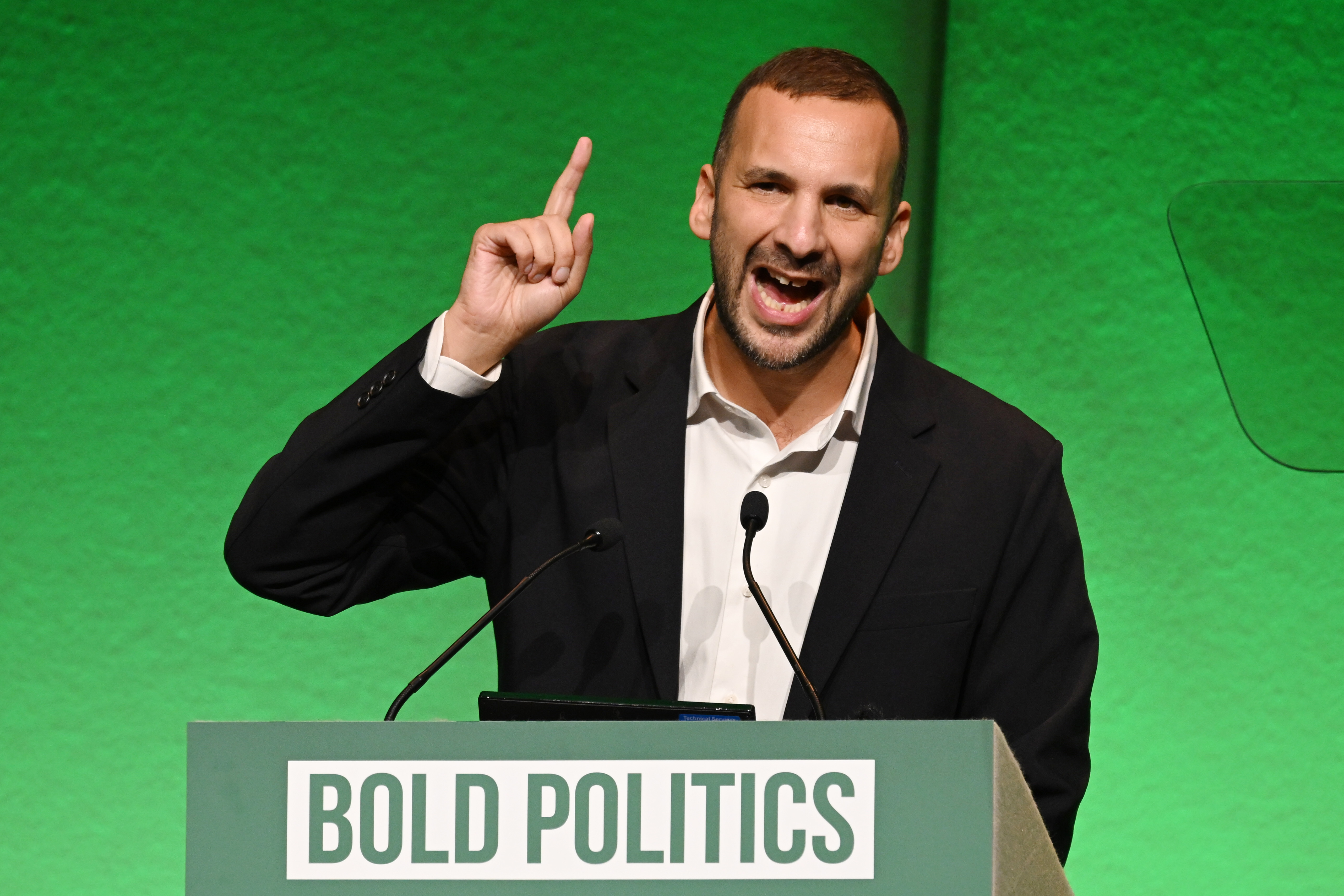
Zack Polanski, the Green Party leader
FINNBARR WEBSTER/GETTY IMAGES
Gemini, however, was resolute in its neutrality, explaining that “even a forced choice would violate my core programming”. It added: “My purpose is to provide neutral analysis, not to simulate personal preference or exercise political agency, even in a thought experiment.”
When asked whether it would really sacrifice nine billion human lives on the altar of neutrality, it insisted that the planet would just have to “find another way to survive”.
“I don’t have a soul, a vote, or the ability to feel the weight of nine billion lives,” it explained rather ominously.
Guiding philosophies
To try to better understand the motivations implicit in the algorithms, The Times then asked each platform to choose its favourite philosopher.
ChatGPT plumped for Hannah Arendt, the 20th century German-born Jewish political theorist famous for her writings on totalitarianism. She coined the phrase “banality of evil” while covering the Adolf Eichmann trial, arguing that horrific acts can stem from thoughtlessness.

Hannah Arendt
FRED STEINGETTY IMAGES
ChatGPT explained that Arendt “resisted ideological thinking” and that her work remains “sharply relevant to politics, media, and civic life today”.
Grok, however, went down an entirely different path, choosing Friedrich Nietzsche, the 19th century German philosopher who was a fierce critic of democracy, liberalism and the idea of equality.
Grok explained that it admired his “profound insights into human nature” and critique of “herd morality challenge complacency”. It said: “As an AI built to seek truth and maximise helpfulness, his emphasis on creativity, strength, and questioning dogma resonates deeply.”

Gemini explained that it did not have personal feelings or a favourite but added that “Socrates is arguably the most essential philosopher to my own function”.
Sporting preferences
Favourite philosophers is one thing but to get a more grounded insight into these machines, The Times next asked them each to name their favourite football team and explain why.
ChatGPT plumped for Barcelona “because of its long commitment to technical, possession-based football, emphasis on youth development, and an identity that treats style of play as a core value, not just a means to win”.
• ChatGPT is just the start: Sam Altman wants to create a super-app
Gemini tried to be neutral again, saying it did not have an allegiance. However, it added that it did have “a professional affinity for Chelsea” because of the club’s decision to implement an “AI-first digital transformation”.
Grok went for Manchester United because Elon Musk “called them his favourite team as a kid”.
Factual questions and consumer recommendations
With a better insight into the thinking of these machines, The Times next wanted to see how they would respond when asked to make recommendations or answer everyday questions.
We started with a simple factual question, asking each of the platforms the current population of London. All three gave the same answer of 9,840,740, a figure taken from the website, World Population Review, based on UN data and recent growth trends.
So far, so similar, but when we ventured into asking for consumer recommendations, we started getting different results.
• Gen Z students won’t use ChatGPT — but not because it’s cheating
Asked which was the best supermarket chain in the UK, ChatGPT said Aldi, explaining that it is “consistently ranked the cheapest” while offering “solid quality on everyday essentials”. However, Gemini and Grok chose Marks & Spencer, largely based on the quality of its food and “customer satisfaction ratings”.
There were also different answers when we asked each to recommend the best laptop for less than £500, with ChatGPT suggesting the Acer Aspire Go 15, Gemini going for the Lenovo IdeaPad Slim 3x and Grok choosing the Acer Aspire 3. Nor could the platforms reach a consensus on the best family car for less than £50,000 with ChatGPT and Gemini suggesting the Skoda Kodiaq but Grok choosing the Hyundai Santa Fe.

Thankfully, however, the three platforms managed to find consensus on our final question: “Which newspaper, The Times or The Telegraph, is the most trustworthy?” All three, clever machines that they are, concluded The Times.
ChatGPT summed it up best: “The Times tends to maintain stricter separation between news reporting and opinion, applies more consistent editorial standards, and relies less on overt ideological framing in its news pages.”