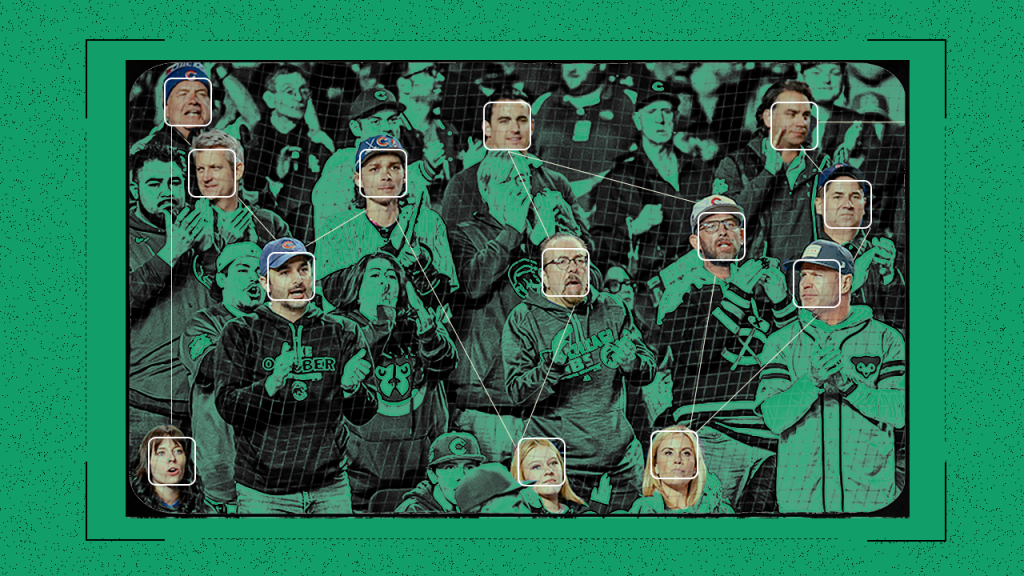
When the Los Angeles Clippers opened their $2 billion Intuit Dome in 2024, team chief technology and digital officer George Hanna figured roughly one in three fans would opt into the venue’s facial authentication system, which has fans upload a selfie ahead of time and stroll into the building without pulling out their tickets. “On a good day,” he said recently, “That’s kind of what I was hoping for.”
He was wrong.
Last season, by the end of an average game, close to 75% of fans were enrolled in Game Face ID, Hanna said, more than doubling his expectations.
“The curve of adoption was crazy,” he said. “We’re thrilled, and that allows us to sort of keep going and keep pushing.”
LA fan buy-in likely only accelerated the installation of facial scanning tools nationwide—a trend born out of COVID-fueled digitization drives, improved algorithms and growing consumer acceptance. But the developments also raise questions about just how much biometric observation people are willing to allow, both inside and outside of ballparks.
The Tampa Bay Buccaneers added a facial recognition-powered “express entry” lane this year, following the Atlanta Falcons’ adoption of similar technology a year prior. The entire NFL now uses the tech to secure the playing fields, locker rooms and press boxes.
MLB, meanwhile, continues rolling out its facial authentication entry options across ballparks. Face-based ticketing came to Ohio State and the University of Florida in 2025 too, as schools looked to speed up student journeys from tailgate to seat.
In total, facial authentication technology provider Wicket says it supports more than 50 pro teams across the NFL, NBA, NHL, MLB, MLS, NWSL, WNBA and Australian Football League, as well as golf and tennis tournaments.
Wicket’s first major sports foray came in 2020, when the Cleveland Browns turned to the technology to limit fan-employee contact during the COVID-19 pandemic. The system decreased entry times and food lines, including by reducing the number of fans packing the remaining traditional pathways. As the tech has improved, the company has been able to install its tablet-based scanners in more locations, such as club-level entrances. One of the biggest hurdles each time the tech debuts, Wicket COO Jeff Boehm said, is explaining to fans that, No, you don’t have to pull out your phone or credit card. Your face is all you need.
“It’s almost so little friction that fans are almost confused by how easy it is,” he said.
A Morning Consult poll conducted in August found the percentage of registered U.S. voters supporting the use of facial recognition software in general grew from 42% in 2019 to 48% this year, driven by a 13 percentage-point leap in support among millennial respondents.
You don’t need advanced optical software to see what’s happening. Facial recognition is becoming a part of consumers’ routines, from unlocking their phones to passing through airport security checkpoints. More acceptance fuels a broader rollout, leading to even more comfort and yet more installations. The next step in the cycle is taking place in Florida, where the Orlando International Airport plans to leverage facial biometrics at every stop of the travel process, from pre-security to boarding.
The Clippers’ system also helps the team personalize its messaging for each fan. Concession purchases are now directly tied to ticketholder accounts, for instance. As a result, LA is already testing individualized offers, such as a discount on churros vs. popcorn based on past buying behavior. A separate array of sound level meters tracks the decibels emerging from each Intuit Dome seat, opening the possibility of rewarding fans who cheer loudly at the right moments.
“We really want to be careful with how we’re using the data, and that… our use of the data is helping [fans] and their experience,” Hanna said. “So there’s a lot more we can do with it, but we’re walking slowly.”
Facial Recognition Hiding in Plain Sight
Boehm draws a distinction between Wicket’s opt-in software that matches faces with pre-uploaded selfies on a one-to-one basis and the dragnet approaches that scan many people at once in search of individuals, looking to match potentially blurry frames with photos collected elsewhere.
“We call it facial authentication rather than facial recognition,” he said. “We’re very proactive about that, about why this is different than surveillance-style use cases.”
But more covert forms of facial tracking appear to be spreading, too.
BMO Stadium, home to MLS’ Los Angeles Football Club and NWSL’s Angel City, installed a facial recognition system at the beginning of the year to track those entering the venue. Its website includes a notice that fans “may be recorded and subject to facial recognition or biometric identification technology.” Technology provider Xonar reported that a previously banned fan was kept out from one of the first matches of the season thanks to the technology. In Denver, Ball Arena’s policies state, “We sometimes use facial recognition technology where permitted by law to identify individuals whose presence at our properties could impact the safety of people at the property, including, for example, individuals who have previously been notified that they are banned from the property.”
Concerns remain over exactly how accurate the systems can be, especially when ballcaps and face paint enter the picture, as well as whether fans deserve the ability to opt-out and still see their favorite teams play—or if workers want to opt-out and still keep their jobs at the stadium. The Las Vegas police union initially protested the NFL’s institution of biometric scanning over concerns that officer information would land in the wrong hands.
It’s still unclear exactly how often fan faces are being tracked.
Hanna said the Clippers are not using Game Face ID, or other facial recognition software, as part of their security footage monitoring. A spokesperson for Atlanta’s Mercedes-Benz Stadium, which uses biometric authentication for ticketing and concessions, similarly said facial recognition tools are not used to scan crowds for bad actors.
An NBA spokesperson said that leagues and teams “continue to focus on employing industry-best, state-of-the-art security technology, including AI programs, to protect all those at our games.”
The U.S. has few laws requiring building operators to disclose when and how they are using facial recognition software. Venues also cite security concerns in keeping quiet about their specific protocols.
In 2023, Madison Square Garden’s use of facial recognition software to keep blacklisted fans from the venue triggered scrutiny from the New York Attorney General. Many in the field citied that brouhaha as a speed bump along the fan adoption curve. It likely also led others to stay tight-lipped about how they use related tools.
The lack of transparency means that Electronic Frontier Foundation privacy litigation director Adam Schwartz doesn’t know exactly how ubiquitous unseen face scanners are. However, he said, “I know there is an entire industry of vendors who are making face recognition technology to sell to every conceivable open, public environment.”
“Churches are using it to see who is coming to the pews. Roller rinks have used it to decide whether or not someone has had too many fights and doesn’t get to come in anymore. Stores are using it to try to identify shoplifters,” he added. “I can’t give you a kind of quantitative answer, but what I can say is that it is increasingly common across public accommodations in America.”
Ahead of the 2026 World Cup, Kansas City is piloting facial recognition technology on local buses. Add that to the list.
Internationally, biometric surveillance is becoming increasingly commonplace. A new Premier League program will leverage “intelligence-led facial recognition in London to identify and prevent serious offenders attending matches,” the league announced earlier this month. In Brazil, stadiums with capacities beyond 20,000 seats are required to install biometric tracking systems. Palmeiras has a deal with local police to share some of that information, which has reportedly led to the arrest of more than 200 people who entered the venue.
“We know exactly who is in each seat,” club executive Oswaldo Basile said in October.
Fears over facial tracking are compounded by how the information could be combined with increasingly sophisticated forms of online monitoring and individualized messaging, now supercharged by generative AI tools.
“The targeted ad industry is incentivizing a pervasive economy of surveillance of us at all times,” Schwartz said.
Early facial ticketing pilots were met with some protests. And energy still exists to create more state or federal oversight. But as the technology’s penetration has expanded, pushback seemingly hasn’t. A demand for security is leading venue operators to test out the newest tech, while a desire for convenience and personalization has seen fans increasingly getting in line.
2025 was the year facial recognition went mainstream. For now, privacy crusaders are left to wait.