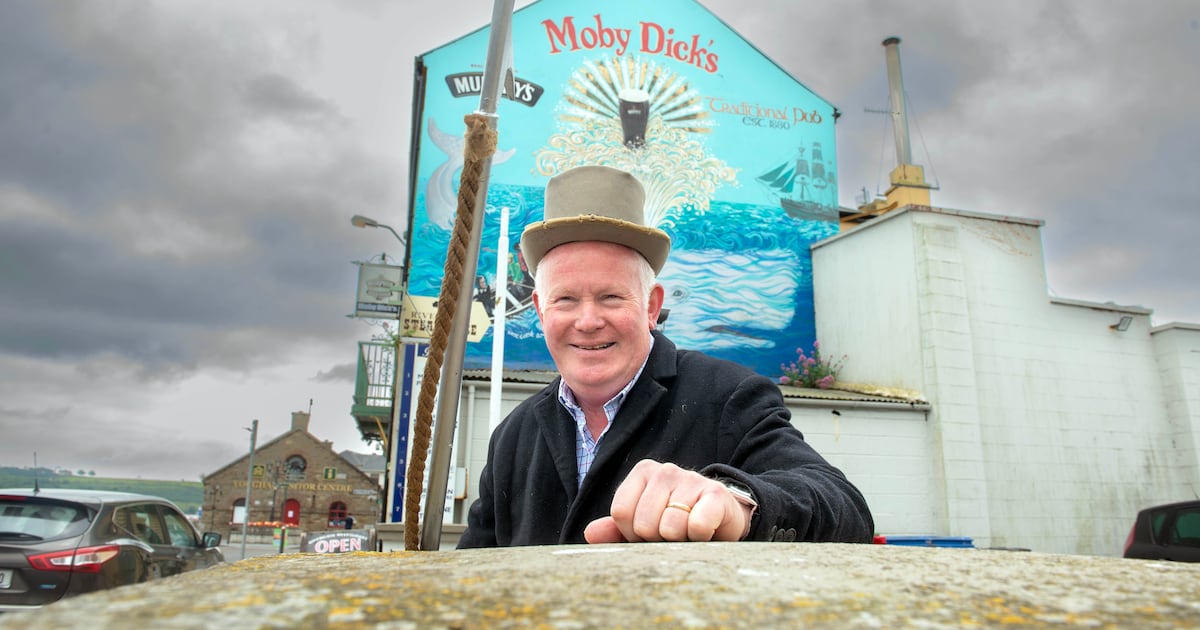
“Gregory Peck was terribly shy, my father said, whereas John Huston was more outgoing, while Richard Basehart and Noel Purcell were good, hardy boys; Noel Purcell would drink a fair few gin and tonics for you.”
Kevin Linehan (66) is recalling what his late father, Paddy, told him about the filming of Moby Dick in Youghal as he prepares to close the door for the final time on the pub renamed in honour of the film after it served as the offices for director John Huston and his film crew in 1954.
“I remember my father saying that he was selling two kegs of Guinness a week before Moby Dick, but during the film, there were so many people coming to Youghal to see it being shot, he was selling 10 kegs a week.”
Based on Herman Melville’s novel about Captain Ahab, the skipper of the Pequod whaling ship who was obsessed with killing an albino whale that bit off his leg, the film was set in New Bedford, with Youghal doubling up for the Massachusetts port in the opening scenes.
“Claud Cockburn, the journalist, was living in Youghal and he used to come into my father for a whiskey,” says Linehan “It was he who suggested to John Huston they should come to Youghal as the quayside here hadn’t changed in a hundred years.
“John Huston gave my father £5 a week to use the sittingroom as his office – they were only due to stay two weeks, but they ended up staying three months. My father used to say it was like sitting on top of an oil well with all the business it brought – it was the making of the pub.”
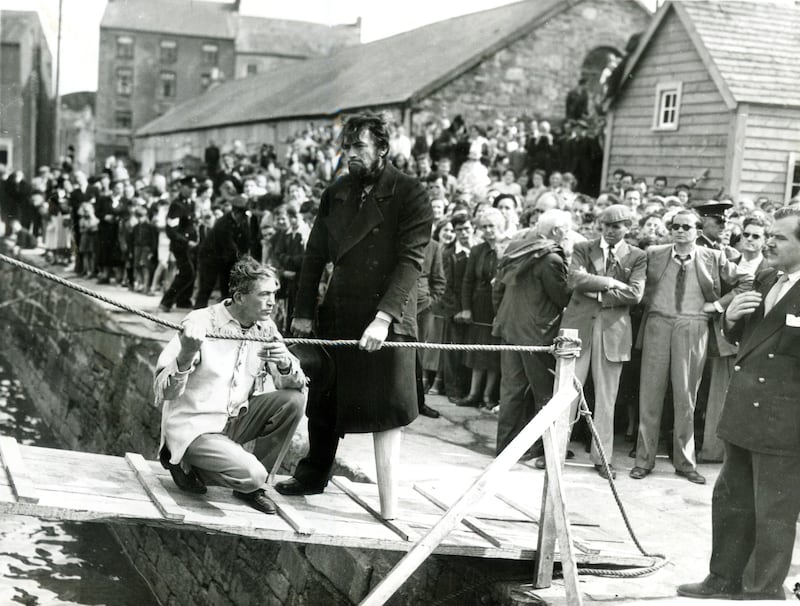 John Huston and Gregory Peck on the set of Moby Dick in Youghal on July 18th, 1954. File photograph: Dermot Barry/The Irish Times
First opened by Kevin’s grandfather, David Linehan, in 1880 and trading as Linehans, it was Kevin’s parents, Paddy and Maureen who renamed it Moby Dick. “Paddy Linehan had a good head, but he had a good wife too because it was she who put the investment in the place.”
Always popular with salmon fishermen, which was a big industry in Youghal at the time, Linehan’s was also popular with those working in bakeries such as Murphy’s and Mother’s Pride. “Bakers were great men for pints, they were thirsty men, I put it down to the heat.”
Throughout the ’60s and ’70s, Youghal was booming, with hundreds of people working at Seafield Fabrics, Youghal Carpets, Blackwater Cottons and Murray Kitchens “There were good wage packets in town and we were often full at 8pm on a Saturday night.”
When Kevin first started working as a teenager in the bar in the mid-1970s, a pint of Guinness was 25p. The only lagers on the market were Harp and Carling, while women were opting for sherry and port, he said.
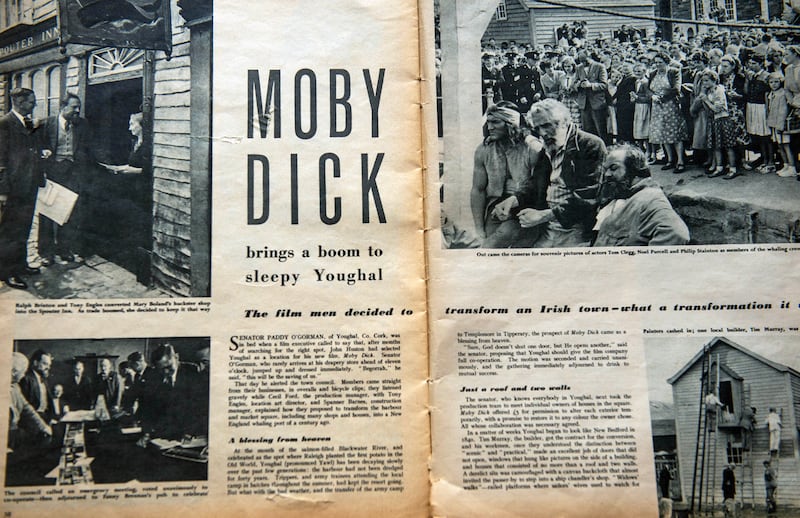 A newspaper double-page spread showcasing the making of Moby Dick in Youghal, Co Cork.
File photograph: Michael MacSweeney/Provision
“I recall my father saying he could float the Pequod with the amount of Palomino sherry he was selling – now a bottle of sherry would nearly last me a year. Gin became popular with women too for a while, but now it’s all vodka, though women are drinking pints too.”
With their three adult children, David, Deirdre and Marie all living elsewhere, Kevin and his wife Bríd have decided to shut up shop. They will close the doors for the last time on New Year’s Day.
Linehan remains hopeful a buyer will emerge to keep the bar, complete with film memorabilia, open for locals and visitors alike.
“I’ve worked here 50 years, so I was emotional when I announced our retirement. I always enjoyed the craic with our staff and customers – we’ve had an incredible journey here,“ he says. ”We want to enjoy our grandchildren while we still can, but Moby Dick’s will always be part of our lives.”