Punjab is set to witness a flurry of political activity this year in the run-up to the February 2027 elections. To make a judicious choice of their representatives, people need to assess carefully various claimants to power and their past performance. None of the contesting parties have an unblemished track record. None have delivered sufficiently on their poll promises.
Economically, Punjab is yet to regain its lost glory. Rising above personal prejudices, they need to look at the larger picture, particularly at financial management of the state. Long years of misgovernance have crippled Punjab and public disenchantment is widespread. Extravagance, unproductive expenditure and unlimited as well as misguided subsidies have pushed Punjab into a debt trap.
In the last election, for the first time, a new party of largely administrative novices and untested and unheard-of candidates was swept to power in a state which the Akali-BJP combine and the Congress had ruled, or rather misruled, by turns. The Aam Aadmi Party (AAP) stormed to power riding the wave of disillusionment and got a massive mandate from an electorate desperately looking for an alternative. However, power’s intoxicating effect has changed AAP from what it promised to be — a different party.
Delhi had a surplus budget when AAP took to distributing revdis. The party’s Delhi model based on liberal subsidies has pushed up Punjab’s debt to Rs 4 lakh crore. As a consequence, the state ranks among the lowest in the NITI Aayog Fiscal Health Index 2025. The debt-to-GSDP ratio, 46.6 per cent, is unacceptably high. Punjab has become the second most indebted state in the country after Arunachal Pradesh. Instead of debating this issue, special Vidhan Sabha sessions are called to discuss politically useful matters.
To be fair, AAP has inherited an empty treasury. A large amount is required annually to service the legacy loans which amounted to Rs 3 lakh crore.
Like other Opposition-ruled states, Punjab has suffered from a steady erosion of resources in the past 10 years. Centralisation of tax revenue by the Modi government and discrimination and delays in the release of funds have worsened the state’s fiscal stress. The NDA government headed by Atal Bihari Vajpayee had undermined Punjab’s efforts to boost industry by giving a tax holiday to neighbouring hill states. The present BJP-led dispensation has further hit Punjab’s trade and tourism with Pakistan and other countries by shutting the Attari-Wagah border.
But AAP’s contribution to the fiscal mess is no less significant. VIP culture is back. AAP’s non-Punjabi guests from Delhi, including those getting plum posts, annoy its political opponents no end apart from burdening the state exchequer. The use of helicopters for campaigning in various state elections is no less irritating.
Prior to the polls, AAP had vowed to stop illegal mining and generate revenue to fund freebies, but the problem continues to persist after almost four years in power. Revenue generation attempts are being made with plans to acquire and sell PSPCL properties in Bathinda and village land in Mohali.
After 2000, almost every government in Punjab has lacked fiscal discipline, relied heavily on subsidies and accumulated debt. What can a near-bankrupt government do for people? Problems kept multiplying. Free power to farmers has encouraged paddy cultivation and deepened the groundwater crisis. Fund-starved universities and colleges have been forced to hire contractual staff and raise fees, pushing higher education beyond the reach of less privileged students. Private educational and healthcare institutions have flourished. Inadequate public transport has led to proliferation of private vehicles and chaotic traffic in every city.
Cities and towns stink as garbage disposal is poor and unscientific. The state’s rivers have not been desilted for long, partly due to paucity of funds and partly due to lack of political will, resulting in floods last year. The victims have not got adequate compensation. The old pension scheme has not been revived. Contractual roadways staff keep protesting for regular jobs. All this because politicians divert money from development works to freebies for votes.
Despite successive wins — the latest being the Tarn Taran bypoll and zila parishad and panchayat samiti elections — AAP is unrelenting in its pursuit of a second term. Also helping it is the opposition parties’ state of disarray. The BJP is a minor player in Punjab and its leaders — Sunil Jakhar and Capt Amarinder Singh — are thinking aloud about renewing the alliance with the Shiromani Akali Dal (SAD), indicating a lack of confidence in the party going it alone.
The Sukhbir Badal-led SAD has regained part of its lost ground due to good flood relief work, but its once-strong vote bank stands depleted with the growing influence of a rival outfit, Waris Punjab De, and Giani Harpreet Singh-led Akali Dal. The Congress has several district-level leaders aspiring to occupy the Chief Minister’s chair. Groupism is rampant. The party is set to remain faction-ridden ahead of the elections unless its central leadership in Delhi decides to intervene decisively and reinvent the state unit.
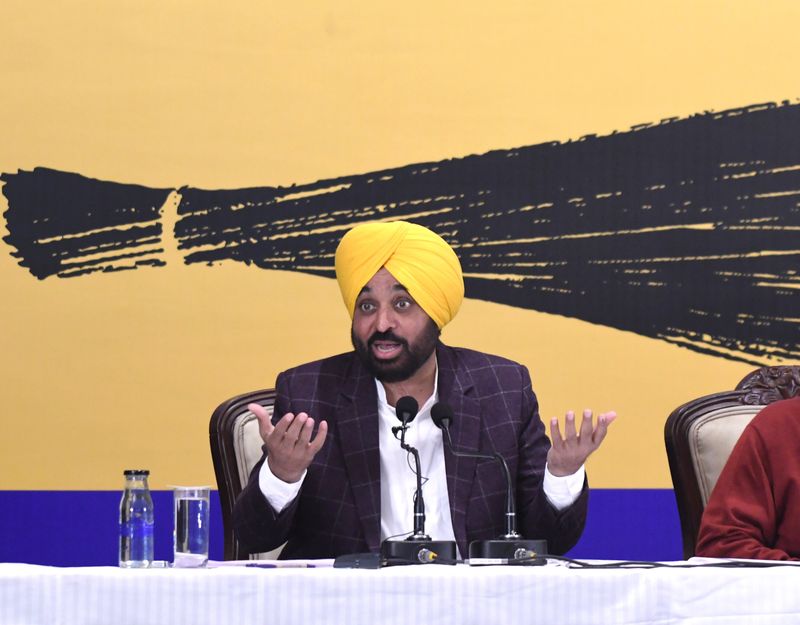
Despite all shortcomings, the Bhagwant Mann-led AAP government has done some good work, but there is more over-projection than concrete results on the ground. The rise of gangsters happened during the SAD-BJP and Congress regimes. So did the spread of drugs to every street corner. Mercifully, there are few allegations now of politician/police protection to gangsters and drug peddlers. The “Majha Jarnail” has been caged. Hitherto untouched police officers are being put in the dock. The net has been cast wide to catch the big fish.
Also commendable is the party’s focus on health and education. The announcement of free treatment up to Rs 10 lakh will provide much-needed relief to Punjabis. Subsidies come at a price. Either the government should have enough money to fund them or limit these to the underprivileged. However, the cost of AAP’s please-all freebies is met largely with borrowed money. Had it generated enough revenue from legitimate sources within the state, none would have complained.
Debt has seldom been a serious poll issue. This is partly because SAD-BJP and Congress governments, too, did not give much priority to tackling the challenge. Pursuing vote-first politics, they had no credible development model to follow. AAP is no different.