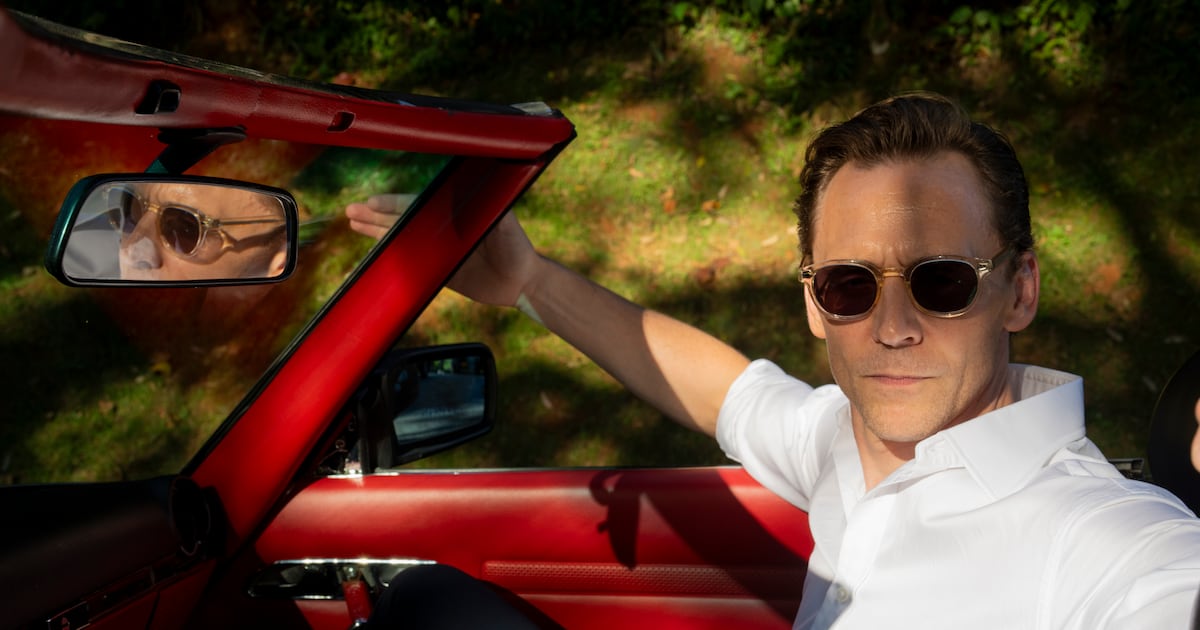
In an interview promoting the enjoyably claustrophobic second season of spy thriller The Night Manager (BBC One, 9pm), Tom Hiddleston noted that the world has changed radically since the BBC’s wildly unfaithful, hugely addictive John le Carré adaptation first debuted a decade ago. He was referring to geopolitics, but could just as easily have been talking about the espionage genre, which has been turned upside down by the success of Apple TV+ mega-hit Slow Horses.
Slow Horses brought kitchen-sink grit to the world of international intelligence gathering. Second time around, The Night Manager unapologetically takes up that baton: the vibe is Slow Horses with an extra spring in its step. As suave sleuth Jonathan Pine, Hiddleston emanates movie star glamour, but the world he inhabits is notably murkier than before.
Ten years after taking down mercurial weapons dealer Richard Roper (Hugh Laurie), Pine is now gainfully employed in a late-night surveillance unit. There’s no foreign travel and not much adventure – exactly as he would like it. However, his cosy life of sleep deprivation and office drudgery is interrupted when a contact at the foreign office dies in mysterious circumstances.
All the evidence points to suicide, but Pine suspects foul play. Digging deeper, he stumbles upon an international conspiracy connecting former associates of Roper to senior figures in the British government, with Colombian agent Roxana (Camila Morrone) as a key go-between.
While Hiddleston received top billing in season one, his thunder was stolen by both the fantastically despicable Laurie and by Elizabeth Debicki as a trophy wife with hidden depths. Both are badly missed. Oh, for a sprinkle of Laurie’s jovial villainy or one of Debicki’s soul-shrivelling stares.
The return of Olivia Colman as Pine’s fixer at the UK Foreign Office has been teased by the BBC, though she is nowhere to be seen in the first episode. We are also not treated to the steamy assignation between Pine and Roxana heavily hinted at in advance of the New Year’s Day broadcast. The one concession to spy-caper convention is the globe-trotting plot, which sees Hiddleston travel from Syria to London and then to Girona in Spain – not that this gloomy show gives us much Catalan sunshine.
Even at his most rip-roaring, le Carré was never big on James Bond–style high-jinks. That’s why his readers loved him: he made spying sound like a believable 9am-5pm grind rather than the 1950s male fantasy embodied by 007. To that extent, the new spin-off honours his vision and arguably takes it further – to the point where, as pointed out above, it verges on a Slow Horses cover version. As Hiddleston might point out, dark times call for dark TV. In that respect, The Night Manager gets the tone absolutely right, with compelling results.