Leica is working on developing its own image sensors again, an exciting and interesting development in an industry where there is not all that much diversity in image sensor technology.
Dr. Andreas Kaufmann, the Chairman of the Supervisory Board of Leica Camera AG, was recently a guest on the German language podcast, “Leica Enthusiast Podcast” with Michel Birnbacher. In the latest episode, published on Christmas Eve, Birnbacher had an extensive conversation with Dr. Kaufmann about all things Leica, from its 100th anniversary celebrations in 2025 to its latest products, including the polarizing but brilliant Leica M EV1.
But arguably the most exciting part of the conversation, as reported by Leica Rumors, came in the latter portion when Birnbacher and Dr. Kaufmann discussed the image sensors in recent Leica M-System cameras.
“We have plenty of ideas for further development,” Dr. Kaufmann said of the Leica M-System. “And that will be very exciting… As has already been partially reported, we’re also developing our own sensor again.”
Dr. Kaufmann continues, explaining that the sensor development has been ongoing and that it takes considerable time to develop an image sensor.
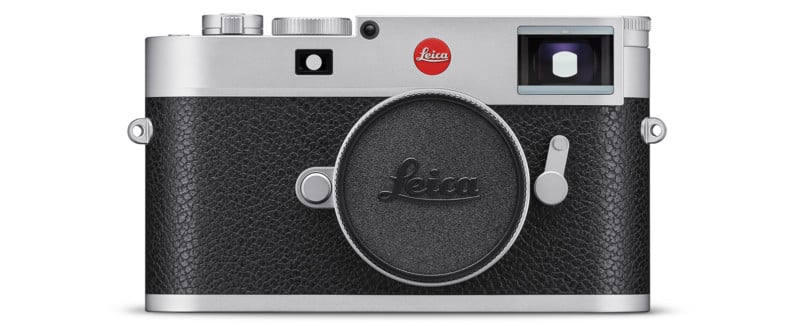 Leica M11 | Credit: Leica
What isn’t clear is precisely how long Leica has been developing an in-house image sensor, whether it will work with an outside party on final sensor production, or when a Leica camera with a new Leica-engineered image sensor may make it to market. Simply making a new camera, even if it has the same image sensor as its predecessor, can easily take three-plus years. Adding in a new image sensor only further complicates the process.
The most likely explanation here, and this is speculation, is that Leica’s engineers are working closely with an existing image sensor fabricator to design and create a brand-new image sensor for some future Leica camera. There aren’t many companies in the world that can make sophisticated image sensors.
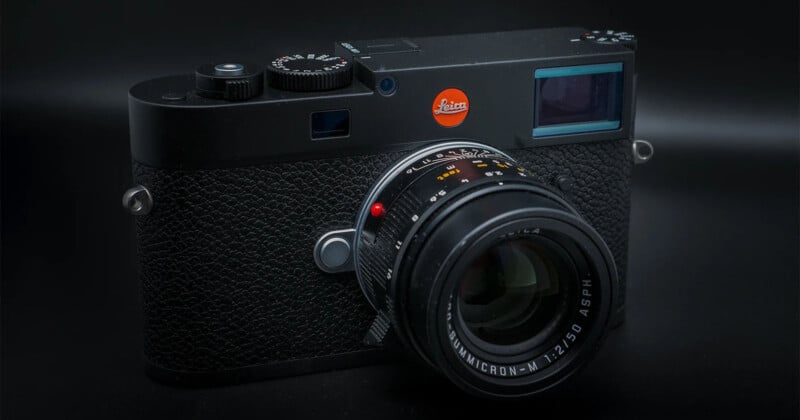 The Leica M11 | Credit: Matt Williams
As Dr. Kaufmann explained, Leica most recently used off-the-shelf Sony image sensors for its M11 series cameras, but for the M10, Leica developed sensors alongside AMS OSRAM, an Austrian image sensor company. However, as Dr. Kaufmann notes, Leica worked with AMS’ Dutch development company and the sensors were made in a French foundry. European through-and-through, nonetheless.
There is technically nothing stopping Leica from contracting Sony Semiconductor Solutions to create bespoke image sensors. While Leica has developed image sensors alongside a wide range of makers over the years, the image sensor market is much less diverse than it used to be, and “developing” an image sensor can mean many things. It can mean something as simple as installing a specific, unique color filter array in front of a widely available image sensor, tweaking the electronics below the image sensor, or working with a fabricator on an all-new sensor designed from top to bottom for a very specific photographic application.
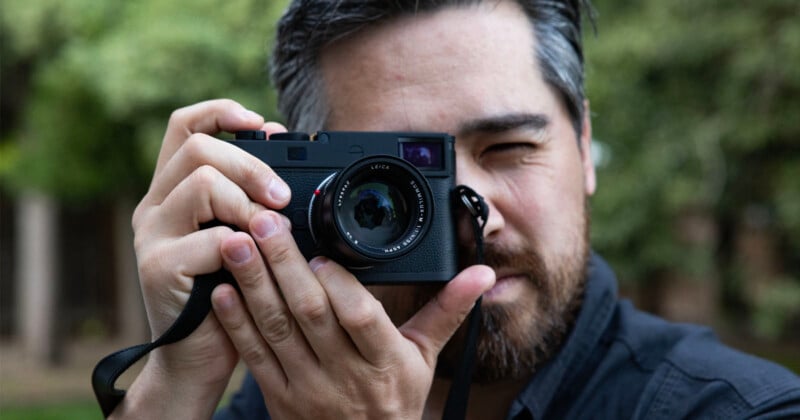 PetaPixel‘s Chris Niccolls using the Leica M11 Monochrom
What is clear, based on what Dr. Kaufmann told Michel Birnbacher, is that Leica is taking a much more hands-on approach to image sensor development for future cameras, and that’s exciting news.
The entire podcast episode is interesting, although again, it is in German.
Some highlights include that Leica’s largest market is the United States, and its second-largest is now China. Its home market, Germany, is in third place, but Dr. Kaufmann believes Japan will “probably overtake” Germany to take third.
Dr. Kaufmann also noted that Leica has “quite a few things in the pipeline,” so photographers should keep their eyes peeled for exciting news in 2026.
He also dished on the Leica M EV1, putting to bed any concerns longtime Leica M enthusiasts had that Leica may ultimately move away from the rangefinder. That is not happening.
“If you look at the family tree now, you would see a split into two branches,” Dr. Kaufmann said. “One that operates via the electronic viewfinder, and the other, for traditionalists like myself, [the rangefinder].”
While Dr. Kaufmann said the EVF will play a role in the Leica M-System, the company will maintain two product families.
Image credits: Leica