
A new study has found that changes in driving patterns could signal cognitive decline, with researchers identifying specific driving behaviours linked to mild cognitive impairment in older adults People with mild cognitive impairment displayed certain habits while driving – stock photo
A new study has suggested that a red flag warning sign of dementia could appear while driving. The research indicates that certain alterations in daily driving patterns could be indicative of cognitive decline.
The study, published in the Neurology journal, revealed that individuals with mild cognitive impairment (MCI) typically undertook fewer car journeys and tended to avoid unfamiliar routes and night-time driving. They were also less prone to speeding, but more likely to take turns too quickly.
The research involved 298 participants aged 65 or over who underwent a cognitive assessment at the start of the study and then annually for 40 months. Initially, 56 people had MCI, while 242 were categorised as having normal cognition.
As Medical News Today reported, the researchers used a global positioning system-enabled tracking device or datalogger to evaluate the participants’ driving. This assessed variables such as the number of trips, the time of day of the trip, distance travelled, destination location, the number of trips, and the frequency of speeding, hard braking, and hard cornering.
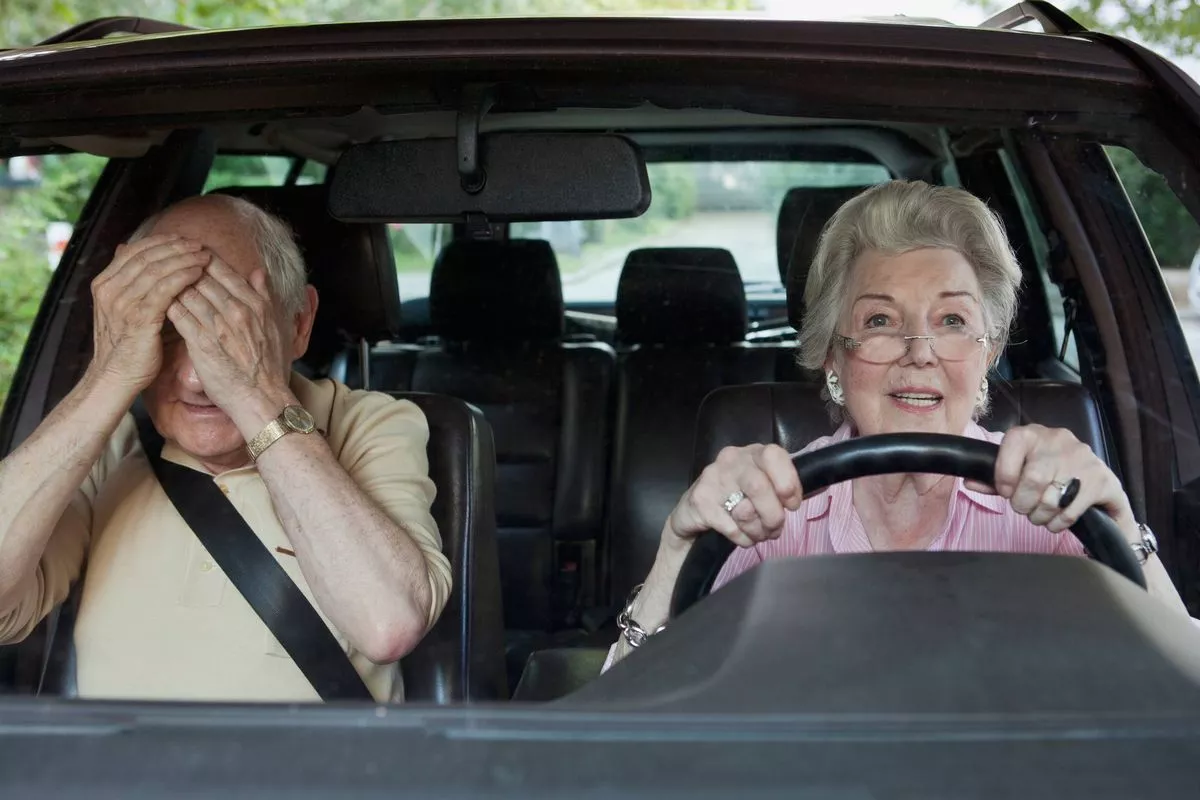 People with mild cognitive impairment were less likely to speed, but more likely to take turns too fast(Image: Getty)
Throughout the follow-up period, older adults with MCI made fewer trips, particularly at night, compared to those with normal cognition. They were also less likely to embark on long-distance journeys and were more inclined to avoid new or unpredictable environments, sticking to familiar routes, reports the Mirror.
Individuals with MCI demonstrated an increased frequency of sharp cornering throughout the follow-up period. The researchers observed that certain changes in driving behaviour, such as avoiding longer journeys or unpredictable environments, might represent adaptive tactics to compensate for deteriorating driving skills.
The more frequent occurrences of sharp cornering could be linked to declining driving performance, according to the team. The researchers subsequently examined whether participants’ driving behaviours could forecast their cognitive condition.
Scientists were able to determine the cognitive status of participants based purely on driving patterns with remarkable precision. The study revealed that the driving pattern-based model was superior in distinguishing between individuals with and without MCI compared to models relying on cognitive test results, gender, age, ethnicity, education, and genetic susceptibility.
The study authors stated: “Our findings suggest that digital driving biomarkers hold promise for early identification of cognitive impairment and may enhance existing approaches for assessing fitness-to-drive in older adults. Future studies should explore how these metrics evolve from normal cognition to MCI to dementia, evaluate their predictive validity in diverse populations, and test interventions to prolong safe driving through tailored education or support.
“Clinicians, researchers, and policymakers must collaborate to integrate digital monitoring into routine care while upholding ethical standards for autonomy, privacy, and informed decision-making.”
 There are 64,000 people with dementia in Ireland and the number of people with the condition will more than double in the next 25 years to over 150,000 by 2045(Image: Getty)
Previous research has established connections between dementia and alterations in driving ability. The Alzheimer’s Association notes that individuals with the condition may face challenges with spatial perception and colour recognition, complicating the task of driving.
“Some people living with Alzheimer’s or other dementia could experience vision changes. This may lead to difficulty with balance or trouble reading,” the Alzheimer’s Association states.
“They may also have problems judging distance and determining colour or contrast, causing issues with driving.”
The Alzheimer’s Society reports that one in three individuals with dementia continues to drive.
Nevertheless, the organisation warns: “However, over time, dementia affects the skills needed for safe driving.”
The charity elaborates: “As dementia gets worse, it affects these skills even more. This means everyone with dementia will eventually be unable to drive safely. How quickly this happens varies from person to person.
“Most drivers with Alzheimer’s disease will need to stop driving in the middle stage of dementia. Some types of dementia have certain early symptoms that mean an end to driving might be sooner.”
Subscribe to our newsletter for the latest news from the Irish Mirror direct to your inbox: Sign up here.