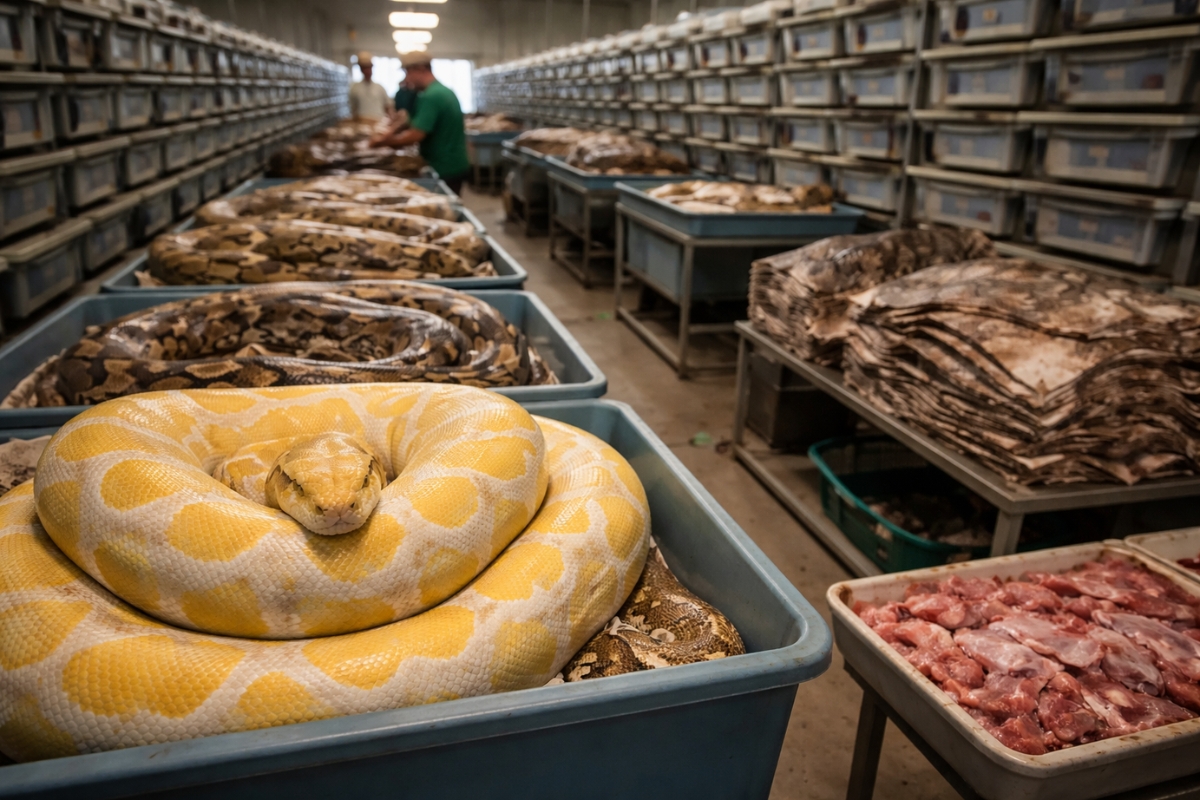
For centuries, snakes have been associated with danger, mystery, and fear. But there is a very different reality, silent and highly organized.
Today millions of python snakes They do not live freely in nature. They are born and raised in controlled environments, following standardized routines and integrating into a global production chain.
The process doesn’t depend on hunting or improvisation. It’s about… planned creation, with control over each stage and a defined destination for the generated products.
— ARTICLE CONTINUES BELOW —

What happened and why did it attract attention?
The industrial-scale breeding of pythons takes place mainly in Southeast Asia, with emphasis on Vietnam, Indonesia and Thailand.
The setting is far removed from forests and natural habitats. The structures operate in organized warehouses and facilities, designed for efficiency and control.
Everything is designed to maintain stability, from the animals’ living space to air circulation, as well as… temperature and the moisture precisely adjusted.
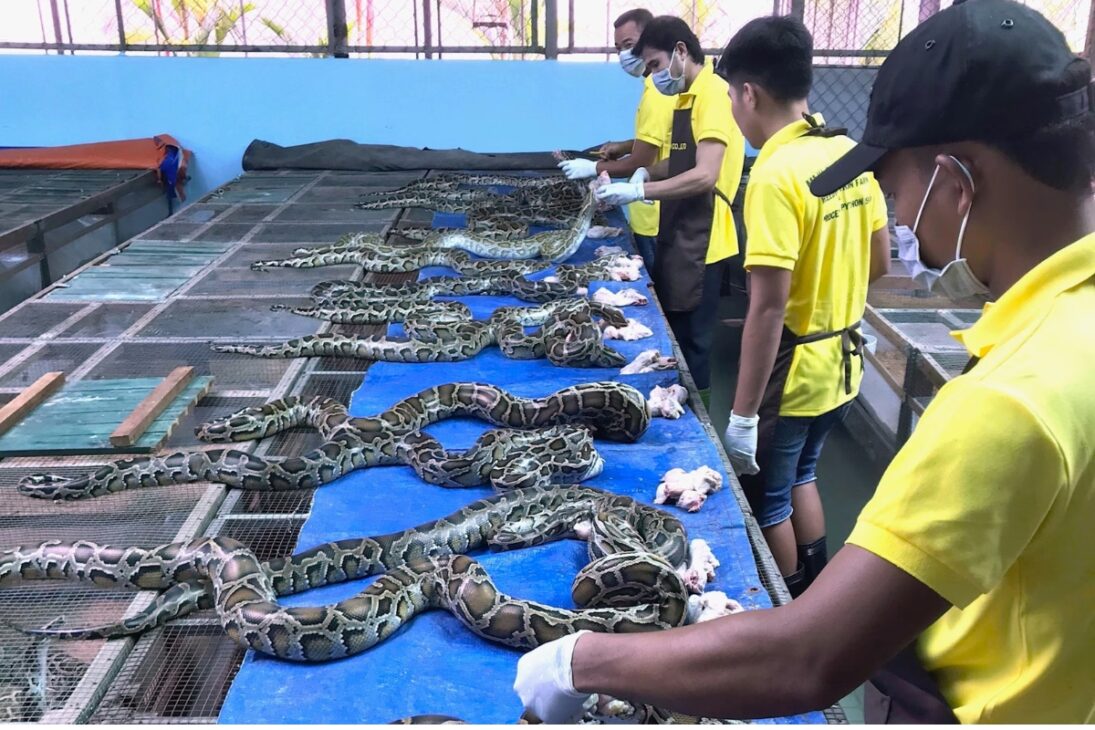
Where does this creation take place and what are the structures like?
The farms are specialized and operate with planned management systems. The goal is to maintain a standard of operation that allows for predictable growth and reduced losses.
The environment is controlled to prevent variations that could harm development. The idea is to ensure stable and repeatable conditions over time.
With this model, reptile farming grew without attracting much public attention, even with a presence in legalized operations connected to international trade.
How does prenatal planning work?
Nothing starts by chance. Before birth, each animal is already part of a plan that defines reproduction, management, and growth capacity on farms.
The farms maintain breeding stock selected by genetics, health and productive potential. Each crossbreeding is planned, and the number of eggs matches the system’s capacity.
Incubation and development take place under controlled conditions. temperature, moisture and lighting cycles. This allows for a more predictable process from egg to adult stage.
What is the growth phase and daily monitoring like?
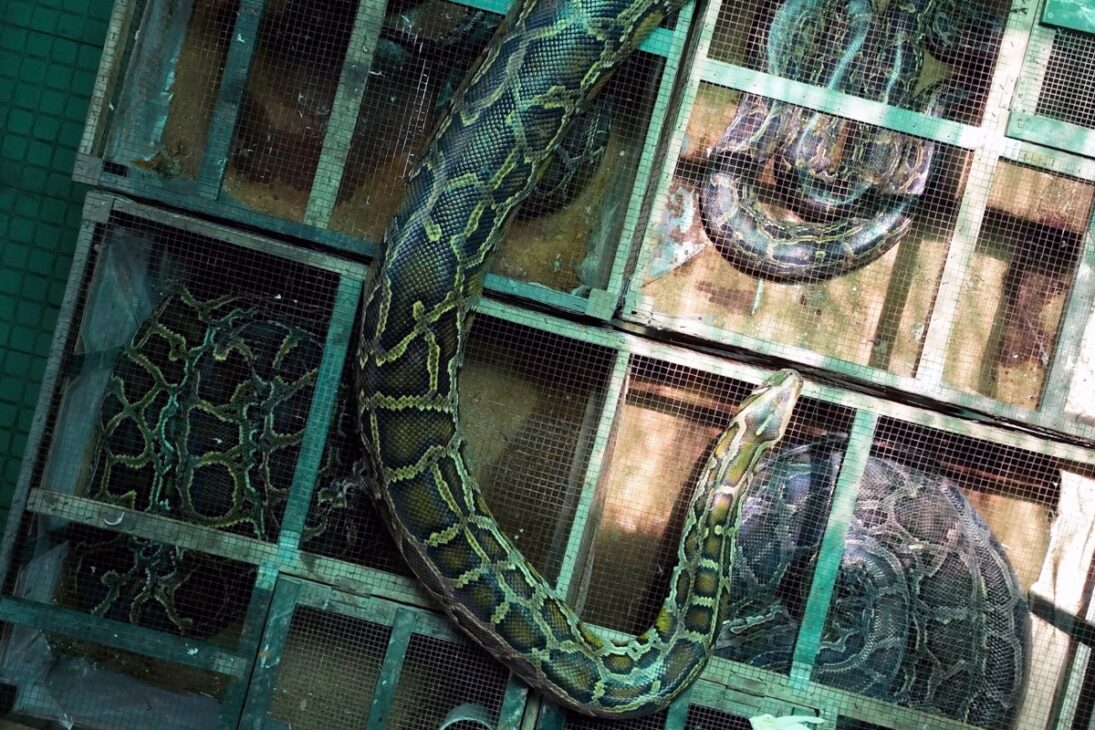
After birth, the longest stage begins: growth. Pythons are kept in individual compartments or in groups according to size, which facilitates handling and reduces risks.
Meals follow strict schedules to meet nutritional needs at each stage. There is no room for improvisation in this routine.
Health is monitored with daily inspections, following up. weightBehavior and signs of change. Employees record details of growth and changes in conduct to prevent problems from escalating.
Why are standardization and record keeping so important?
As the pythons grow, data is collected and recorded continuously. This list includes… weightsize, age, growth patterns, and environmental conditions.
Any variation can affect the uniformity of production and the quality of the final result. Therefore, the standardization It is treated as a central part of the process.
Beyond its commercial value, quality control also supports legal and sanitary requirements. Without it, logistics and export can become unfeasible.
The fate of meat and hides in the final stage of the chain.
When the animals reach the ideal size and age, they enter the final stage. Each phase follows planned and regulated procedures.
A carne It supplies local and regional consumption, being present in cultures that incorporate this food in traditional or specialized preparations. It undergoes inspections to meet sanitary standards.
A skin It then goes through specific tanning and treatment processes. After that, it becomes raw material for the fashion industry, giving rise to… scholarships, belts, shoes and other high-value accessories.
What could happen from now on, and why is this topic generating debate?
The supply chain can span continents. The hides go to specialized tanneries, undergo finishing, and then arrive at factories, eventually reaching shop windows in various countries.
The sector is discreet for the average consumer, but connected to the global economy. In parallel, the debate about ethical limits and environmental impacts is growing.
Some see animal breeding as an alternative to illegal hunting, with regulated income and production control. Others point to animal exploitation and question the use of originally wild species.
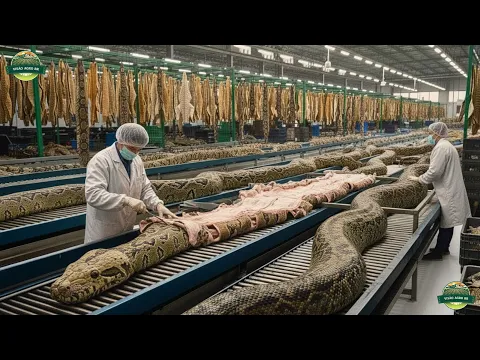

The discussion involves ethical, environmental, cultural, and economic points, with differing views on the same system.
The creation of millions of pythons It shows how a feared yet fascinating animal can be transformed into part of a global productive machine. The impact is evident in fashion, food, and international trade.
Ultimately, the main change lies in the perspective on the origin of what is consumed and in the awareness that there is an entire chain operating far from the reach of most people.