
Manchester United didn’t even play that badly against Leeds. It was like most of the other Manchester United games over the last 14 months under Ruben Amorim. They never really seem to know what they want to do next.
The team’s chronic identity crisis is strange given that Amorim, maybe more than any other coach at the top level in Europe, is obsessed with a very particular system of play. He has been clear about this since his first weeks in the job. That his players still regularly look like they’re playing 3-4-3 for the first time in their lives does not speak well to his coaching ability.
None of this is news to anybody. Amorim’s malfunctioning 3-4-3 was one of the most over-discussed topics of 2025. United had always insisted they knew what kind of coach they were hiring and they were going to back him. They were proud to have moved on from the culture of hire and fire.
In recent days, though, there have been signs that the hierarchy’s thinking has shifted.
On Christmas Eve, Amorim told reporters: “I have the feeling if we have to play a perfect 3-4-3, we need to spend a lot of money and we need time. I’m starting to understand that is not going to happen. So, maybe I have to adapt.”
This was a big U-turn from a guy who had previously insisted that “not even the pope” could persuade him to change and that if the club wanted change, they would have to change the man.
United did adapt. They played 4-2-3-1 against Newcastle and won 1-0. In the next game, against Wolves, Amorim reverted to his favoured 3-4-3 and United drew 1-1 against a team that had lost 16 of 18 matches up to that point.
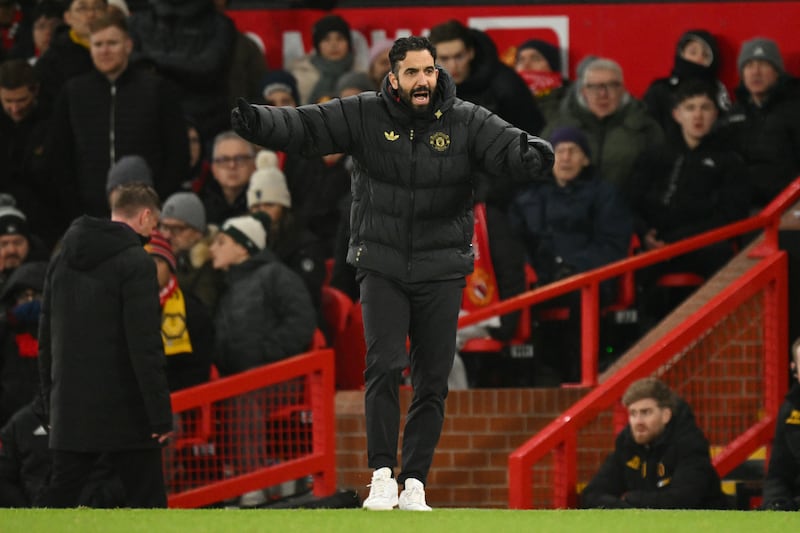 Manchester United head coach Ruben Amorim during the Premier League fixture against Wolves on December 30th. Photograph: Oli Scarff/AFP via Getty Images
Last Friday, Amorim told reporters he didn’t want to talk any more about 3-4-3 and such issues. When they pointed out that this was unlike him, and wondered if this was because something had changed in his relations with United’s board, he grinned and said: “You are very smart.”
On Saturday, there was a report that Christopher Vivell – United’s director of recruitment who pushed for the signing of Benjamin Sesko, the €85 million Slovenian striker who has contributed two goals in 17 appearances – had criticised Amorim’s tactical inflexibility in the club hierarchy’s WhatsApp group.
[ Manchester United booed off against Wolves as Bournemouth hold ChelseaOpens in new window ]
Amorim had evidently thought about what he was going to say after the Leeds game because he came with a prepared line.
“I came here to be the manager of Manchester United. Not to be the coach of Manchester United.” He repeated it three more times in the following 90 seconds.
“I’m going to be the manager of this team, not just the coach. And I was really clear on that. And that is going to finish in 18 months, and then everyone is going to move on. That was the deal, that is my job, not to be a coach,” he continued.
“No guys, I just want to say that. I came here to be the manager of Manchester United, not to be the coach, and every department, the scouting department, the sport director, needs to do their job, and I will do mine, for 18 months, and then we move on.”
It feels a safe bet that the time remaining for Amorim at United will be closer to 18 minutes than 18 months.
The revelation that he was “really clear” that he was joining United as a manager and not as a head coach would have been a surprise to United, who announced his appointment in November 2024 with a statement that began: “Manchester United is delighted to announce the appointment of Ruben Amorim as head coach of the men’s first team, subject to work visa requirements.”
[ ‘Tough, really tough’: Ruben Amorim on his first year at Manchester UnitedOpens in new window ]
Actually, there are not many “managers” left in the Premier League. It’s an exclusive club consisting of Pep Guardiola, Mikel Arteta (hired as “head coach” but “manager” since September 2020), David Moyes, Oliver Glasner and Daniel Farke (whose title at Leeds is “first team manager”). Everyone else, from Unai Emery down to Rob Edwards, is officially a head coach.
You will often see the media reporting that X club has announced Y as their new manager, when the club has actually hired them as head coach. Those of us outside the football bubble still use the terms interchangeably. Who really cares?
The people inside the football bubble, is who. When you work in a corporate office, titles matter. You notice this if you check out, for example, the “Leadership” section of the Manchester City website, where everyone has a title beginning with words like “chief”, “global” or “senior”.
The reason clubs have switched to using “head coach” is that “manager” implies more power.
We’ve just seen Enzo Maresca, a more successful coach at Chelsea than Amorim has been at United, leave his job after internal tensions broke into the public domain.
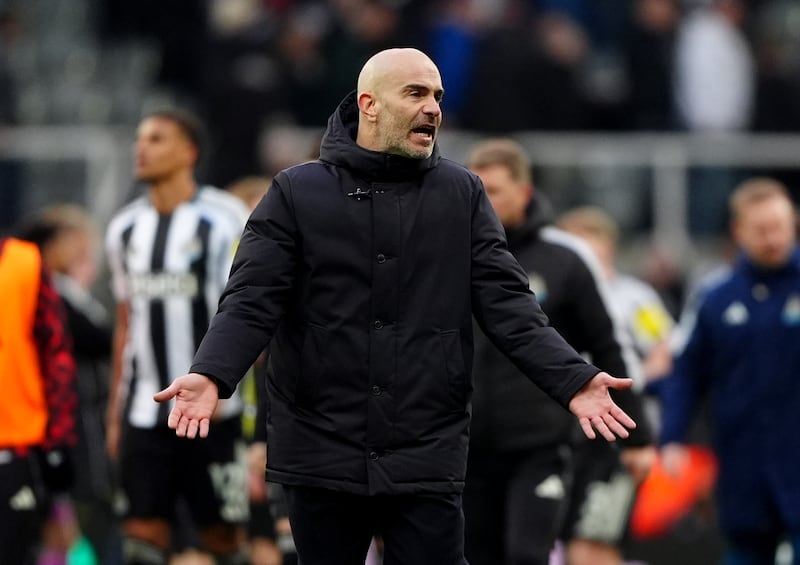 Former Chelsea head coach Enzo Maresca, who stepped down on New Year’s Day. Photograph: Owen Humphreys/PA Wire
The basic problem between Chelsea and Maresca came down to the head coach wanting to have more power – that is, to become more of a “manager” – while others felt he should stay in his lane.
Maresca wanted the authority to pick the players he wanted when he wanted, and to leave out the ones he didn’t want.
But the medical department, always more risk-averse than the coach when it comes to managing fitness issues, had different ideas about how many minutes it was appropriate to demand from certain players. And recruitment departments hate it when they buy a bunch of expensive young players that the coach never seems to pick.
This kind of low-level simmering conflict is chronic at every Premier League club now, because they’re all stuffed with so many directors, administrators, coaches and analysts, all jealously guarding their own little patch.
It’s clear why coaches are the ones most likely to blow up in frustration at the internal politics. They’re the ones who take all the public criticism. Lose a game and they’re the ones copping the flak. Coaches therefore feel trapped in a position of responsibility without power.
An example from Maresca’s last game as Chelsea manager. He subbed off Cole Palmer on 58 minutes and the crowd sang “you don’t know what you’re doing”. But was Palmer’s substitution all Maresca’s decision, or the result of an agreement with the medical department? Whoever had input, Maresca was the only one getting publicly abused by thousands of people.
Still, you’re expected to be a team player and put up with it. By taking his issues public, Maresca was in effect pressing the ejector button.
On Sunday, before announcing that he rejected his official job title, Amorim had remarked: “I notice that you (the media) receive selective information about everything.”
The implication is that the club has been feeding a distorted version of events to the press behind Amorim’s back. By the time stuff like this is getting said in public, the relationship has usually already broken down. Be sure to enjoy what remains of the Ruben era while you still can.