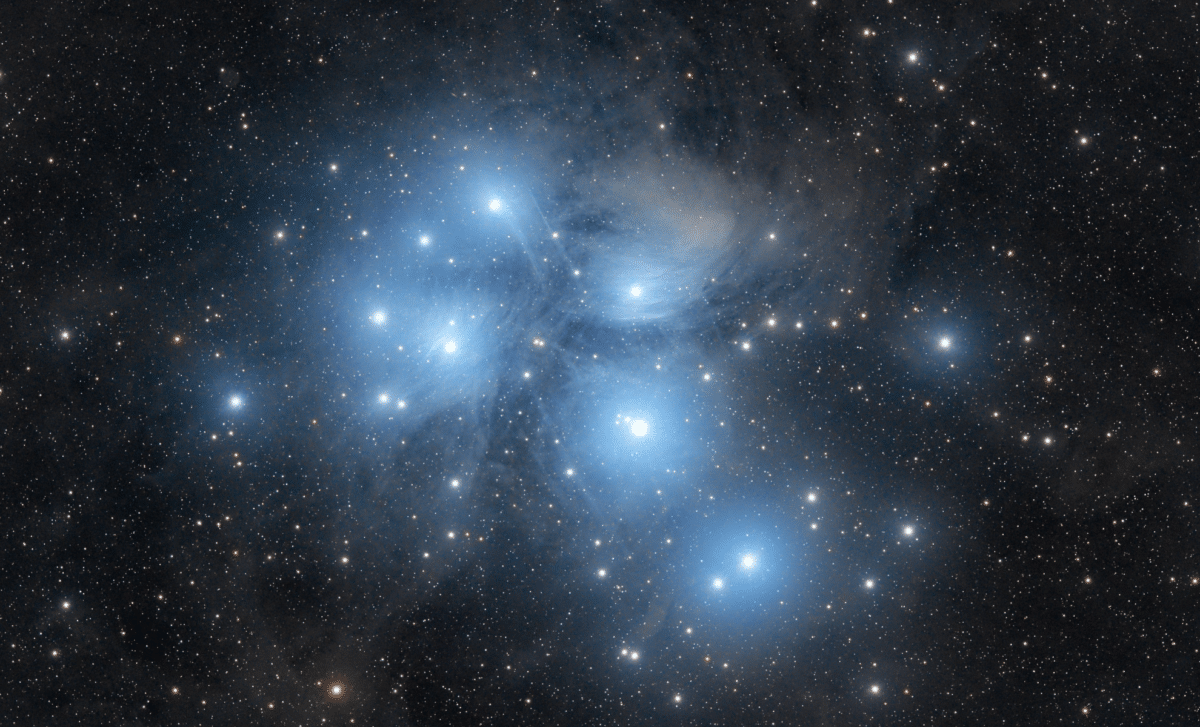
A globular cluster near the heart of the Milky Way is gradually dissolving, according to a new study published on arXiv, revealing rare insights into how the Galactic bulge was built from ancient star systems.
The Slow Death Of NGC 6569
Located about 35,000 light-years from Earth in the constellation Sagittarius, NGC 6569 is one of the oldest known globular clusters, with an age estimated around 13 billion years. Now, new research using the Anglo-Australian Telescope has found that this ancient cluster is slowly losing its stars, pulled away by the intense tidal forces of the Milky Way’s gravitational field.
The findings come from the first wide-field, medium-resolution spectroscopic survey of the cluster, conducted as part of the MWBest survey (Milky Way Bulge Evolution Survey Team). “We have conducted the first wide-field, medium-resolution spectroscopic survey of NGC 6569. Our findings provide evidence that NGC 6569 is actively losing stars through tidal stripping,” the study authors note.
This phenomenon, known as tidal stripping, occurs when a more massive gravitational body, in this case, the Milky Way, pulls stars away from a smaller, gravitationally bound structure like a cluster. The discovery provides rare, real-time evidence of a cluster being disrupted, something astrophysicists have long theorized but seldom observed this clearly.
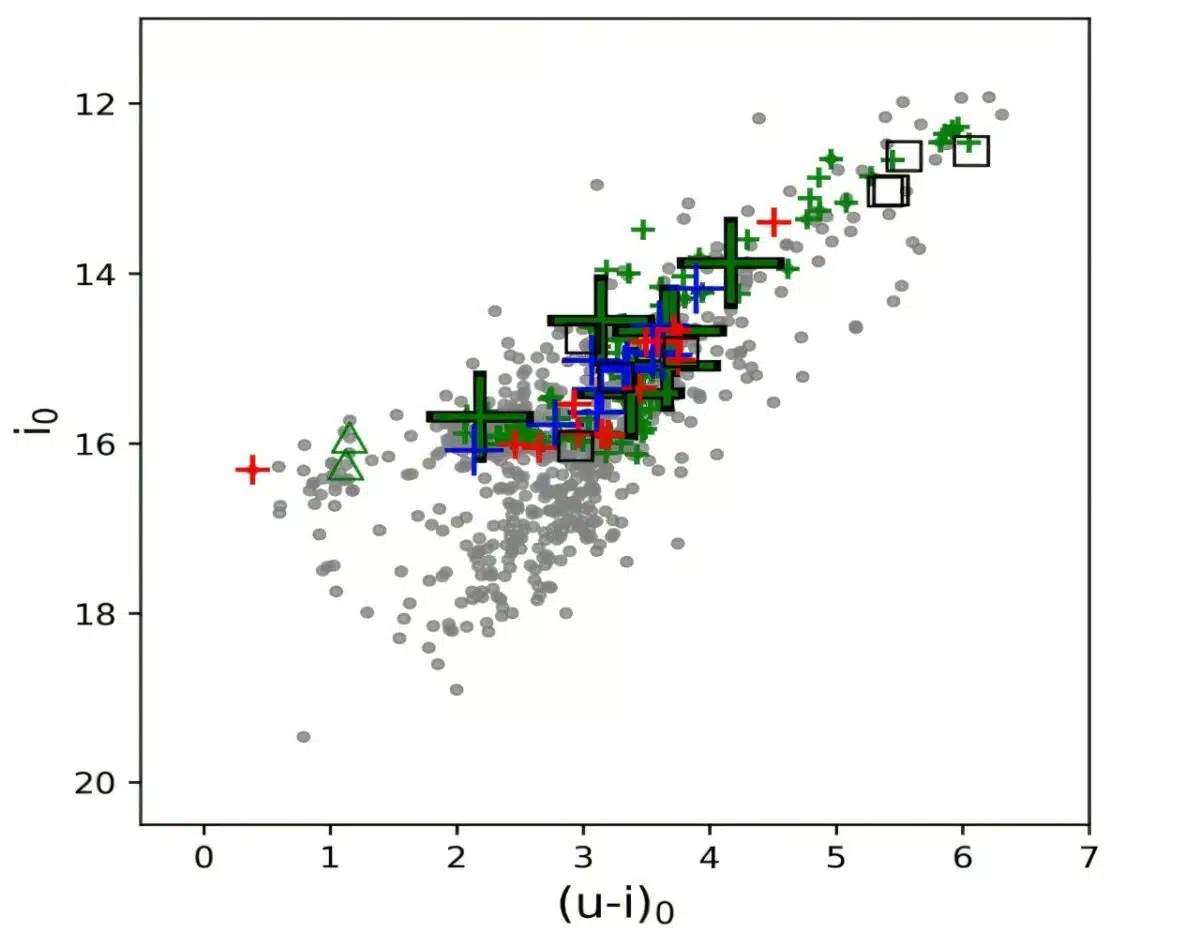 Candidate selection for tidal debris around NGC 6569. Credit: arXiv (2025). DOI: 10.48550/arxiv.2512.19074
Published On ArXiv: Mapping The End Of A Star Cluster
The study, published on arXiv, represents one of the first comprehensive looks at the outer regions of NGC 6569, an area typically too faint and scattered for detailed observation. Using spectral data from over 1,000 stars and applying statistical analysis to filter cluster members from field stars, the team was able to identify at least 40 stars that are no longer bound to the cluster.
By charting the kinematics and metallicity of these escapees, researchers were able to conclude that the process of dissolution is currently underway. This is no longer a hypothetical or a historical event, it is unfolding right now in the inner regions of the Galaxy. The ongoing mass loss from clusters like NGC 6569 may be contributing directly to the stellar population of the Galactic bulge, a finding that could reshape models of how this region was formed.
“Extending this approach to the full MWBest sample will ultimately clarify the cumulative role of GC-dissolution in building the Galactic bulge,” the study authors concluded, hinting at a much broader investigation underway.
Why It Matters For Galactic Evolution
The Galactic bulge, the dense spherical core of the Milky Way, is a key focus for astronomers seeking to understand the evolution of our galaxy. One long-standing theory posits that it was partly formed from the remnants of globular clusters that gradually fell apart due to the Milky Way’s gravity. This new research on NGC 6569 strengthens that theory with observational data.
NGC 6569’s metal-rich stellar composition aligns closely with other stars in the bulge, suggesting that its stars, once stripped, become indistinguishable from native bulge stars. This blending complicates efforts to trace Galactic history, but also supports the idea that many of the oldest stars in the Milky Way may have originated in globular clusters like this one.
The spectroscopic techniques employed in this study open new doors for tracking star loss from other clusters. As more members of the MWBest sample are analyzed, the cumulative effect of cluster dissolution on galactic structure is likely to become clearer. For now, NGC 6569 serves as a striking example of a star system caught in the act of fading into the Milky Way itself.