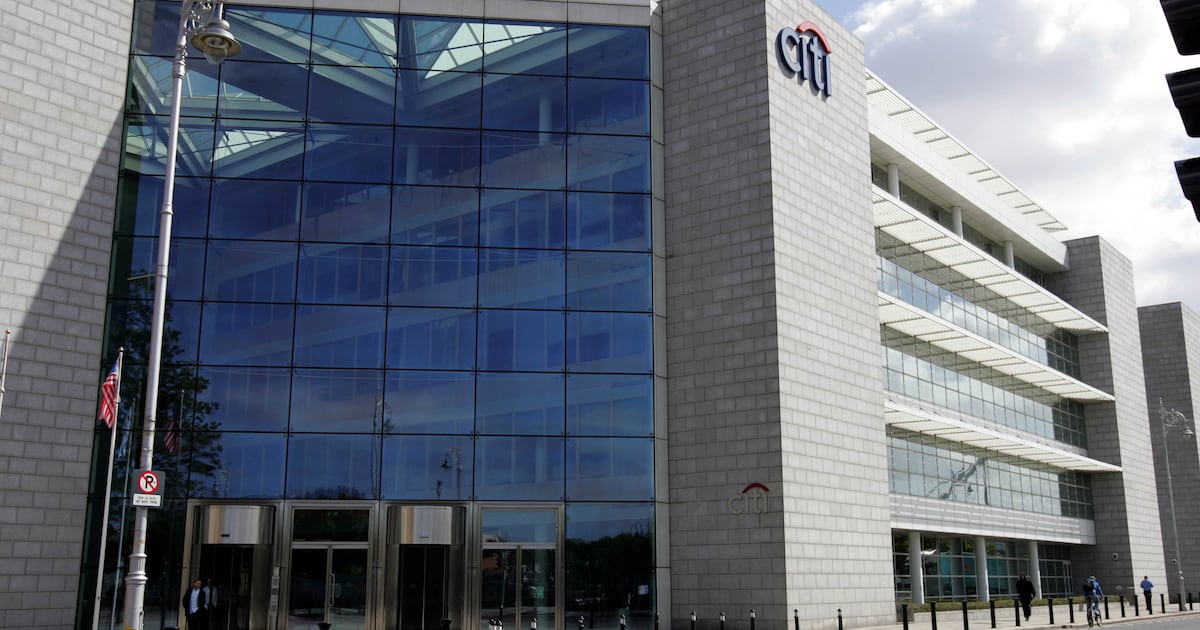
A Johnny Ronan firm has scaled back a rejected 17 storey office scheme for Dublin’s Docklands to 12 storeys in a bid to secure planning permission.
In August, An Coimisiún Pleanála (ACP) upheld Dublin City Council’s rejection of Mr Ronan’s RGRE planned 17 storey redevelopment of global banking giant Citigroup’s current European headquarters at 1 North Wall Quay in Dublin’s docklands.
In new plans lodged by NWQ Devco Limited for One North Wall Quay, planning consultant, John Spain wrote that the previous reasons for refusals by ACP have been fully addressed through the redesign of the development which has been reduced from 17 storeys to 12 storeys.
The current six storey Citigroup building is 34,507 sqm. The proposal will retain 24,767 sqm of the existing floor area which will be incorporated in the development and the revised plans will provide 53,774 sqm of high quality office space across 12 floors.
Mr Spain said the previous reasons for refusal related to concerns regarding the overall height, bulk and mass of the proposed development and the full demolition of the existing building on site.
The 1NWQ now incorporates a large portion of the existing building within the development as opposed to full demolition of the building, he added.
The 64 page planning report notes that the development comprises four blocks ranging in heights of 7-11 storeys, 12 storeys, 10 storeys and seven storeys which represents a maximum height increase of six storeys above the existing building.
Architects of the scheme, Henry J Lyons stated that the redevelopment “proposes to greatly enhance the site and its urban setting at the corner of the city block fronting on to North Wall Quay and Commons Street”.
The design statement claims “the remodelling of the existing building proposes of a contemporary office building of exemplar design and architectural merit seeks to provide an extensive public benefit”.
“A carefully considered building form responds to its docklands riverfront setting,” it said, adding that the applicant’s focus has been to deliver a building of aesthetic quality, with inspirational flexible spaces, employee wellbeing and enjoyment.
Mr Spain has claimed the reduction in height has substantially reduced the impacts of the development on the surrounding area in terms of visual impact and residential amenity.
He said that the change in massing has resulted in a reduction of daylight impacts on the surrounding residential properties when compared to the refused scheme.