
It has been an unusually busy cyclone season for northern Western Australia, with the Cocos Keeling Islands lashed by a second system in two weeks.
On Monday afternoon, Tropical Cyclone Jenna was the second system to impact the islands after Tropical Cyclone Grant struck on Christmas Day.
Tropical Cyclone Jenna passed to the east of the islands as a category one cyclone, bringing gale force winds with gusts up to 91 kilometres an hour as well as 7 millimetres of rain in the 24 hours to 11am Tuesday.
Only two of the 27 islands more than 1,000km off the Western Australian coast are inhabited, by around 600 people.
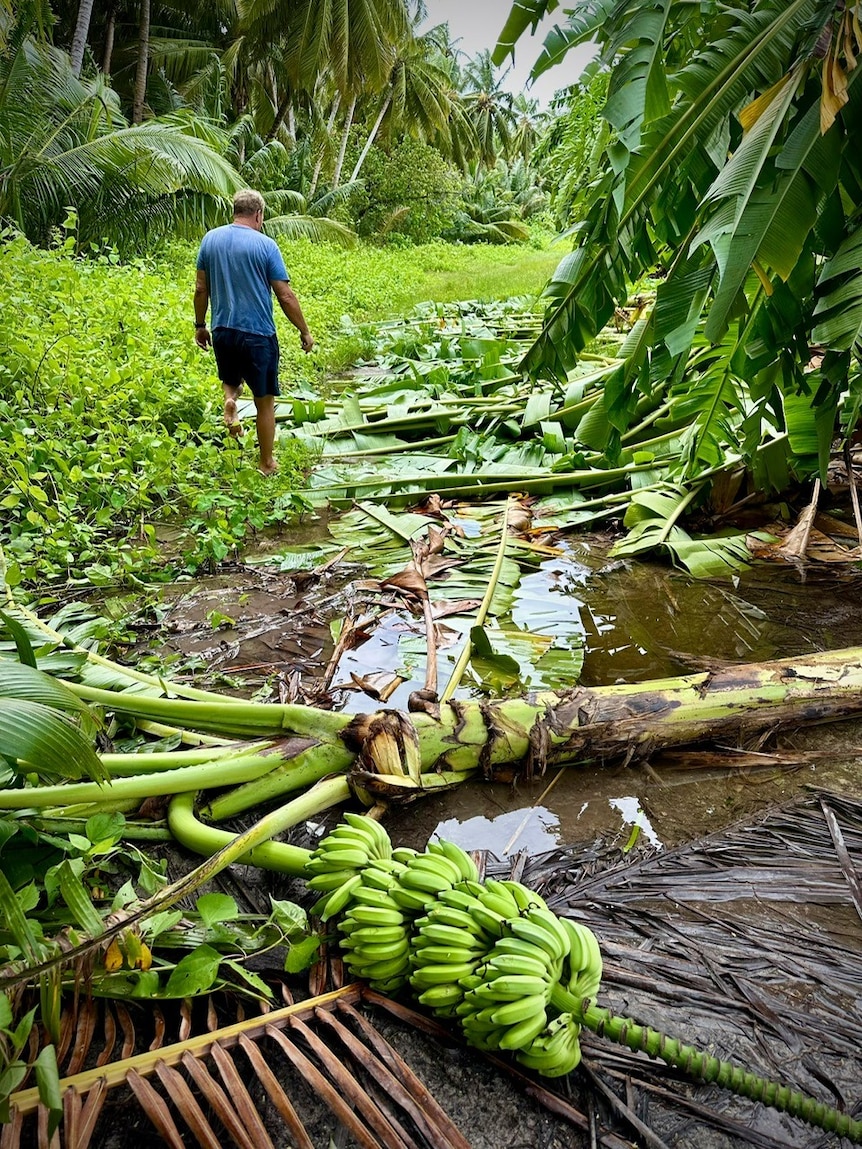
Banana trees were down on one property on West Island. (Supplied: John Clunies-Ross)
Unusual habits
Initially forecast to pass the islands as a tropical low, Tropical Cyclone Jenna quickly intensified into a category one cyclone as it passed the islands, before later strengthening to category two intensity on Monday evening.
Residents have reported minor flooding, leaky roofs and fallen trees.
However, the lagoon that connects the islands has reopened and flights were expected to resume on Tuesday.
Cocos Keeling Islands Tourism Association chair and resident for over 30 years Dieter Gerhard said two systems passing so close together was unusual.
Dieter Gerhard is the chair of the Cocos Keeling Islands Tourism Association and runs dive tours on the islands. (Zoom)
“Normally after a tropical low or cyclone, we’d hope to see three to six weeks of, you know, pretty settled conditions,” he said.
“[We] normally expect one to have gone past by now, but Mother Nature has doubled it and given us a bonus one.
“Here’s hoping that that’s not setting the trend for the season.”
A record cyclone season ahead?
Tropical Cyclone Jenna is the third tropical cyclone to form off the WA coast in the past two weeks and the fifth for the Australian season.
The 2024/25 cyclone season saw 12 cyclones in Australian waters, while 2023/24 had eight.
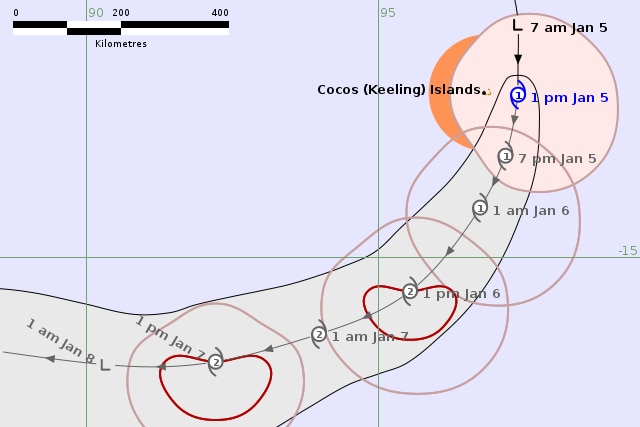
Tropical Cyclone Jenna intensified from a tropical low into a cyclone right as it passed by the islands. (Supplied: Bureau of Meteorology)
Bureau of Meteorology (BOM) meteorologist Grace Abbott said time would tell what 2026 had in store.
“It is uncommon to have quite this many systems before new year’s or … just after the new year,” Ms Abbott said.
“So we are off to a quite a frequent start to the season.”
The BOM said smaller systems had the ability to strengthen and decrease more quickly than larger systems, making forecasting difficult.
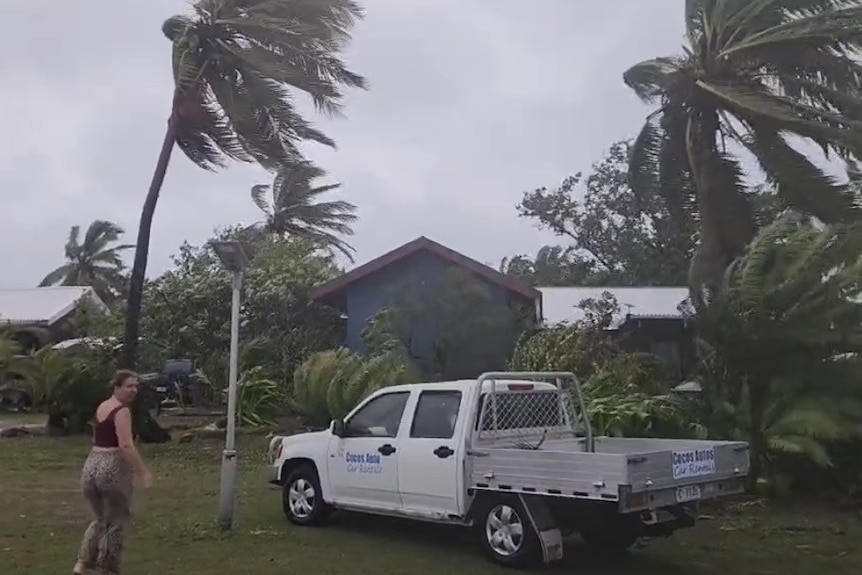
Residents did not have to shelter as the cyclone passed as a category one on Monday afternoon. (Supplied: Elizabeth Barton)
“It looks as if it strengthened a little bit quicker than we’d forecast, maybe three to six hours earlier, and so therefore strengthened to a cyclone … just to the east of the island,” Ms Abbott said.
“They can be very tricky beasts and I assure you that we are doing the best we can with the intensity, but that is one of the hardest parts of cyclone forecasting.”
Islands’ future
Kuranda Seyit, the manager of accommodation business Oceania House, said the island was low-lying and more susceptible to flood damage due to its rounded shape and lack of drainage.
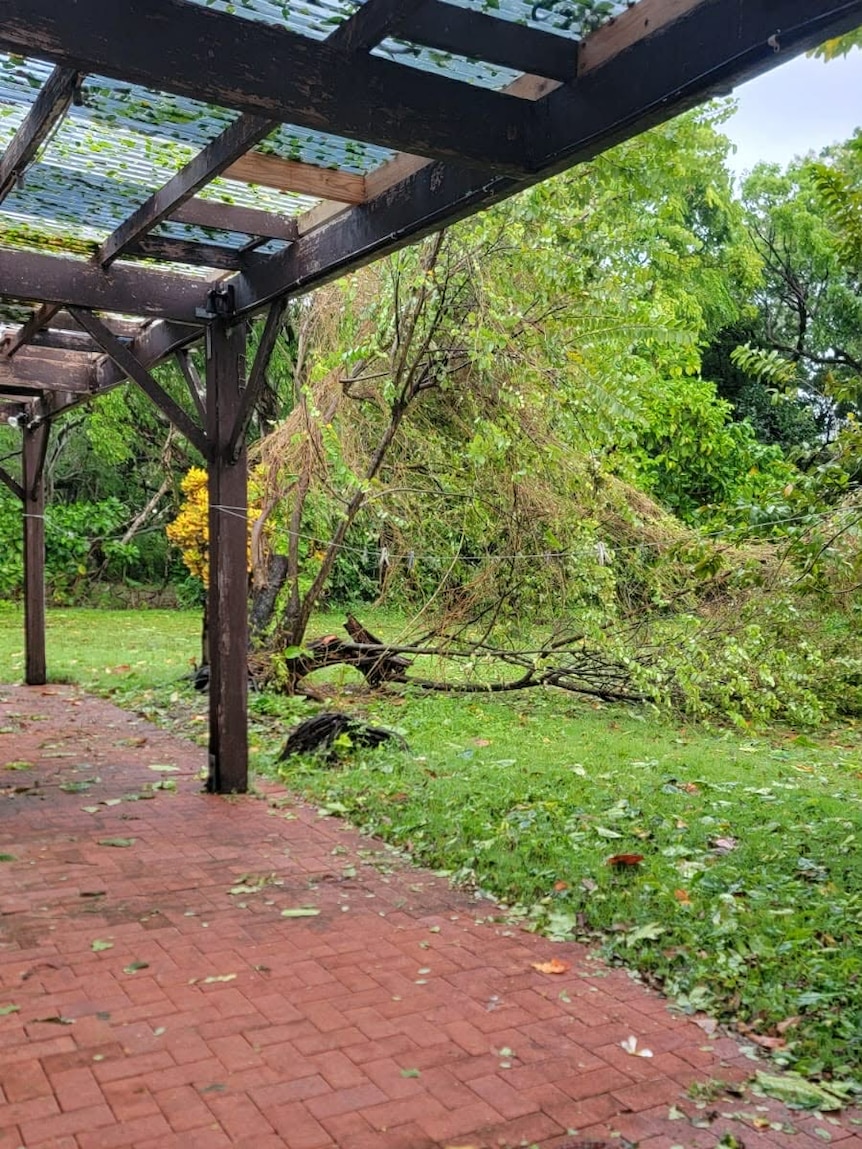
Trees were blown down in the backyard of Oceania House, a short-stay accommodation provider on Home Island. (Supplied: Oceania House)
“It was a pretty rough day yesterday — a lot of high winds and much more rain this time,” Mr Seyit said.
“But generally speaking, everybody’s safe and yeah, we got through it again.
“Compared to the Christmas Day cyclone, I think this was either the same or even maybe just a bit stronger.”
Mr Seyit worried about what would happen if anything stronger impacted the islands.
“I think the residents are very nonchalant about cyclones as they leave everything in the hands of God,”
he said.
“One thing that needs to be discussed is the drainage behind all the houses.
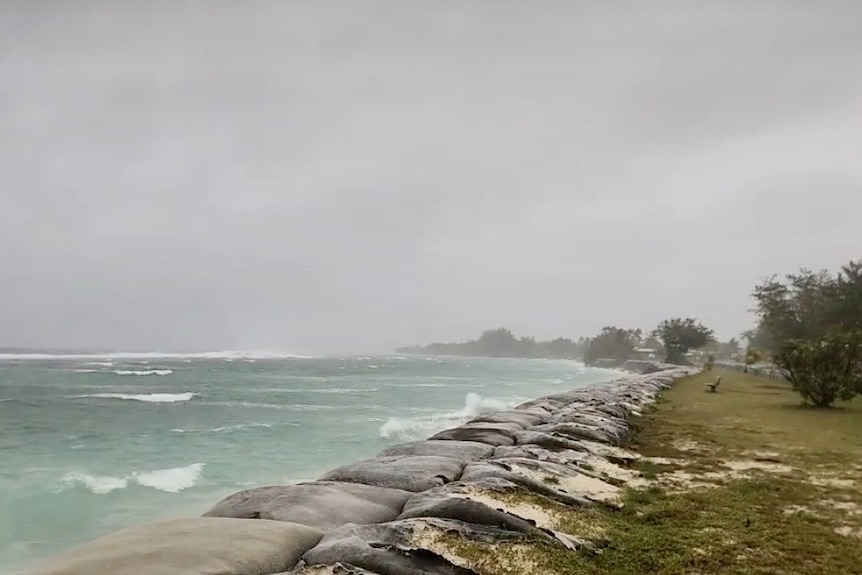
Wild waters off the coast of the Cocos Islands have been kept at bay by sandbags. (Supplied: Elizabeth Barton)
“It’s not wide enough and overflows every time it rains heavily, a survey needs to be carried out and assessment to see if it can be fixed.
“Other than that, there is some sandbagging needed on the south side and some sandbags need repair.”