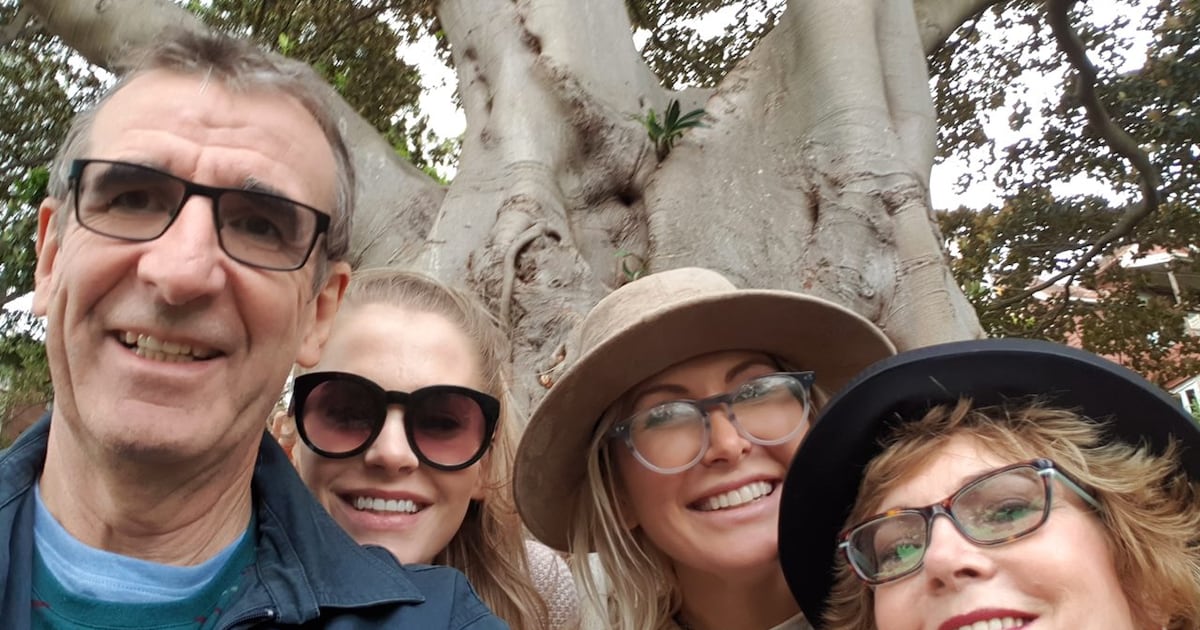
I’m often asked if I made the right decision to emigrate. Today it is difficult to imagine what it was like in Ireland in 1983.
When the bank manger sent a “please explain” letter to my wife Marian because she exceeded her £200 overdraft by £20, we figured there had to be somewhere in the world with better prospects.
There were very few good jobs in manufacturing in Ireland. And my UCD Mechanical Engineering degree in those days was a visa to go anywhere you wanted in the world.
Thanks to Thatcher, the UK was in worse shape than us, Canada was too cold and America was … well … America. Australia seemed to be in our Goldilocks zone.
Six months later, on a cold August morning, we sat our bags down in the arrivals hall at Sydney Airport. We looked at each other and said “what the hell are we doing here?”.
We had hardly enough money to live on for three weeks and not a sinner to call on if we got stuck.
These days, a young Irish arrival is more likely to bump into a former schoolmate on Coogee Beach than on Grafton Street. But in 1983, Paul Hogan was the only person on this continent we would have recognised.
We had the phone numbers of two people we never met. The first response was “bugger off, we live in the bush”. The second response was from Annie, who said: “Come on over.”
In the past 42 years we have received many such calls and we make it a point to never offer less than Annie’s “mi casa, su casa”.
[ My ‘neutral’ accent is now just another foreign voice from a country far awayOpens in new window ]
We never felt like immigrants here. There was plenty of good work and Australians couldn’t care less where you came from as long as you did a good job, or at least had a go.
There is a statue to Yabba, a post-war spectator in the Sydney Cricket Ground who frequently heckled an underperforming bowler with “‘ave a go ya mug!”.
I always thought that “‘ave a go” should be on the coat of arms as our motto. I mean, Advance Australia? Really?
Going somewhere was always the correct decision. The decision to stay there, well that’s different. It was never about Australia or Ireland – it was always about the job. If you enjoy your job you are unlikely to leave no matter where you are.
Sigmund Freud said “love and work are the cornerstones of our humanness”. That’s where Marian and I found ourselves 12 months after arriving in Australia. We loved what we were doing and were as happy as two clams in Sydney Harbour. There was no chance of returning home soon.
Marian made a point of going home every year. Most years I tagged along. With big families in Ireland there is never a shortage of places to stay and always a warm welcome.
With many nieces and nephews, there was a wedding most summers. .
But winter is not my favourite time to visit. One dismal February afternoon cemented my resolve to stay. Sitting in a Limerick coffee shop with my brother Joe, I look across the car park into the gloom. There is a weight in the greyness of the sky that I had forgotten.
We were having lunch and it was getting dark. I was thinking: “How can it be so dark at this time of day?”
I hadn’t seen the sun for a week and felt exhausted. Then Joe broke the silence: “Isn’t it great to see some length in the day.”
He said it with an optimism that shook me. That’s when I realised there was no coming home.
We were living in two different worlds and while neither is better, coming home would be like emigrating again and I wasn’t up for that.
I’m pushing 70 now, loving every minute of retirement and looking forward to our next visit to the west of Ireland.
But that isn’t going to happen until we get Annie into a better nursing home. We have kept in touch over the decades and Annie is in her 84th year now. She is a retired west Cork nurse and doesn’t have family here (another problem for migrants).
We are only too happy to help her out now – we have always been grateful for the kindness she showed us all those years ago.
Ray Farrell and his wife Marian emigrated to Australia in 1983 and live in Alfords Point on the edge of Sydney. He is originally from west Clare. Before retiring, he worked as a general manager in manufacturing.
- Are you Irish and living in another country? Would you like to share your experience with Irish Times Abroad, something interesting about your life or your perspective as an emigrant? You can use the form above, or email abroad@irishtimes.com with a little information about you and what you do.
- Follow us on Instagram to keep up with the latest
- Sign up to The Irish Times Abroad newsletter for Irish-connected people around the world. Here you’ll find readers’ stories of their lives overseas, plus news, business, sports, opinion, culture and lifestyle journalism relevant to Irish people around the world.