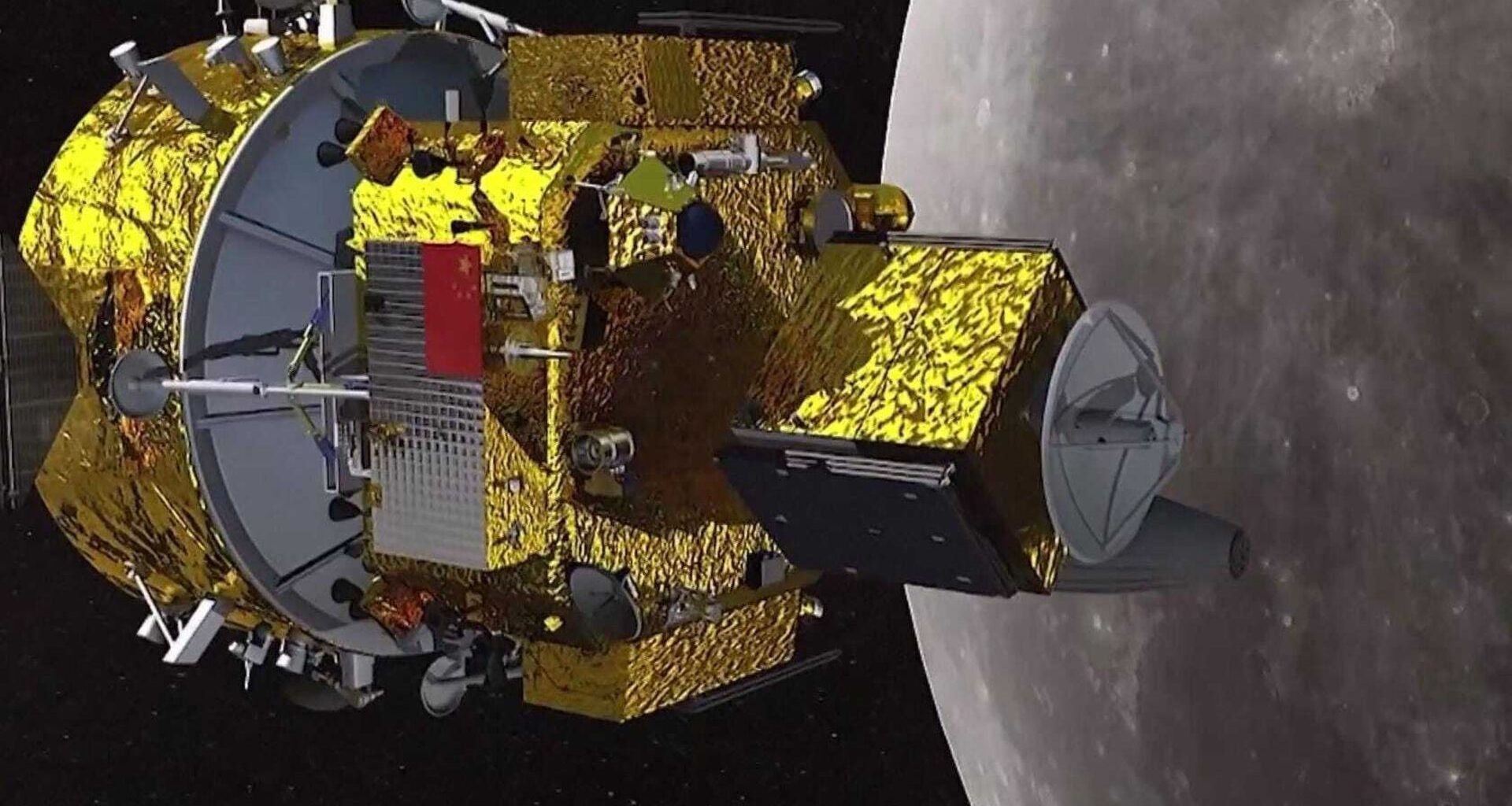
China’s next robotic moon mission is scheduled to launch later this year, helping set the stage for the nation’s planned multi-phased lunar outpost.
The Chang’e 7 mission is on tap to reconnoiter the moon’s south pole, making use of an orbiter, lander, rover and a water-seeking, well-instrumented lunar hopper.
You may like
Rigorous schedule
“Programmatically, the Chang’e series is on a rigorous schedule. They all launched as scheduled,” said Norbert Schörghofer, a senior scientist for the Planetary Science Institute who’s based in Honolulu, Hawaii.
“It’s hard to know for sure what China is planning in the longer term, but since they have a successful lunar exploration program and lots of government resources, I’d fully expect they will construct a lunar base soon, perhaps using their own advanced robots,” Schörghofer told Space.com.
It is likely that the Chang’e 7 lunar lander will touch down near Shackleton Crater, Schörghofer advised, outfitted with an international array of scientific instruments. “Chang’e 7 is destined to find water ice and make the first in-situ measurements of water ice on the moon,” he said.
A critical question is where to build the first base on the moon, said Schörghofer. Ideally, it should be near significant water ice deposits.
“Chang’e 7 will not settle how water ice is exactly distributed geographically, but it will certainly make relevant discoveries,” Schörghofer said. “The Chinese will be ahead of everyone else by at least one year, but probably several years. Chang’e 7 is a key mission for the study of lunar volatiles,” he added, “but we need more missions.”
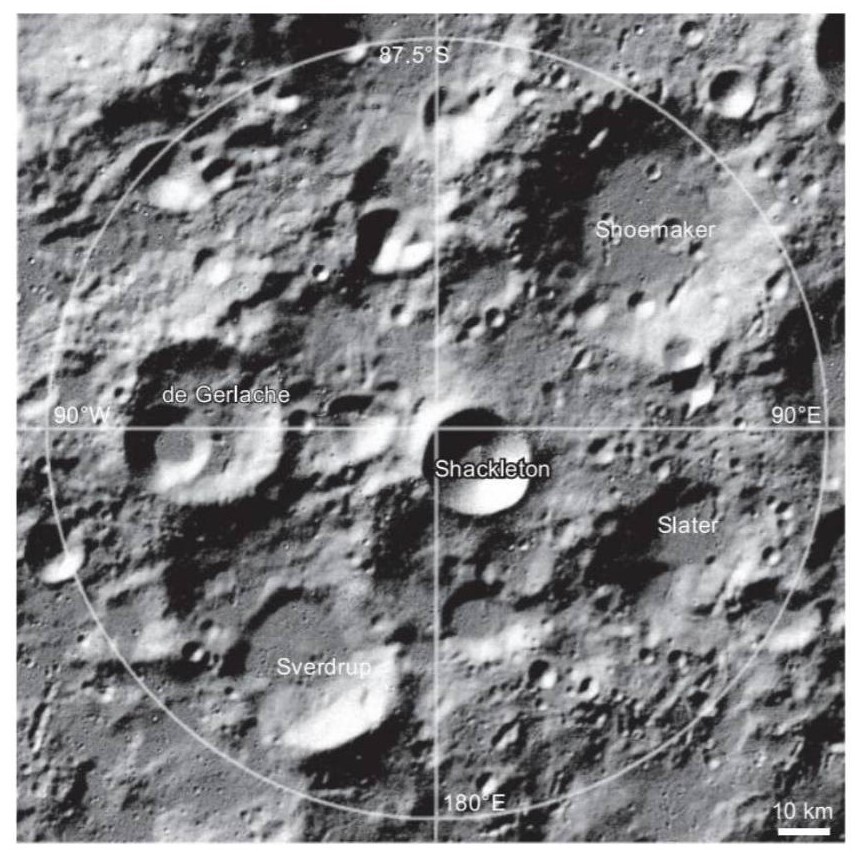
The candidate landing region of China’s Chang’e 7 lunar lander. (Image credit: Yang Liu/Wang C. et al.)Foreign payloads
Chang’e 7 is reportedly scheduled for liftoff in the second half of 2026.
Last year, a memorandum was signed by Russia’s space agency Roscosmos and the China National Space Administration (CNSA). Chang’e 7 will carry a Russian scientific instrument called Dust Monitoring of the Moon, which will study dust components and dynamics of the near-surface exosphere of the moon; registration of micrometeorites and secondary particles of lunar regolith; and the parameters of low-energy plasma near the surface of the moon.
You may like
That Russian instrument will be integrated into Chang’e 7, along with other foreign payloads from such countries as Egypt, Bahrain, Italy, Switzerland and Thailand.
Wide-field telescope
Kong’s Laboratory for Space Research and the International Lunar Observatory Association (ILOA), based in Waimea, Hawai’i.
Steve Durst, the founding director of ILOA, told Space.com that the ILO-C is a small, wide-field telescope designed for the Chang’e 7 lunar lander. The instrument has successfully passed all flight model testing, securing its acceptance as a payload, he said.
“This advanced astronomical camera is set to launch aboard China’s Chang’e 7 mission, scheduled to land near the illuminated rim of Shackleton Crater in the lunar south pole region in November 2026,” Durst said. “The telescope aims to capture stunning images of the galactic plane, contributing to lunar science and inspiring future generations.”
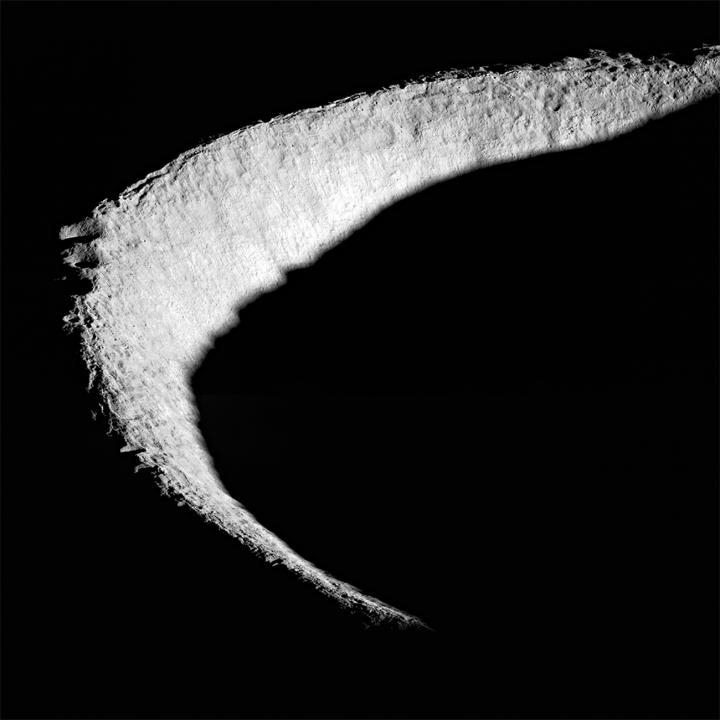
Shackleton Crater is an impact feature that lies at the moon’s south pole. While peaks along the crater’s rim are exposed to almost continual sunlight, the interior is perpetually in shadow. (Image credit: NASA/GSFC/Arizona State University)Research hotspot
Water ice in the lunar polar regions has emerged as a major research hotspot in lunar science, observed Yang Liu of the National Space Science Center in Beijing.
Yang and colleagues detailed Chang’e 7 mission goals at the 2nd Lunar Polar Volatiles Conference, which was held last November in Honolulu, Hawai’i.
Chang’e 7’s candidate landing site is near the rim of Shackleton Crater at the lunar south pole. One of the mission’s primary scientific tasks is to conduct remote sensing and on-the-spot investigations of water ice at the lunar south pole.
Chang’e 7 features an orbiter, a lander, a rover and a mini-flying probe or hopper, which together will tote to the moon a total of 18 scientific instruments.
The lander will deploy China’s inaugural deep-space “landmark image navigation” system to ensure a safe and precise landing.
Mission intent, Yang stated, is to explore the environment and resources in the lunar south polar region by conducting a series of steps: orbiting, landing, roving and mini-flying.
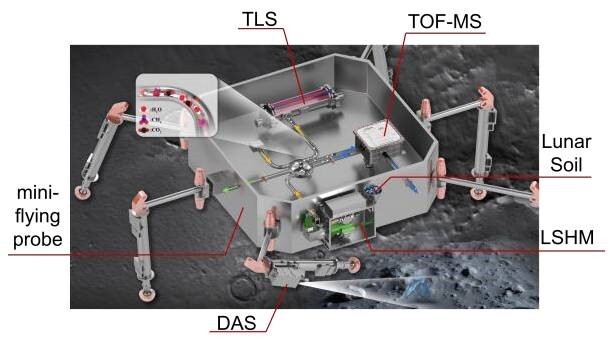
China’s Chang’e 7 moon hopper is equipped with an instrument called the Lunar soil Water molecule Analyzer, which integrates four components: a differential absorption spectrometer, lunar soil heating module, tunable laser spectrometer, and time-of-flight mass spectrometer. (Image credit: Nailiang Cao, et al.)Water ice exploration
To achieve that objective, Chang’e 7 is equipped with six scientific payloads related to water ice exploration. These include a lunar neutron gamma spectrometer and a wide-band infrared spectrum mineral imaging analyzer, as well as a miniature synthetic aperture radar onboard the orbiter.
Mounted on the Chang’e 7 rover is a lunar Raman spectrometer and a system to measure volatiles on the lunar surface, Yang explained.
The mini-flying probe will utilize active shock-absorption technology to safely land on slopes. Notably, the hopper is equipped with a LUnar soil Water molecule Analyzer (LUWA), deemed as a critical payload designed to characterize the form, abundance and origin of water ice in permanently shadowed regions (PSRs) on the moon.
On-the-spot access
The hopper is built for direct, on-the-spot access to PSRs, states a paper led by Nailiang Cao of the Anhui Institute of Optics Fine Mechanics, of the Hefei Institutes of Physical Science in Hefei, China.
Making use of multiple methods, Nailiang pointed out that LUWA is expected to resolve the abundance and origin of lunar water ice.
Another paper, led by Jie Zhang of the National Space Science Center in Beijing, noted that Chang’e 7’s gauging of the thermal stability of lunar ice will be key.
Considering that the floor of Shackleton Crater is one of the potential sites for exploration by Chang’e 7’s hopper, “mapping the thermal stability of water ice at high spatial resolutions in these regions can help to identify high-priority locations with great potential for hosting water ice,” Jie and colleagues reported.
Furthermore, Jie said that laboratory simulations support the hypothesis that the majority of the surface regolith inside Shackleton Crater is conducive to the stable preservation of water ice.
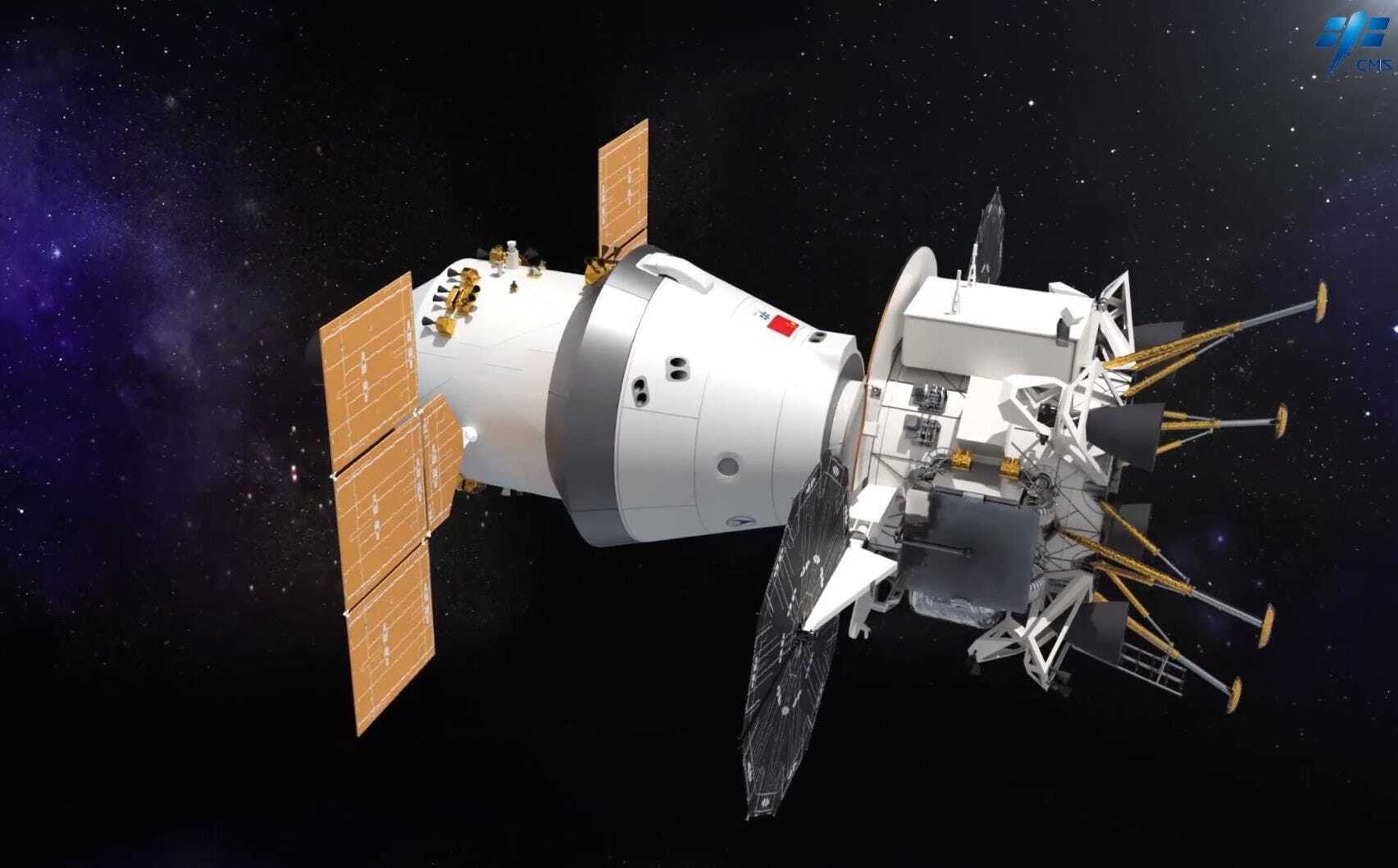
China’s moon master plan calls for achieving a crewed lunar landing before 2030. (Image credit: CMSA)Research station
Chang’e 7 will help pave the way for bigger things to come, if all goes to plan. Those “bigger things” include a crewed lunar landing, which China aims to achieve by 2030.
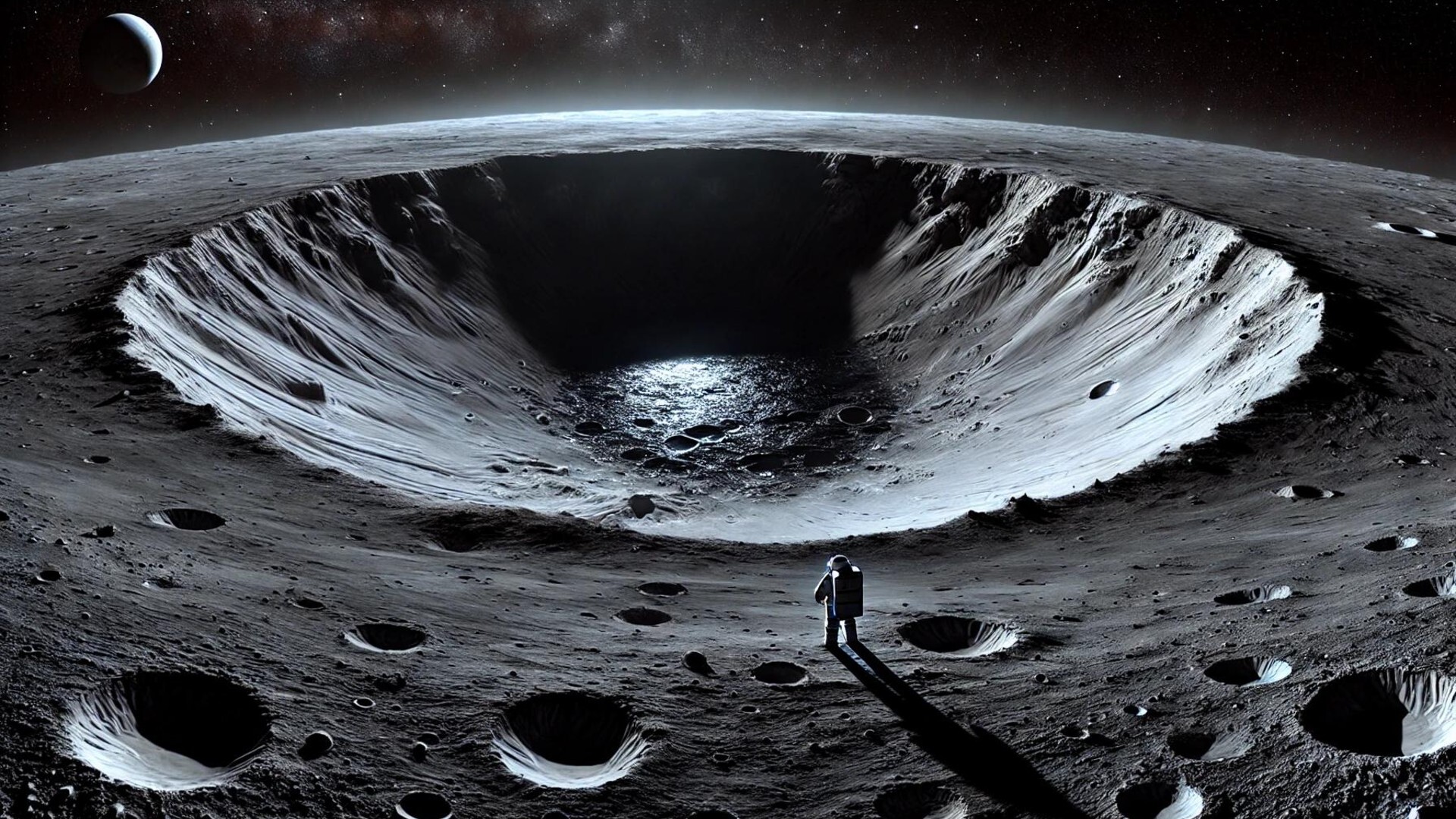
Hot topic: Water ice in the lunar polar regions has emerged as a major research quest in lunar science. Robotic and human explorers are on the hunt for lunar polar volatiles that can be utilized for an extended astronaut stay on the moon. (Image credit: Hawaii Institute of Geophysics and Planetology, University of Hawaii at Manoa)
The follow-on Chang’e 8 robotic mission in 2028 will test technologies for building habitats using lunar soil, said Wu Weiren, chief designer of the Chinese Lunar Exploration Program. Both Chang’e 7 and Chang’e 8 are seen as key enablers of the ILRS, which China wants to start building in the 2030s.
“We hope that on the basis of phase four of our lunar exploration program,” Wu said, “there will be a large international scientific-technological research project initiated by China, with the participation of multiple countries.”
The research station at the lunar south pole will be capable of automatically supplying power for itself and making telecommunications available on site.
Centered around the lunar south pole, the ILRS would be equipped with multiple systems including lunar rovers, landers, hoppers and networks. “Once assembled, we will be able to conduct long-term unmanned exploration there, as well as accommodate short-term human presence,” Wu said.
Wu added that he believes that, ultimately, the construction of a lunar research station will serve China’s future Mars missions. “I believe this is a very important goal for us,” Wu said in an interview last year with the China Global Television Network.