
Published
05/01/2026 às 12:40
Updated
05/01/2026 às 23:06
Woman single-handedly builds an underground wooden house in just 32 days, lives off the power grid, and creates a self-sufficient refuge hidden in nature.
The project begins in a raw and direct way: choosing the exact spot on the land and manually excavating the soil. Without machines, backhoes, or external support, the woman uses only simple tools to open the space that would house the underground house. The images show the gradual progress of the hole, with walls carefully carved to ensure stability and natural drainage, something essential in buried constructions. The rectangular shape of the opening already foreshadows the internal organization of the shelter, demonstrating that nothing there is improvised.
The underground house structure uses wooden logs and traditional techniques.
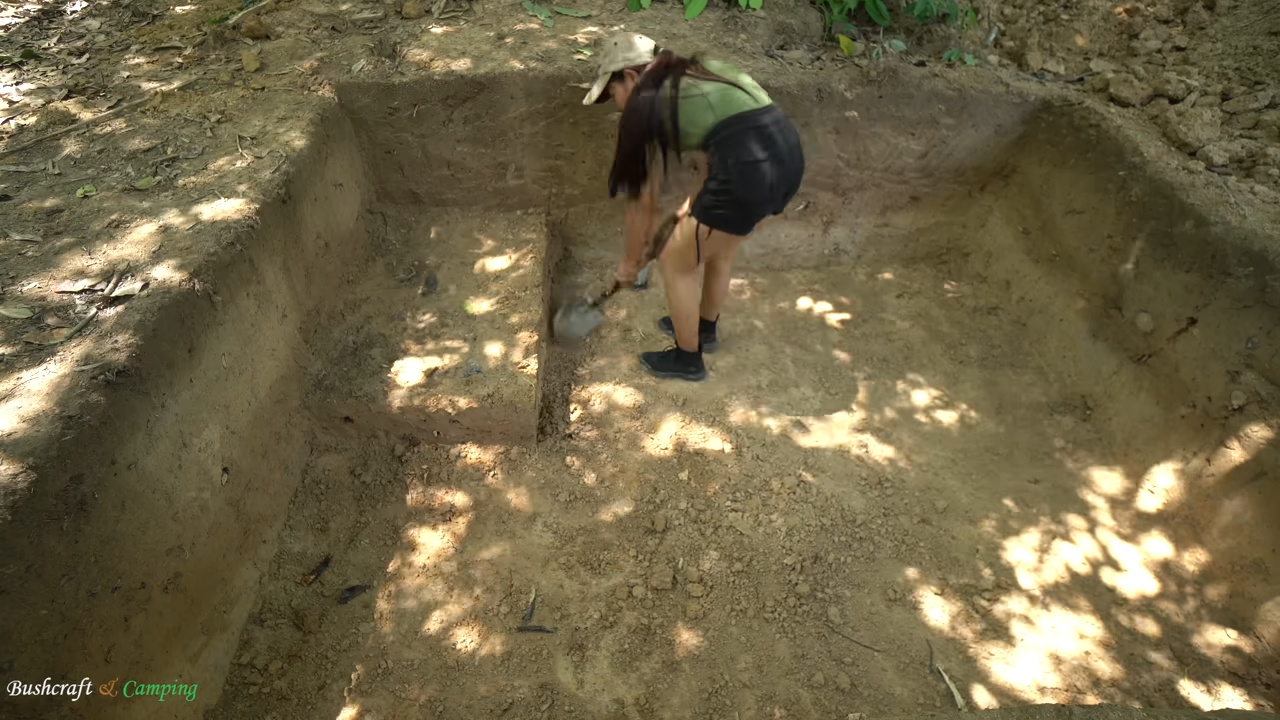 In just 32 days, a woman builds a completely self-sufficient underground wooden house, lives off the power grid, and creates a hidden refuge in nature.
With the excavation complete, the structural phase begins. Wooden logs are cut, debarked, and positioned vertically along the walls of the hole, acting as retaining pillars. On top of them, horizontal beams form a solid framework capable of supporting the weight of the earth that will later cover the roof.
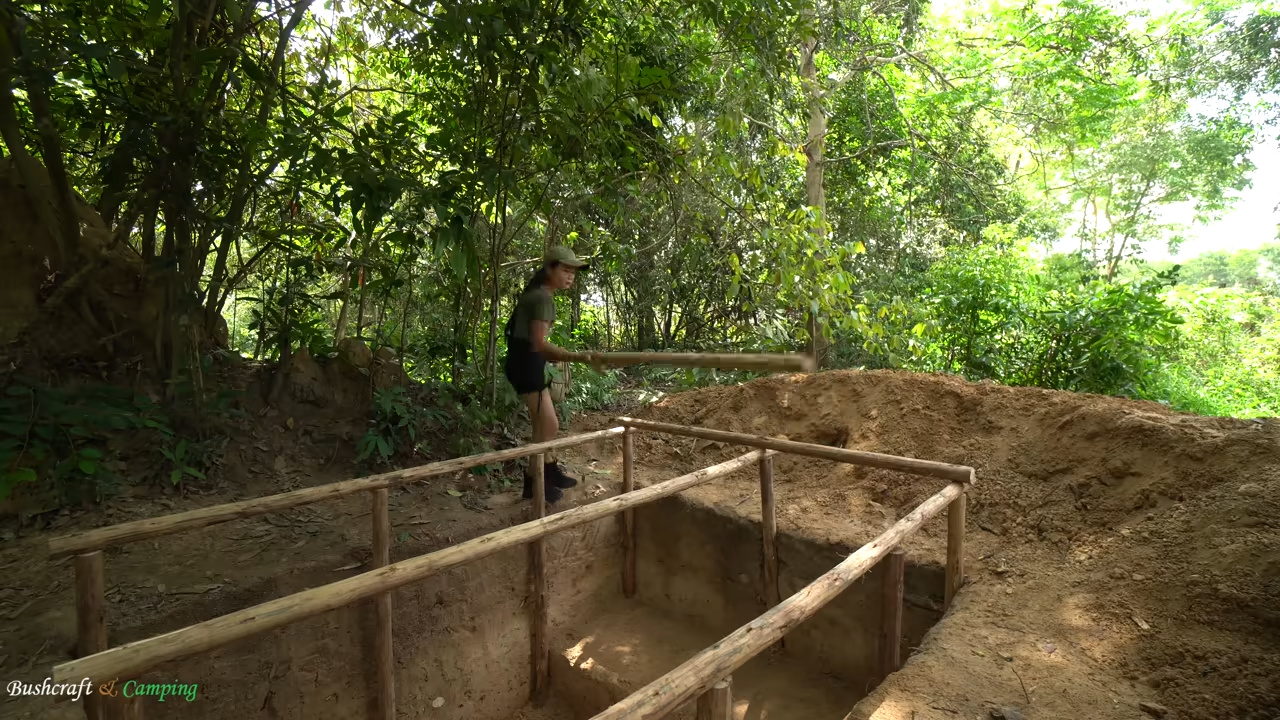 In just 32 days, a woman builds a completely self-sufficient underground wooden house, lives off the power grid, and creates a hidden refuge in nature.
The technique harks back to ancient methods of underground construction used for centuries in different regions of the world, especially in forested areas where wood is abundant and resistant when properly treated.
— ARTICLE CONTINUES BELOW —
See also other features
-
Prefabricated block house with walls for R$ 7.900, ready in 30 days, assembled by a bricklayer, yields R$ 3.300 in three units and becomes a cheaper option than containers and studio apartments today.

-
With over 1.500 pipes driven underground and a 1,5 km long ring, Japan froze the ground around an entire nuclear power plant to prevent the contamination of 400 tons of groundwater per day and avoid a structural collapse after Fukushima.
-
What is needed to prevent a European country, where 26% of the territory is below sea level, from flooding? The answer is 60-meter-high walls, more than 400 floodgates, and a barrier of approximately 9 kilometers.
-
A neighborhood spanning only 9,16 km² built on the water: erected on floating platforms and thousands of stakes anchored to the lakebed, this neighborhood was designed to rise and fall with the water level and function as a complete city in the face of extreme tides.


Are you in favor of US military intervention in Venezuela and the arrest of Nicolas Maduro?
— Click Oil and Gas (@clickpetroleoeg) January 3, 2026
Interior wooden walls create natural thermal insulation.
As the structure progresses, the interior walls begin to take shape with wooden planks fitted together one by one. The finish reveals an aesthetic care that goes beyond functionality.
The combination of woods with different tones creates a welcoming look, while the surrounding soil itself acts as a natural thermal insulator, maintaining a stable internal temperature even with external climate variations.
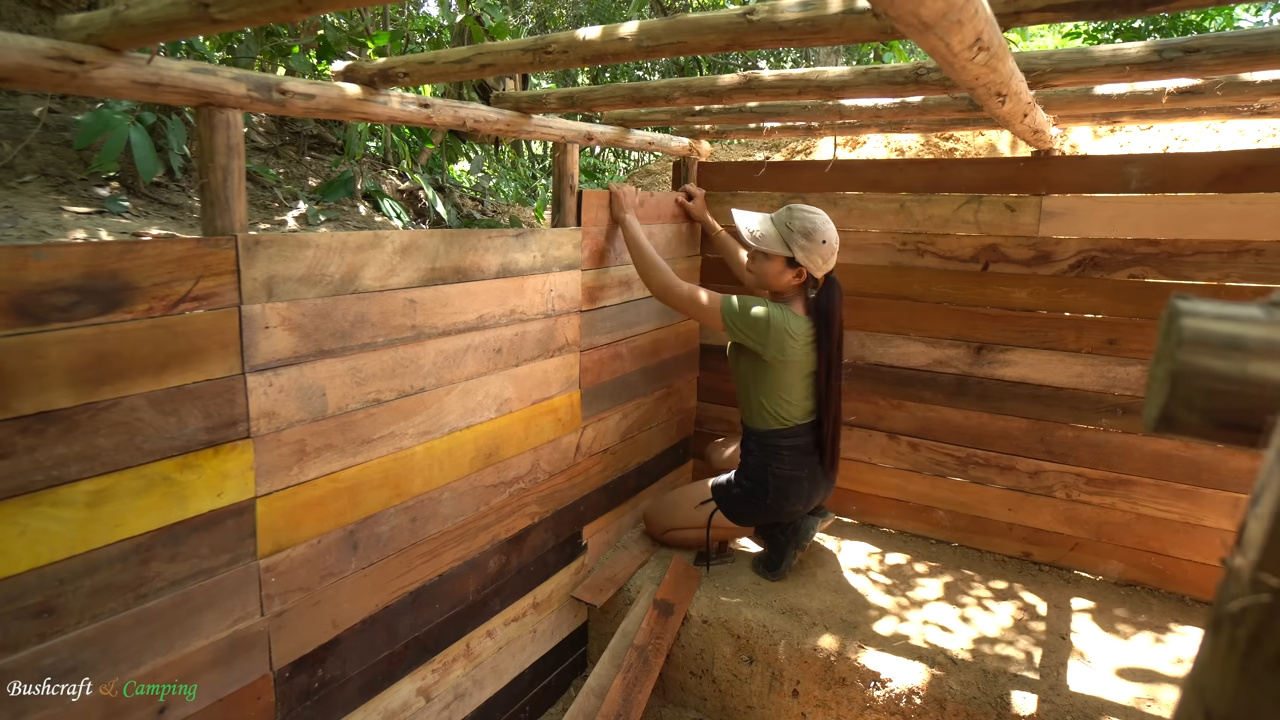 In just 32 days, a woman builds a completely self-sufficient underground wooden house, lives off the power grid, and creates a hidden refuge in nature.
This is one of the great advantages of underground houses: thermal comfort without consuming electricity.
The top closure is one of the most critical stages of the project. On top of the beam structure, the construction company installs planks, a waterproof protective layer, and then replaces the soil removed during excavation.
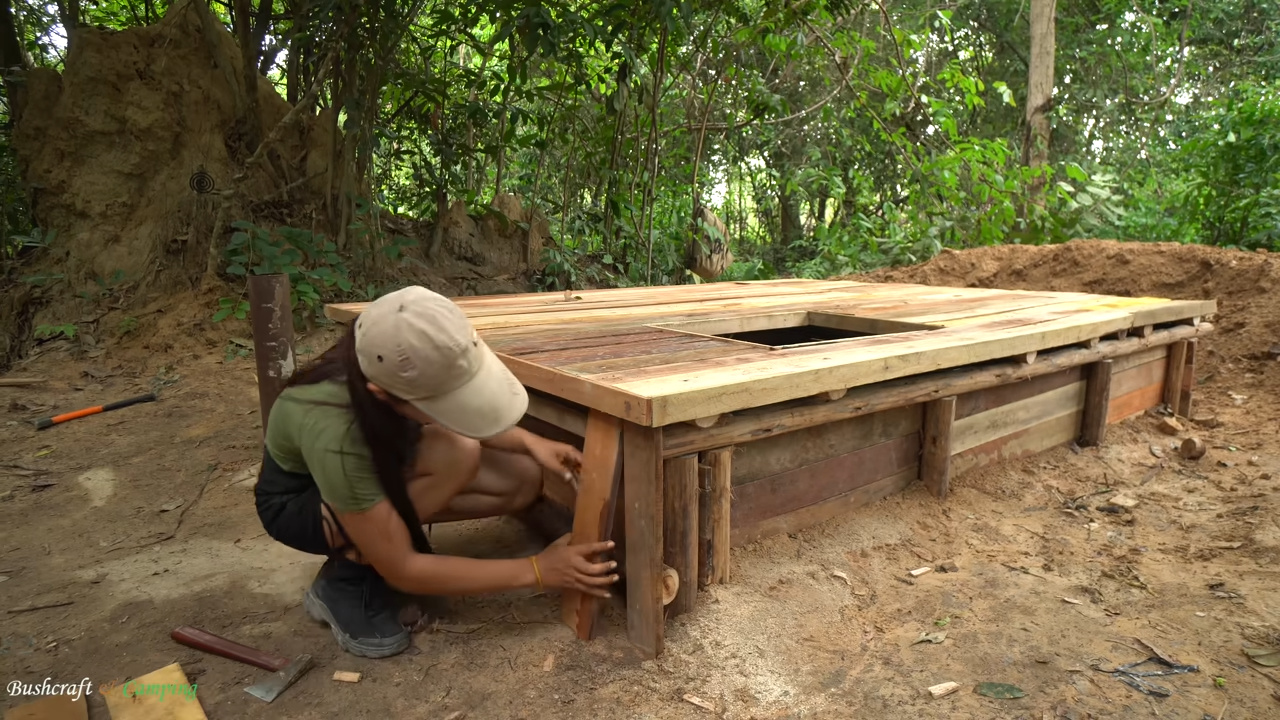 In just 32 days, a woman builds a completely self-sufficient underground wooden house, lives off the power grid, and creates a hidden refuge in nature.
The result is a roof completely integrated into the environment, practically invisible when viewed from a distance. The vegetation is replanted on top, causing the house to disappear into the landscape, creating a hidden, silent, and protected refuge.
Even without a connection to the electrical grid, the interior space is functional. Lighting is provided by lanterns and low-energy lights, while the intelligent use of natural ventilation ensures air circulation.
The images show moments of everyday use of the shelter, such as simple meals, rest, and organizing the interior space. Everything is designed for the essentials, without excess, reinforcing the concept of self-sufficient and sustainable living.
Sustainable construction showcases a real alternative for off-grid housing.
The project is noteworthy not only for its speed—just 32 days—but also for its feasibility. The underground house uses local materials, reduces environmental impact, eliminates the need for concrete, and virtually eliminates the need for artificial climate control.
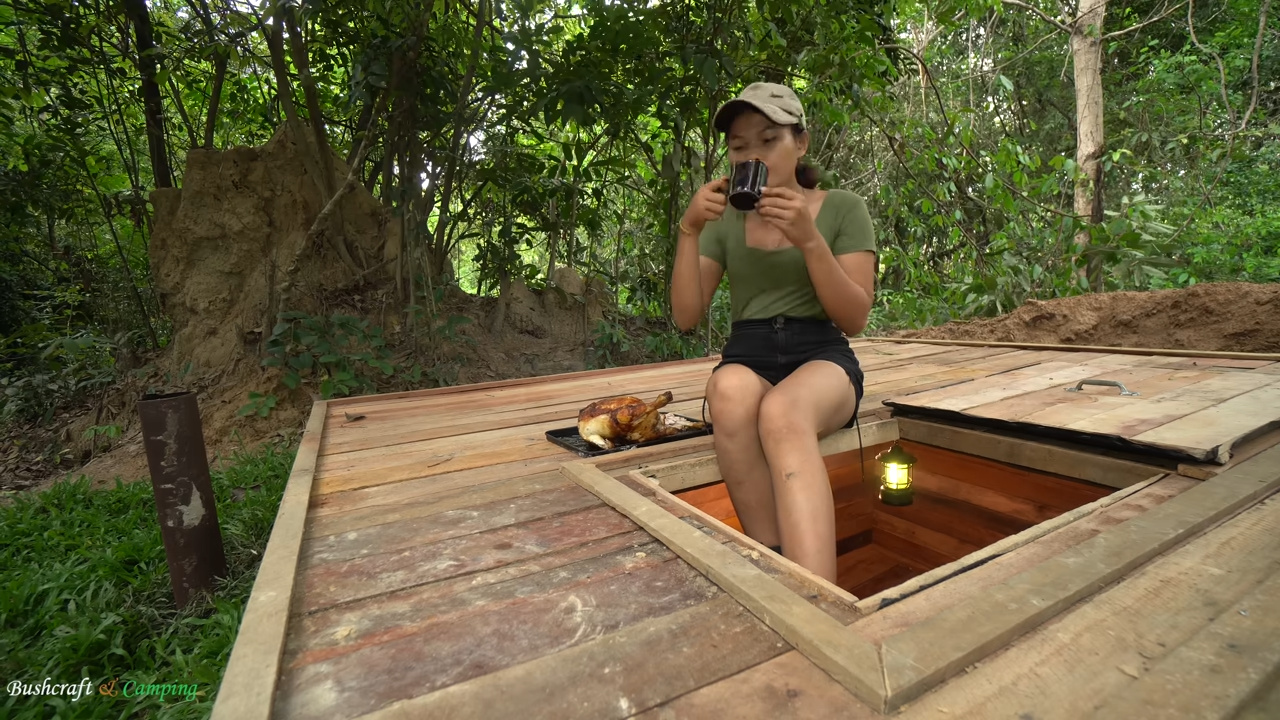 In just 32 days, a woman builds a completely self-sufficient underground wooden house, lives off the power grid, and creates a hidden refuge in nature.
At a time when the cost of traditional housing is rising and the search for off-grid solutions is increasing, this type of construction emerges as a real alternative, especially in rural and forested areas.
A hidden haven that combines technique, resilience, and simplicity.
More than just a buried cabin, the construction represents a lifestyle choice. Each step of the process reveals physical resilience, practical knowledge, and a direct connection with the natural environment.
In the end, what emerges is not just a house, but a silent, self-sufficient refuge integrated with nature, capable of functioning far from civilization without sacrificing essential comforts.