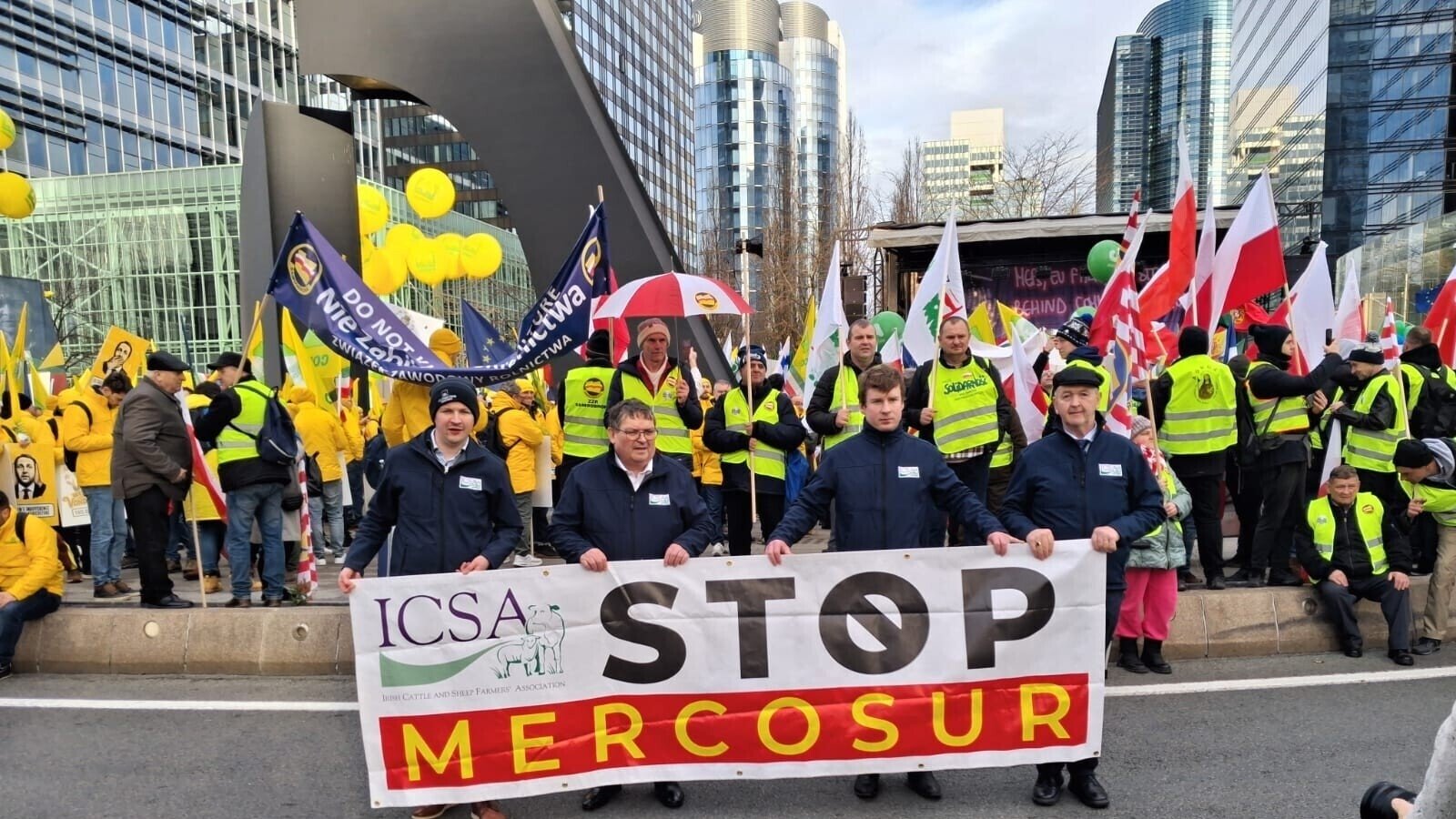
The Taoiseach has not ruled out Ireland supporting the EU-Mercosur trade deal, which member states will vote to either accept or reject on Friday.
Speaking in China, Micheál Martin said he “still has concerns” over the deal but that “a lot of progress has been made” and the Government will make a decision on the matter “towards the end of the week”.
He said the announcement in respect of an improvement in the EU’s Common Agricultural Policy “is also welcome”.
“That improvement has to be welcomed, because income to Irish farmers is key,” he said.
Mr Martin added that Ireland has been working with “like-minded countries” in relation to the proposed agreement and that “significant safeguards” have been negotiated in the last 12 months.
He said the issue is if there is a blocking minority on Mercosur on Friday.
The Taoiseach added that the Government will “continue to engage with our partners in Europe on this and we will make a decision on this towards the end of the week”.
The Irish Farmers’ Association has said the Government must continue to oppose the Mercosur trade agreement, despite the latest move by the EU Commission to link it to CAP funding.
It said the Government “must hold firm on its commitment in the Programme for Government and vote no to Mercosur”.
Minister of State Seán Canney will discuss the concerns of the Regional Independents group regarding the proposed Mercosur trade deal in an online meeting with Mr Martin.
Mr Canney has made clear his concerns regarding the proposed Mercosur trade deal between the EU and several South American countries led by Argentina, Brazil, Paraguay, and Uruguay.
He has cited differences in beef and poultry regulations applied in both regions.
On Friday, the European Union’s 27 member states will vote to accept or reject the deal which has been 25 years in the making.
If approved, the deal would allow Mercosur countries to export up to 99,000 tonnes of beef into the EU at a much-reduced tariff rate of 7.5%, as well as 180,000 tonnes of poultry.
This has led to concerns amongst farmers of cheap South American beef flooding the EU market, which they say could be of inferior quality.