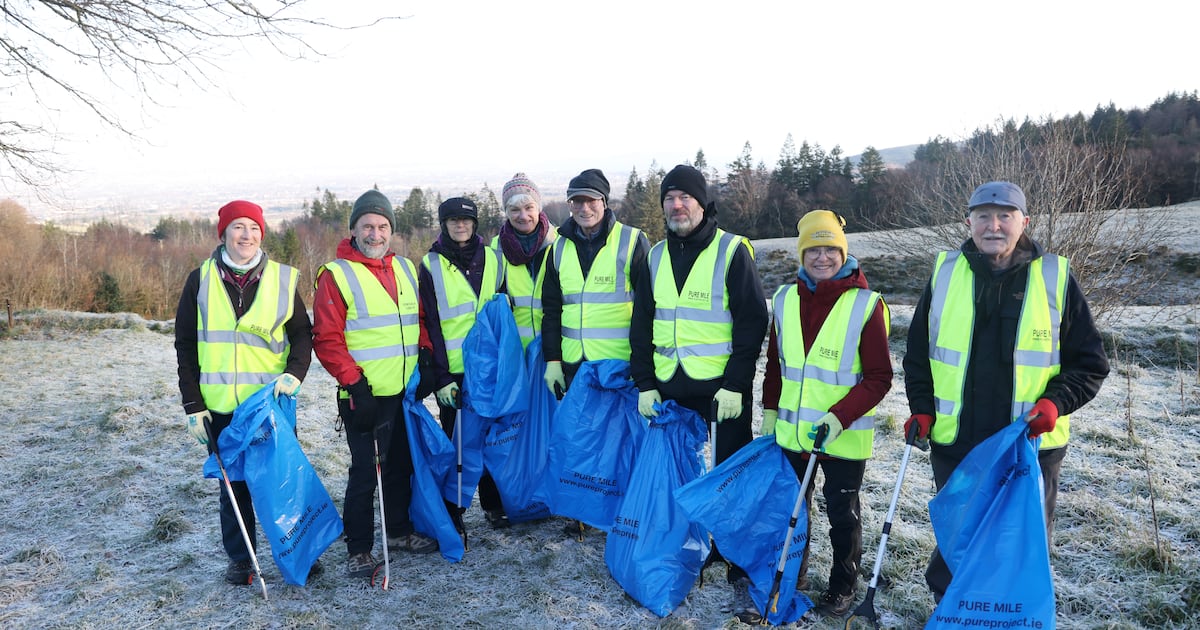
Dublin hiker Tom Hulton (59) and the Wayfarers Walking Group have found tyres, traffic cones, paint, computer materials, bottles, sleeping bags and tents, electrical waste and fast gas (nitrous oxide) cans left in the South Dublin uplands.
“The Dublin Mountains are a great facility… the Dublin Mountain Way and the facilities along there… right beside the city, they’re really good,“ he is keen to point out. ”It’s disappointing when you see rubbish.”
“What we try is not to take it too much to heart,” he adds.
An estimated 40 tonnes – or 40,000kg – of dumped rubbish was collected from the Dublin uplands last year, according to an organisation which monitors fly-tipping in the scenic area.
Ian Davis, manager of Pure (Protecting Uplands and Rural Environments), told The Irish Times it had recorded 382 sites of illegal dumping in 2025, with volunteer-led clean-ups following afterwards.
[ Gardaí fine driver €150 for illegal dumping in Dublin mountainsOpens in new window ]
Construction rubble and household and landscaping waste, along with 14 mattresses, two washing machines, three fridges, a cooker, seven microwaves and three TVs were all dumped along roadsides, woodlands, valleys and car parks in the Dublin Mountains and surrounding areas, he says.
“The Pure truck is in the Dublin uplands every week,” Davis says, responding to reports of dumping from the general public and from Wicklow County Council, South Dublin County Council, Dún Laoghaire-Rathdown County Council, Coillte, the National Parks and Wildlife Service, Dublin Mountains Partnership, and Pure Mile volunteers.
The Pure Mile is a community initiative that encourages communities and groups living in and using the uplands to adopt a mile of roadway and to keep that area litter-free.
“Almost all rural roads in the south Dublin uplands are involved in the Pure Mile,” Davis says. “In 2025, Pure Mile groups removed over 900 bags of rubbish and litter from the south Dublin uplands, with over 350 people participating in clean-up events, with an estimated 4,500kg of waste collected by the Pure truck.
“It is vital that we continue to monitor the situation and ensure that we remove illegal dumping quickly from the landscape – because we know that dumping causes [more] dumping.”
For one volunteer clean-up group at Cruagh Woods in the Dublin Mountains, discarded fast gas cans, balloons and fast food wrappers are regular finds.
“Once we came across a box of 18 nitrous oxide cans and balloons,” says Ruth Murphy (50), of the Irish Ramblers Club, “because what they do is they sniff it and they get high, and then they just leave them there. They’re quite heavy, so if they’re on the side of the road you have to drive along to get them.
“The last time we did a litter-pick, we picked about 30 cans within a mile area.
“It was disappointing, because before Halloween we started to notice a difference for the better, but Halloween was brutal – people just arrived, had their meal, and left their fast food-outlet wrapping behind,” explains Murphy, whose group also teams up with members of the Dublin Hillwalkers.
A metre-high stuffed gorilla was one of the group’s more unusual finds in the uplands, according to Murphy.
“It can get exasperating at times. You could pick and have it clean, but then when you come back there’s rubbish on it again.”
She adds: “A lady who passed away this year who was 90 used to [clear rubbish] with us and she drove herself there, which is really impressive.”
The group also follows Mountaineering Ireland’s “one from the hills” initiative, taking a small piece of rubbish from the landscape when possible on hikes.
“Even if it’s small, and we have a plastic bag or a bread cover, if we see something that can be carried, we’ll bring it with us. Sometimes we’d take bigger things like pillows and bring them down as well,” Hulton says.
Dún Laoghaire-Rathdown County Council, which is responsible for amenities including Ticknock Forest Park, said no prosecutions were taken by the council in 2025 for illegal dumping.
Meanwhile, Coillte, the largest landowner in Ireland, said it is working closely with gardaí and local authorities to address the continuing issue.
[ Over 1,600 firms sign up to scheme to prevent dumping of old tyresOpens in new window ]
“To help deter and monitor illegal dumping, Coillte installs signs, barriers and CCTV at known illegal dumping hotspots across its forest estate,” a spokesperson said.
“Many of our forests are in remote areas in rural Ireland, and unfortunately in recent times we have seen many instances of illegal dumping on our lands.”
In recent years, Coillte has spent more than €2 million on clean-up operations and disposing of illegal waste dumped in its forests.
The spokesperson added: “Illegal dumping causes serious problems to habitats, species, waters, soils and human health. It can pollute rivers and drinking water sources, damage biodiversity, and is a threat to both the people who live in the area and to forest recreational users. It also poses risks to Coillte staff who have to remove this illegally dumped material.”
A spokesperson for South Dublin County Council said almost all rural roads in the south Dublin uplands are part of the pure mile initiative.
Almost €3 million was provided last year by the Department of Climate, Energy and the Environment to local authorities under the anti-dumping scheme (ADI) to encourage a collaborative approach between local authorities, community groups and other State agencies to tackle illegal dumping, according to a department spokesperson.
She explained: “Funding provided under the ADI can be utilised by local authorities to organise clean-ups, purchase CCTV and other mobile recording equipment and put in place effective enforcement measures. It is a matter for the local authorities to apply for this funding through the waste enforcement regional lead authorities, who administer the scheme on behalf of the department.”
The department also provides funding of €145,000 to the Pure Project each year to address illegal dumping in the Wicklow and Dublin Mountains.
[ ‘Environmental vandalism’: The households who fly-tipOpens in new window ]
Geraldine Boland, one of three co-leaders of Friends of the South Dublin Uplands, which arranges litter-picking events, said dumped green waste from landscape gardeners and private households is also a problem.
“That means you’re getting seeds from gardens going into heath and heather landscapes, and [they don’t] belong there. Instead it should have been going for what was €8 a carload last year into Ballyogan [civic recycling facility].”
The group is often joined by international protection applicants, Boland adds, who are looking to gain volunteering experience via the South Dublin volunteer centre, and to see the mountains.
To report dumpers and dumping in the Dublin and Wicklow uplands, you can email Pure: info@pureproject.ie, report it to your local authority or Coillte via a confidential forest security hotline on 1890 800 455.