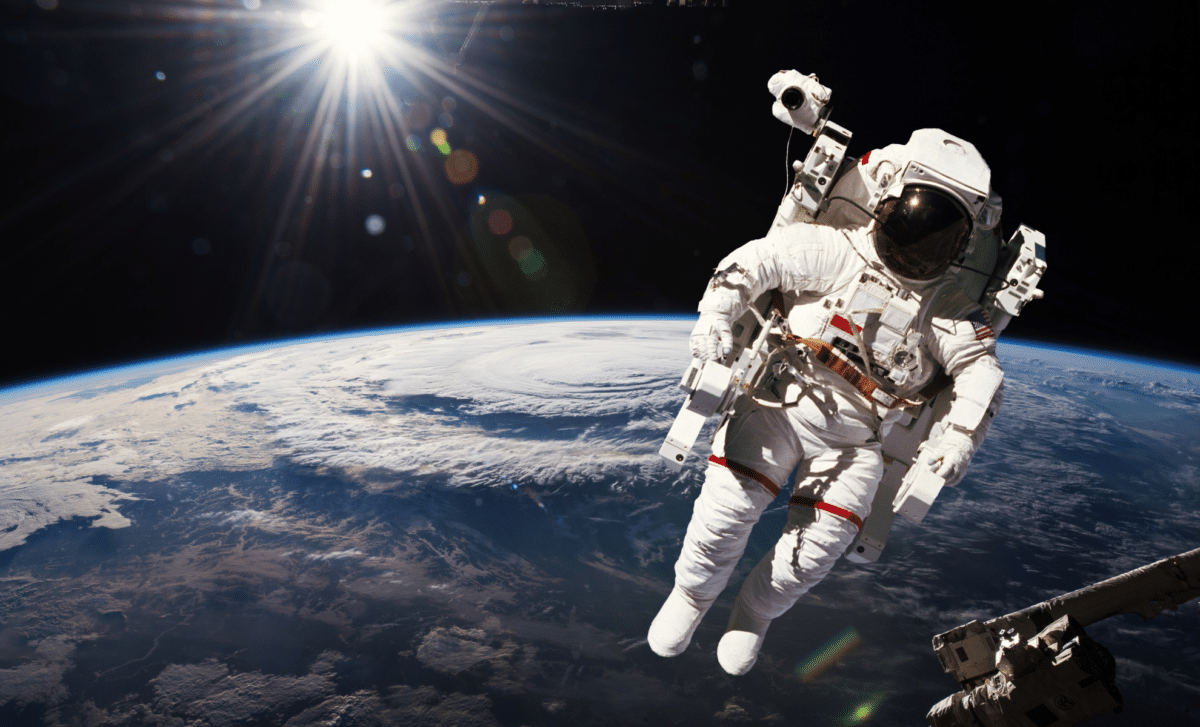
The crew of Expedition 74 is set to conduct the first spacewalk of 2026, marking a key step in upgrading the International Space Station’s (ISS) solar energy infrastructure. As reported by NASA on January 5th, astronauts are readying the outpost for a new set of roll-out solar arrays, with tasks planned both outside and inside the station.
Astronauts Fincke And Cardman Lead 2026’s First EVA
Veteran NASA astronaut Mike Fincke and mission specialist Zena Cardman are scheduled to exit the ISS through the Quest airlock at 8:00 a.m. EST on Thursday, January 11, for a six-and-a-half-hour spacewalk. According to NASA, their mission will focus on preparing the station’s port-side truss structure to accommodate next-generation roll-out solar arrays that will arrive aboard a future cargo shipment. This EVA (extravehicular activity) includes routing essential power and data cables, installing a modification kit, and deploying jumper cables across the ISS exterior.
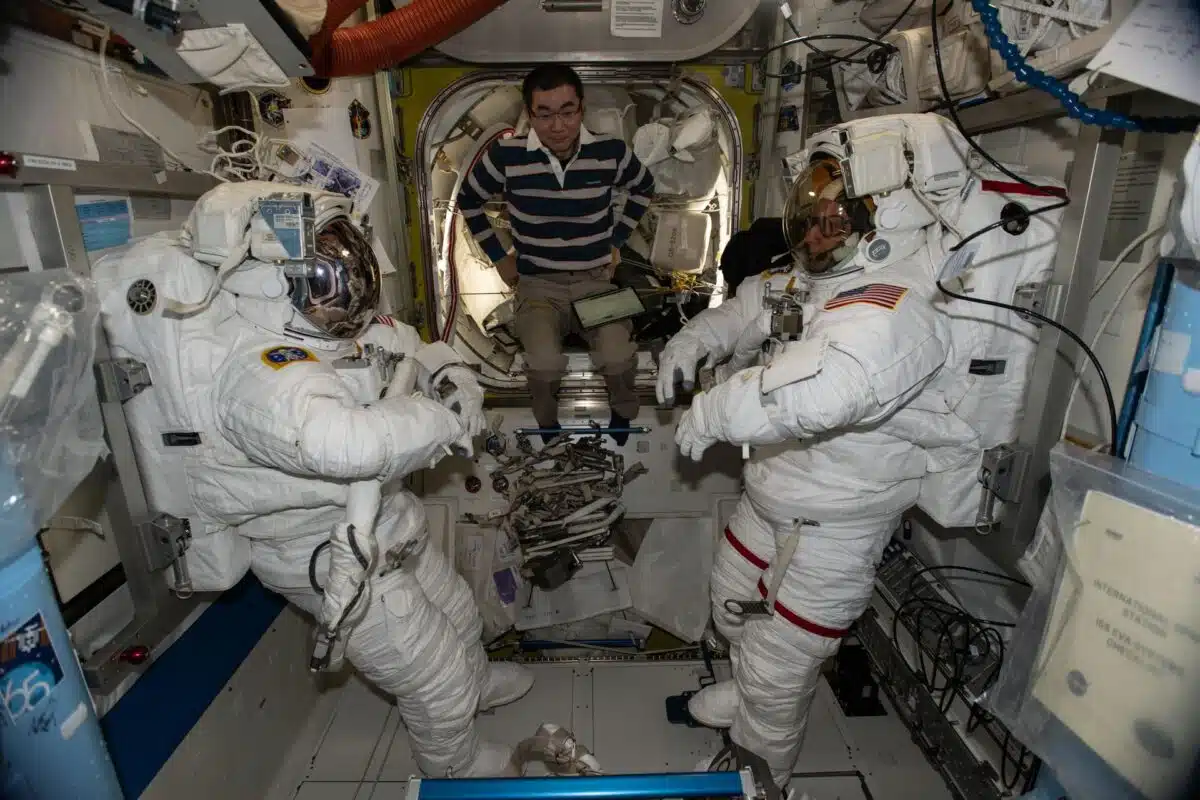 At center, JAXA (Japan Aerospace Exploration Agency) astronaut Kimiya Yui assists NASA astronauts Zena Cardman (left) and Mike Fincke (right) during spacesuit checks inside the International Space Station’s Quest airlock.
Credit: NASA
In addition to mechanical installations, Fincke and Cardman will also conduct bio-environmental sampling by swabbing exterior surfaces to collect potential microorganism specimens. These microbial swabs will be studied back on Earth to better understand how life can persist, or fail, in the harsh conditions of space. The astronauts will also take photographic documentation of external station hardware for maintenance records and future mission planning. The EVA will be broadcast live via NASA’s YouTube channel, offering a rare real-time look into the execution of complex orbital engineering.
Supporting Crew Keeps Operations Grounded, And Moving
Inside the ISS, astronauts Chris Williams (NASA) and Kimiya Yui (JAXA) are charged with supporting the EVA from the station’s interior. Their responsibilities include assisting Fincke and Cardman into their spacesuits, managing airlock pressure cycles, and monitoring safety systems during the EVA. On January 5th, the four astronauts conducted a full procedural review of the spacewalk, working closely with mission control teams on Earth to simulate each operation step-by-step.
The EVA suits’ emergency jetpacks, known as SAFER (Simplified Aid For EVA Rescue), were inspected by the crew as part of safety checks. These are designed to allow astronauts to return safely to the station should they become untethered, a rare but high-risk scenario. Williams and Yui will remain in constant communication with both the EVA team and Earth-based flight directors throughout the mission.
Scientific Research Continues Aboard The Orbiting Laboratory
While the EVA is a focal point, the Expedition 74 crew continues to advance key microgravity research. On January 5, Yui and Williams installed protein crystal growth cassettes into the Advanced Sample Experiment Processor-4. This experiment, part of the Pharmaceutical In-Space Laboratory, is exploring how proteins crystallize in microgravity, a process that can potentially revolutionize the manufacturing of medicines in space. The Destiny module served as the hub for this activity, which also involved capturing precise imagery of the experiment’s progression.
Elsewhere aboard the station, Yui also transferred payloads inside the SpaceX Dragon cargo craft, which is approaching its scheduled departure later this month. Meanwhile, Williams and Cardman conducted hardware stowage operations in the NanoRacks Bishop Airlock, organizing equipment for future deployment or return to Earth.
Russian Cosmonauts Advance Respiratory Health Studies
On the Russian segment of the ISS, Roscosmos flight engineer Oleg Platonov began the day with a novel respiratory experiment. Wearing an acoustic monitor around his neck, he conducted a series of forced exhalation exercises for a study analyzing lung function in microgravity. This research is key to identifying how prolonged exposure to weightlessness affects pulmonary systems, and to developing countermeasures for long-duration missions.
Later in the day, cosmonauts Sergey Kud-Sverchkov and Sergei Mikaev joined the same study, examining the acoustic characteristics of the trachea and monitoring for early signs of space-induced breathing disorders. Their work also included maintaining life-support systems in the Rassvet module and inventorying medical kits and video equipment. Mikaev continued the search for essential hardware inside the Zarya module, reinforcing the multi-faceted nature of station maintenance and scientific operations.