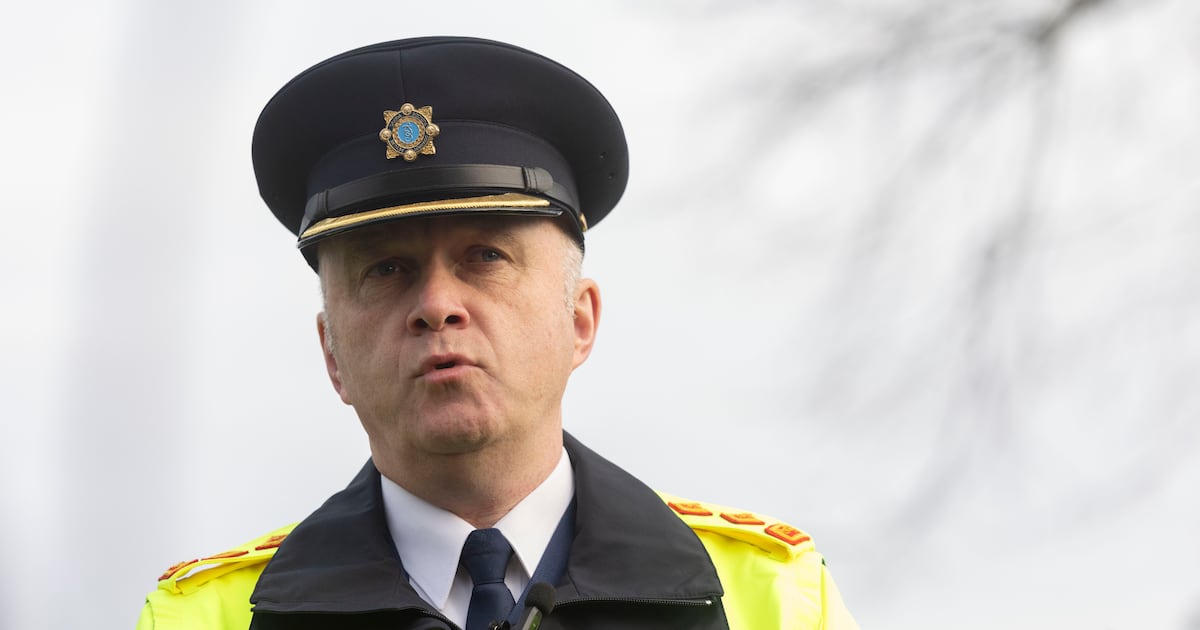
People should tip An Garda Síochána off about their family and friends’ drink driving in an attempt to save their lives and those of other motorists, a senior garda has said.
Chief Supt David Harrington, who is in charge of roads policing, said gardaí had a key part to play in catching motorists who break the law, but a deeper shift was required across Irish society.
“Yes, yes,” he said when asked if people should call gardaí and report their family members or friends for drinking driving.
“Our job is the enforcement of road traffic legislation and if a member of the public sees a potential offence taking place, or about to take place, yes they should call An Garda Síochána and we will respond.”
Chief Supt Harrington said communities must act in a manner “that makes risky behaviour on the roads unacceptable, culturally unacceptable and socially unacceptable”.
“Our road networks are a shared space and it is critically important that we all work collectively to reduce risk-taking and poor behaviour.”
He said “there needs to be an acceptance our behaviours must change” and that enforcement would only “bring that so far”.
While much of the focus around distracted driving has been on mobile phone use, Chief Supt Harrington said those who drink coffee or tea when behind the wheel were also distracted.
“Driving requires your full attention,” he said of people using mobile phones or eating and drinking while driving.
“Roads are very busy spaces and we must be mindful of very vulnerable road users specifically pedestrians, cyclists and motorcyclists.”
The number of Garda members assigned to roads policing units nationally last year fell by about 40 per cent, to just over 600. There were 1,046 gardaí assigned to road policing duties when the numbers peaked in 2009.
In 2024, then Garda commissioner Drew Harris directed all gardaí to perform 30 minutes of traffic enforcement during every shift. The order came in response to an increased number of road deaths.
The number of road fatalities appeared to slow for a period after the commissioner issued the direction, but the 190 deaths recorded last year, while it remained in place, was the highest total in more than a decade.
When asked about the decline in Garda numbers in roads policing units, Chief Supt Harrington said resourcing was “important” for enforcement and the area was a “priority” for the Garda as numbers across the force began increasing last year. An additional 79 members have been assigned to roads policing since the first half of 2024.
He said static speed detection cameras have a significant role to play in detecting speeding offences, with 12 of these installed last year and more to follow.
He said he accepted the State was an outlier in a European context in having so few of these cameras, though “the number of fatalities speaks for itself over the course of the year” despite more of them being introduced.
He said each of the 190 lives lost on the roads last year was “devastating” and represented a “catastrophic loss” to the victims’ family and friends.
He said 765 people were caught driving while intoxicated over the Christmas and new year period despite the Garda running a well-publicised roads enforcement operation in recent weeks. Some 56 per cent of the offences detected involved drink driving while 44 per cent involved drug driving.
The number of drivers caught speeding during the enforcement operation, which ran from December 1st to January 5th, exceeded 26,000, including some caught driving at twice the legal speed limit.
In the same period, 26 people were killed on the roads and there were 70 crashes classified as “serious collisions”.
Nearly 10,000 checkpoints were conducted over the five-week period, with almost 3,000 vehicles seized. Close to 60 per cent of these vehicles were seized for not having insurance.
A further 450 drivers received penalty points for failing to wear a seat belt.
[ The Irish Times view on road safety: an intolerable loss of lifeOpens in new window ]
Chief Supt Harrington said he found it “baffling” that people in vehicles were still not wearing seat belts.
He said it was also “difficult to understand” that it has to be explained to people they are not “invincible” on the roads and their actions have real consequences.