A businessman who fled to Pakistan after being convicted over a £3million fake Viagra scam has now returned to the UK to claim free NHS care and benefits.
Zahid Mirza skipped bail before he was jailed in absentia for two-and-a-half years over his role in what was then Britain’s largest ever counterfeit drugs conspiracy.
He spent 16 years on the run in Pakistan but returned after his health deteriorated and is now living in a taxpayer-funded care home – despite failing to hand over more than £3million in confiscated criminal profits.
The 65-year-old, of Ilford, East London, has also been allowed to access Universal Credit and NHS treatment for multiple, complex health issues.
He is also on the waiting list for dialysis, which costs the health service an estimated £34,000 per patient per year.
The businessman and his associates bought fake Viagra and Cialis, another erectile dysfunction medicine, for as little as 25p before selling them on the Internet for up to £20 a tablet.
The tablets were manufactured in illicit factories in China, Pakistan and Asia and then sold on to unsuspecting customers.
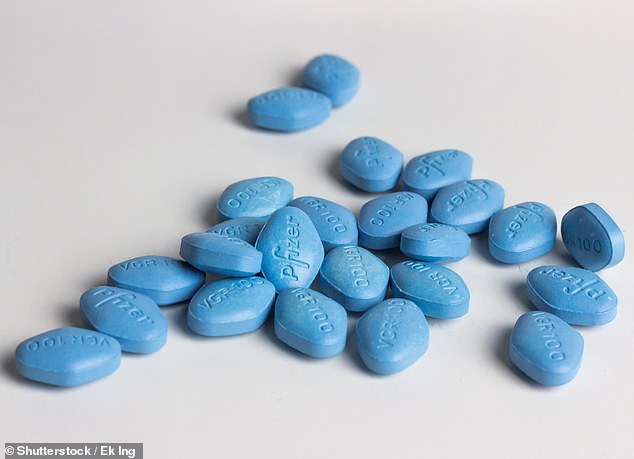
Zahid Mirza skipped bail before he was jailed in absentia for two-and-a-half years over his role in what was then Britain’s largest ever counterfeit drugs conspiracy. Pictured: Real Viagra
The scheme spanned the UK, America, the Bahamas and Mexico and involved scores of businesses, both real and fake.
Mirza fled to Pakistan days before he was found guilty in 2007 of five charges of selling fake medicine and one charge of selling medicines without a licence.
His health deteriorated in 2020 and in 2023 he returned to Britain, where he was sentenced to an additional three months in prison for absconding.
But he was freed the following year and is now living in a care home in Ilford, where his living expenses are paid by the council and he is in receipt of Universal Credit.
Mirza’s return to the UK emerged in a High Court judgment dismissing his application to set aside a confiscation order requiring him to hand back his illicit profits.
A judge originally ordered the scammer to hand over £1.8million, including money held in overseas bank accounts and business interests.
While £408,000 from the sale of his two homes in Ilford was successfully retrieved, Mirza still owes a total of £3,243,551.38 when interest is taken into account.
In his appeal to the High Court, the criminal claimed he no longer has any realisable assets now his two houses have been sold, and is too ill to be able to work.
However, Mr Justice Soole rejected the request – noting that he had failed to explain what had happened to his other assets, and it was likely some of them were hidden.
‘With every allowance for his evident very bad state of health (which I accept) and the consequent need to give his evidence remotely from his care home, I found the applicant to be a most unsatisfactory and unreliable witness and was quite unpersuaded by his bald denials of the matters put to him,’ the judge wrote in a judgment seen by the Mail.
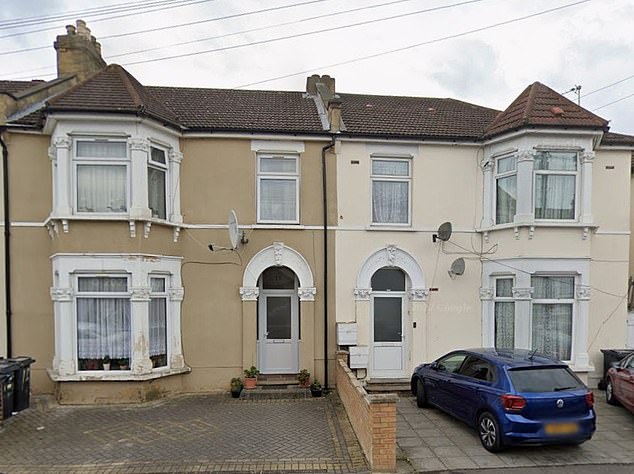
The two London houses Mirza owned before they were seized by the courts
Mirza’s trial heard the products sold by his gang were almost identical to the real thing, with carefully forged packaging, logos and patient information leaflets.
Experts told the jury that only someone who knew exactly what to look for would be able to spot the counterfeit.
The medicines, which were bought online by consumers who believed them to be real, contained about 90 per cent of the normal active ingredient found in the authentic tablets.
Some customers complained that the tablets had no effect. Others said the tablets made them nauseous and others shelled out large amounts of money, unaware that they were buying fakes.
Many of the packages were sent via legitimate delivery firms, including DHL, with labels suggesting they contained vitamins for dogs.
Gary Haywood, from Leicester, and student Ashwin Patel, of north London, were convicted alongside Mirza.
The case used evidence collected by the Medicines and Healthcare Regulatory Authority (MHRA).
Universal Credit can be paid to people who meet the eligibility criteria regardless of them having a criminal conviction, although courts can make an application for some of the money to be used to pay off outstanding court fines.