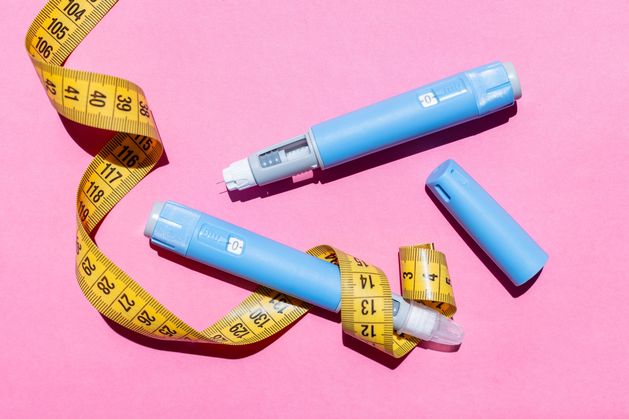
The team looked at the results of 37 studies including more than 9,000 participants who took various weight loss medications for at least two months – including but not limited to GLP-1 receptor agonists like Ozempic and Mounjaro.
Today’s study in the British Medical Journal (BMJ) said it is common for people to stop taking weight loss medications within the first year, and these findings show the need for caution when it comes to short-term use of weight loss drugs.
It comes as a separate Irish study to be published shortly is set to show up to 60pc of people stop taking the medications after a year.
Asked to comment on the BMJ study, Dr Cathy Breen, Clinical Specialist Dietitian in Obesity and Diabetes at St Columcille’s Hospital in Dublin, said the new obesity medications improve health and on average result in more weight loss than changes to health behaviours like food or activity alone.
“This is because they treat the hormonal aspects of the disease of obesity. Obesity is a chronic relapsing disease and so these treatments are designed to be used long-term, not in the short term to just target weight loss.
“The high discontinuation rates seen with these medications have many causes including the stigma associated with having obesity, costs and inadequate support to manage side effects.
“Health behaviours such as healthy nutrition, activity, sleep and stress management are foundations of obesity care, but it is outdated to suggest that medications are just an add-on – similar to all other chronic conditions, medications treat the physiology of the disease.”
Raymond O’Connor, Adjunct Clinical Professor of General Practice, University of Limerick School of Medicine, said he was not surprised by the main finding that there is an average regain of 0.4kg per month . All weight lost is likely to be regained in under two years and also weight is regained faster after stopping weight loss drugs than after dietary weight loss programmes.
“My own review on the topic is about to be published in the Drugs and Therapeutics Bulletin. In my review I found that discontinuation rates of GLP-1 RA drugs can be up to 60pc after one year – almost two-thirds of those starting the drug have stopped it within one year.
“Another study (the STEP-1 trial) showed that one year after withdrawal of once-weekly subcutaneous semaglutide 2.4 mg and lifestyle intervention, participants had regained two-thirds of their prior weight loss, with similar changes in cardiometabolic variables.
“Similar findings have been also found in several other studies. Tailored resistance exercise training and individualised dietary advice may be one way of retaining lean mass (muscle and bone) while achieving fat loss.
“However, in practice this rarely happens outside of specialised centres which have extremely long waiting lists.”
John Wilding, Professor of Medicine in the Department of Cardiovascular and Metabolic Medicine and Honorary Consultant Physician, University of Liverpool said: “This paper is a comprehensive analysis of the available data on weight regain after cessation of weight loss treatments – note that I am lead author for the STEP 1 extension trial with semaglutide and am also an author for some of the other trials that have addressed this question.
“I note that quite a lot of the data concerns older medicines that are no longer available, however agree that the data seems to be valid across medication classes and for the newer medicines that are now most commonly used:
“The results are not surprising. Obesity is a chronic disease that usually relapses when treatment is stopped. We do not expect interventions for other chronic diseases for example diabetes, high blood pressure or high cholesterol to continue working when treatment is stopped and there is no scientific reason to expect obesity to be different.
“We do know from studies in diabetes and from the SELECT trial of semaglutide in people without diabetes that people at high risk of cardiovascular disease are less likely to have an adverse cardiovascular event such as a heart attack or stroke if they take GLP1 based drugs long term (these studies are usually of 3-5 years duration).
“ Hence, we should consider these as long-term treatments, not as a quick fix.
“I note weight regain tended to be slower after intensive lifestyle interventions. I would be cautious about interpretation of this as the populations included in these trials are likely to be different from those included in trials of medication, and I would always advocate lifestyle support to be used alongside weight loss medications to optimise outcomes anyway.”