Show summary Hide summary
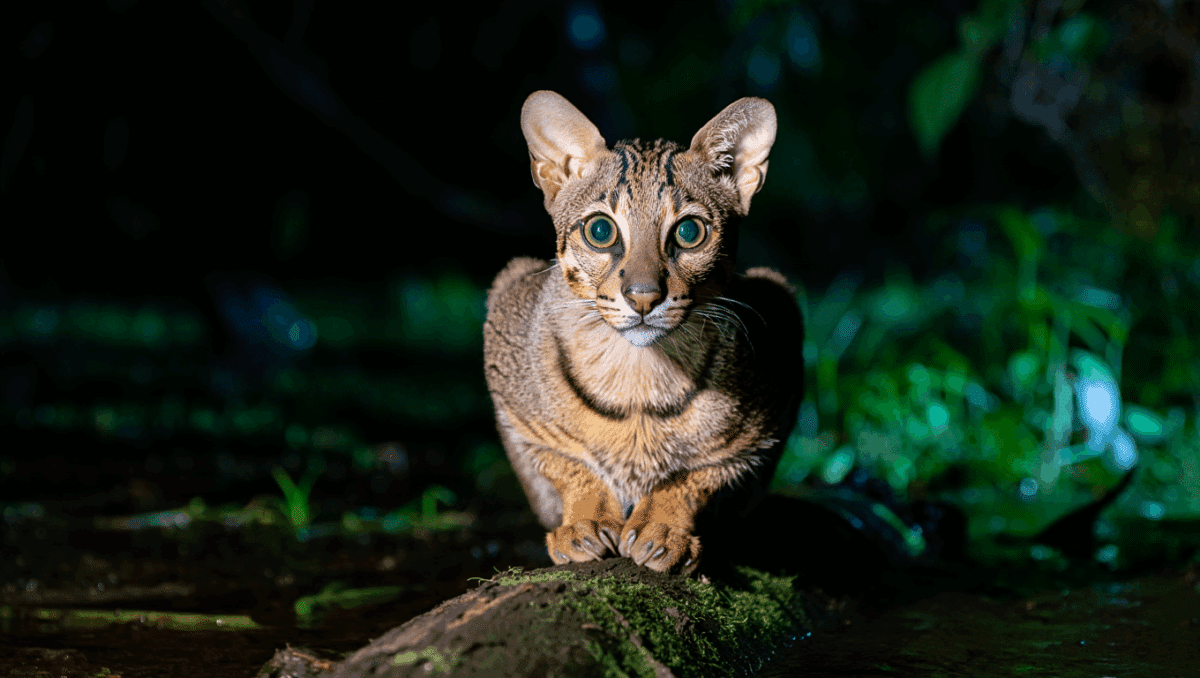
A small, secretive wild cat once thought lost from Thailand has reappeared after three decades, offering a rare spark of hope for the country’s disappearing wetlands. Night-vision camera traps in a protected southern reserve recorded multiple sightings, including a mother and her kitten — a vivid reminder that even species presumed gone can persist in the shadows if their habitats remain intact.
The discovery raises fresh questions about how to protect these animals and the fragile ecosystems they depend on, while giving conservationists new data to guide urgent action.
Where the flat-headed cat was rediscovered: hidden marshes and mangroves
The images came from Princess Sirindhorn Wildlife Sanctuary in southern Thailand, a landscape of peatlands, mangrove fringes, and marshy channels that are often difficult to patrol and study. These wetland habitats provide the hunting grounds and cover this species needs, but they are also some of the most threatened ecosystems in the region.
Researchers believe the cat’s aquatic-adapted lifestyle helped it remain undetected for decades. It favors areas with:
- Shallow water bodies and dense vegetation along riverbanks
- Mangrove creeks and peat swamp corridors
- Isolated patches of wetland with low human disturbance
What the camera traps revealed about behavior and population
The camera survey captured 29 independent detections of flat-headed cats, documenting behaviors that underline their close ties to water. Among the images was a female accompanied by at least one kitten, offering the first photographic proof of recent reproduction in Thailand.
Notable observations
- Frequent nocturnal activity, consistent with a secretive, night-hunting lifestyle.
- Evidence of fishing and foraging along water margins — the species is known to submerge its head to snatch fish.
- Multiple detections across different locations within the sanctuary, suggesting a small but extant presence rather than a single transient individual.
These photos do more than confirm survival — they give scientists a starting point for measuring population size, habitat use, and connectivity.
Why scientists worry: fragmentation, genetics, and shrinking wetlands
Despite the excitement, experts caution that rediscovery is only the first step. The flat-headed cat faces a suite of pressures that have pushed it to the brink in many parts of Southeast Asia.
Major threats include:
- Habitat loss from conversion of peatlands and mangroves to agriculture and aquaculture
- Fragmentation that isolates small populations and reduces genetic diversity
- Human-wildlife conflict, including predation on poultry
- Pollution and hydrological changes that degrade aquatic prey communities
Veterinary researchers working in the region said the critical question now is not simply whether the cat exists, but whether there is enough connected, healthy habitat to sustain viable populations long-term. The species’ reliance on wetlands — ecosystems often undervalued and drained or cleared — makes conservation particularly urgent.
Panthera and partner efforts: how conservationists responded
The international wild-cat organization Panthera played a central role in the camera-trap effort. Known for high-impact work on big cats, Panthera has increased attention to smaller wild felids in recent years, recognizing that little-studied species need targeted research before meaningful recovery programs can be designed.
Key points about the conservation response:
- Camera-trap surveys were prioritized to establish current distribution and detect reproduction.
- Local wildlife authorities collaborated with academic researchers to validate sightings.
- Funding and strategic interest in small cat conservation has grown since 2021, enabling broader field efforts.
A renewed emphasis on baseline data mirrors a long-standing view among conservationists: you cannot save an animal you do not know. Leaders in the field have argued that documenting presence, behavior, and habitat requirements must come before interventions such as protected-area expansion or community-based coexistence programs.
Next steps for conserving Thailand’s wetland felines
Now that the species has been photographed after decades without confirmation, researchers and managers are lining up follow-up actions to better understand and protect these cats. Planned measures include:
- Expanded camera-trap grids to estimate population size and movement corridors
- Genetic sampling where possible to assess diversity and connectivity
- Community outreach to reduce conflict and promote wetland stewardship
- Hydrology and habitat restoration in degraded peatlands and mangroves
Protecting the flat-headed cat will mean protecting the wetlands on which it depends — and that work has benefits for people too, from flood regulation to fisheries.
You might also like:

Michael Thompson is an experienced journalist covering U.S. and global news. With ten years on the front lines, he breaks down political and economic stories that matter. His precise writing and keen attention to detail help you grasp the real‑world impact of every event.
Give your feedback
★★★★★
Be the first to rate this post
or leave a detailed review