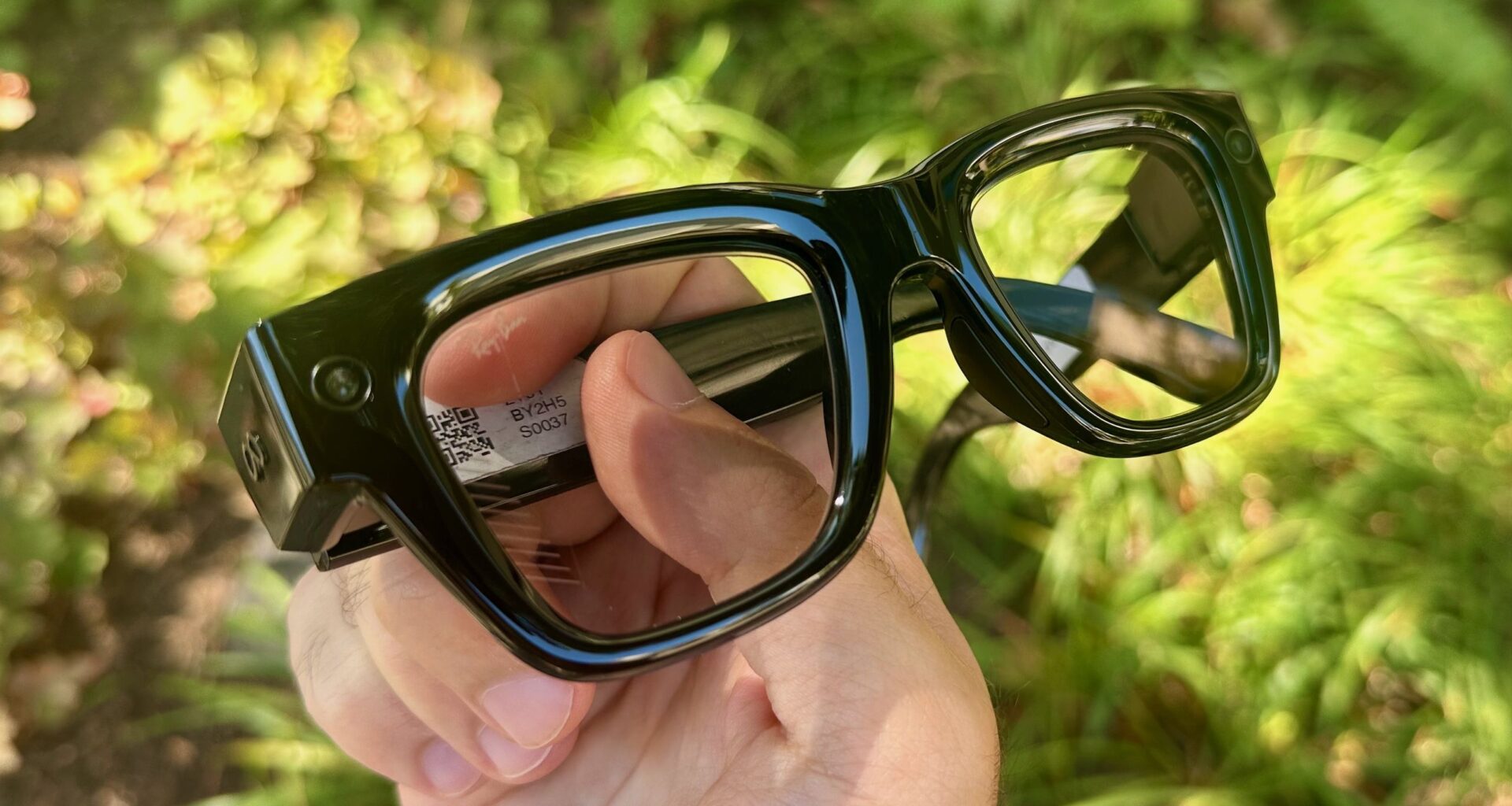
Meta made a big splash at CES 2026, announcing new features for the Meta Ray-Ban Display smart glasses, an exciting proof-of-concept, and availability updates.
Notably, the company is delaying its original plan to launch Ray-Ban Display glasses internationally on an indefinite basis. The company keeps developing new ways to use the brand’s first monocular display glasses, but it also seemingly can’t make enough of them.
You may like
Today’s best Meta Ray-Ban Display Glasses deals
(Image credit: Meta)
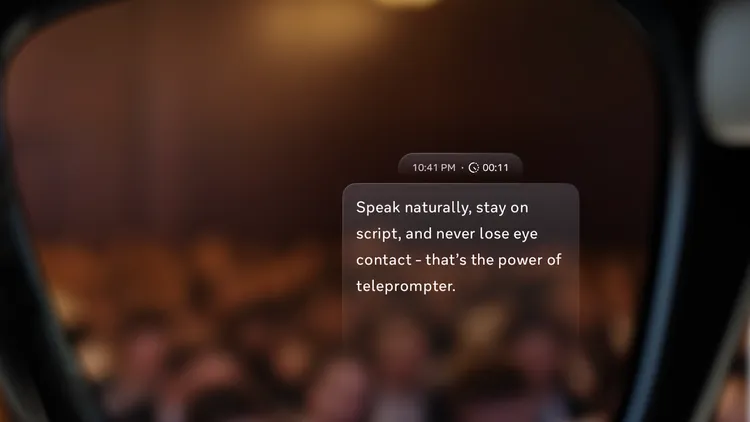
To me, the most exciting Meta Ray-Ban Display upgrade is teleprompter support. It’s exactly what it sounds like — these display glasses can show a script in the right monocular lens to keep you on track during a speech or event. The idea is that Ray-Ban Display’s teleprompter gives public speakers the best of both worlds. They get to maintain direct eye contact with their audience while still enjoying the comfort of notes or a script.
The teleprompter feed appears on the Ray-Ban Display glasses in text-based cards, which kind of resemble notification bubbles. Speakers advance the teleprompter using gestures with the Meta Neural Band. The teleprompter interface also displays the current time and a running timer that shows how long you’ve been speaking.
At its core, the Meta Ray-Ban Display teleprompter is simple, accepting pasted text from any external source. That could be a Google Doc, a note in Google Keep, or something generated with an AI chatbot. Teleprompter support feels like it could be the “killer feature” for XR display glasses. It’s the first tool that makes me think “wow, I need that.”
Meta says a phased rollout of this feature will begin this week.

(Image credit: Michael Hicks / Android Central)
Using the Meta Neural Band, the company is also rolling out EMG handwriting to early access testers starting today. By drawing words with their finger on any surface while wearing the EMG wristband, Meta Ray-Ban Display owners can input text for their glasses. Meta says its Neural Band is the “only wrist device that enables handwriting on any surface.”
The feature is limited to writing WhatsApp and Messenger chats for now, and only works in the U.S. with the device language set to English.
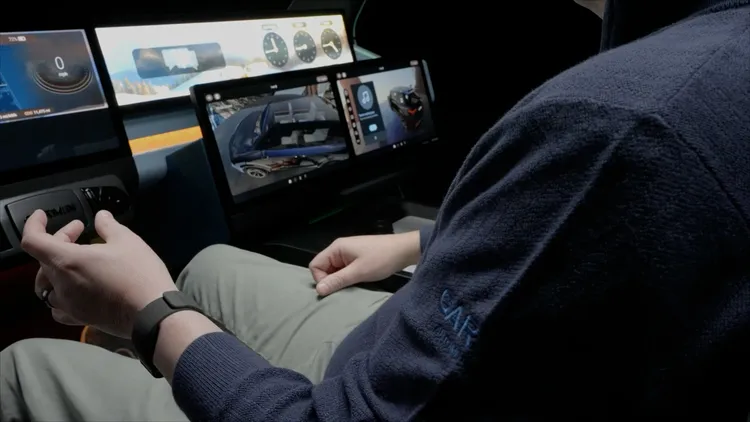
Looking ahead, Meta worked with Garmin to create an automotive proof of concept. It bridges Meta Neural Band to the Garmin Unified Cabin, which manages car infotainment systems. In simple terms, Meta is exploring using an EMG wristband to control you car’s entertainment screen.
(Image credit: Meta)
“Once you start using the band regularly, you want it to control more than just your AI glasses. We’ve already developed prototype experiences for the band to control devices in your home, and it’s been great to team up with Garmin to showcase its potential in your car,” said Meta VP of Wearables Alex Himel in a blog post. “We’re excited about all the possibilities EMG can unlock as a future input platform over time.”
(Image credit: Michael Hicks / Android Central)
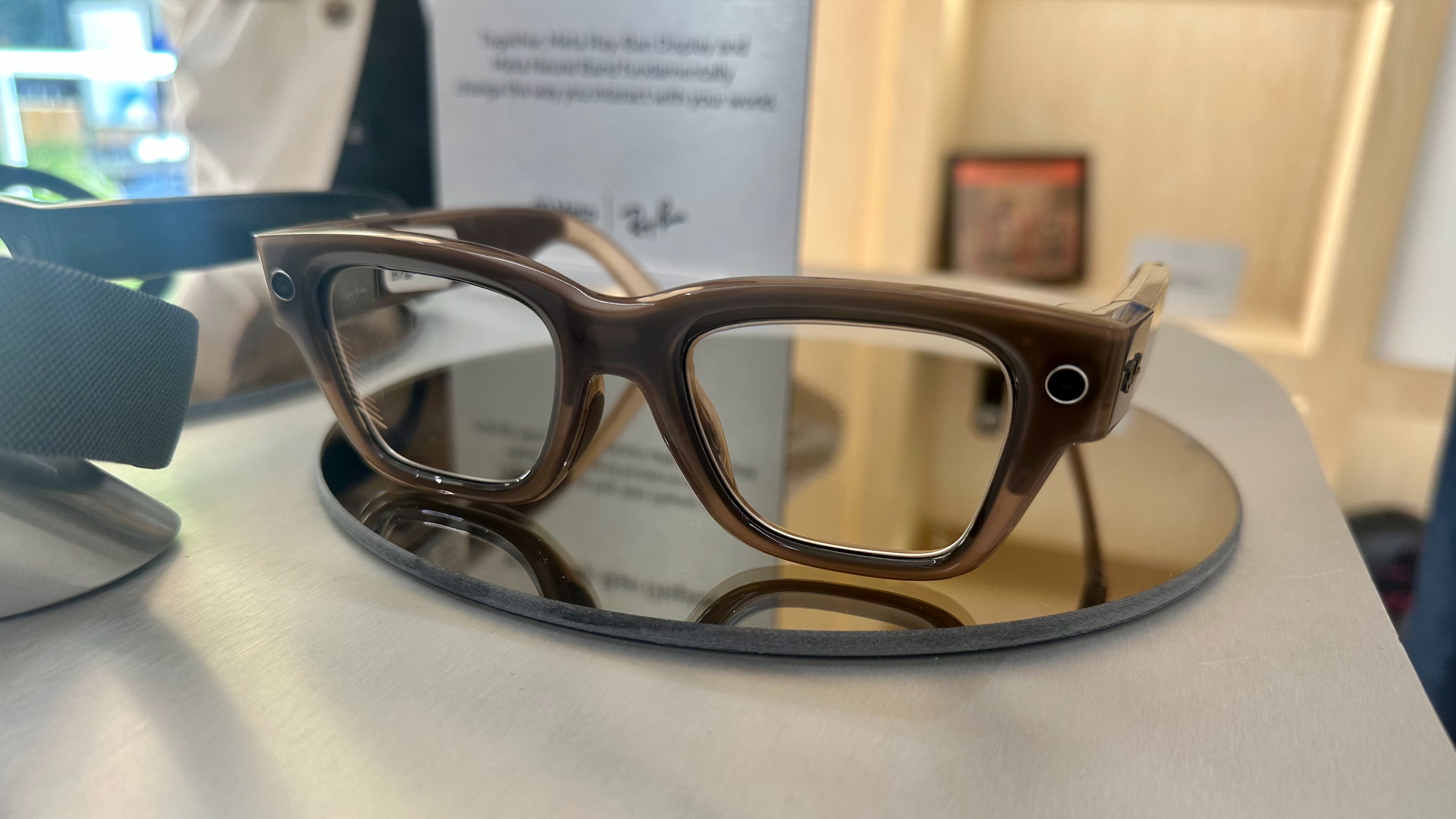
Crucially, Meta announced that it is delaying original plans to launch Ray-Ban Display in the U.K., France, Italy, and Canada in early 2026. Now, the international expansion is postponed indefinitely. The company cites “extremely limited inventory” and “unprecedented demand” as reason for the pause.
Meta says product waitlists for Ray-Ban Display already extend well into this year for U.S. customers due to “an overwhelming amount of interest.” The company noted its focus is on fulfilling U.S. orders for now, and that it is re-evaluating its approach to international availability.
(Image credit: Michael Hicks / Android Central)
My main takeaway is not the so-called “unprecedented demand” for Meta Ray-Ban Display glasses or the international delay itself. Instead, what stands out is Meta’s clear focus and commitment to AR glasses technology.
Just a few months after their launch, the company is already upgrading the Ray-Ban Display glasses with groundbreaking features like teleprompter support and EMG handwriting. It also added four new supported cities to the glasses’ walking directions mode, with more cities “coming soon.” Beyond the features and concepts we’ve already discussed, Meta is also collaborating with the University of Utah to test accessibility applications for the Meta Neural Band in smart home use cases.
Meta is attacking AR glasses development from all angles, and that’s a promising sign. The Meta Ray-Ban Display glasses were never meant to be a best-selling commercial success; these monocular display glasses are an early adopter product in every sense. That’s why you shouldn’t read into the “unprecedented demand,” because Meta itself alluded to the fact that there simply aren’t that many units available for sale.
The hit Meta display glasses are the next one, which hopefully have screens in both lenses. Based on what I’m seeing so far, Meta is still the one to beat in this segment. Samsung and Google want to change that with Android XR, though.